Northern Legless Lizard
Anniella pulchra
A small, snake-like lizard with no legs. It has a cylindrical body with smooth, shiny, skink-like scales, and no defined neck. Its head is very small, with a sloped snout…
How to identify
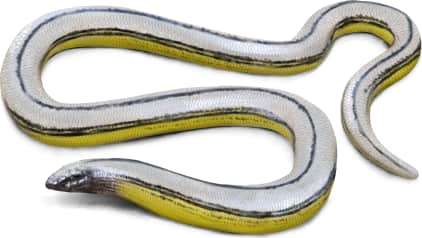
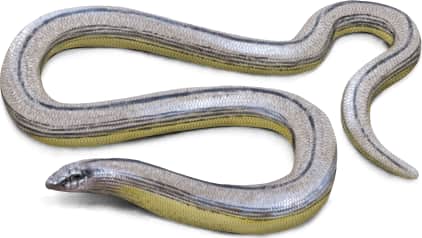
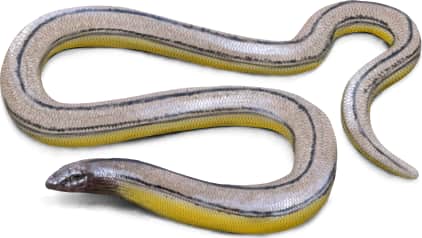
A small, snake-like lizard with no legs. It has a cylindrical body with smooth, shiny, skink-like scales, and no defined neck. Its head is very small, with a sloped snout resembling the front of a high-speed train. It has external ear openings and tiny, laterally positioned eyes with movable eyelids, differentiating it from a snake. It has a blunt-tipped tail and reaches about 7 inches in snout to vent length. Its dorsum is grey-tan, often with a very thin black central stripe, and one or more thin black lateral stripes. Its ventrum is yellow and unmarked.
Range
Western and central California, between San Francisco and Los Angeles.
Habitat
When not burrowing underground, this lizard can be found slithering through loose, sandy substrate or leafy ground debris, often in coastal sand dunes habitats. It requires moist substrate, and can also be found in chaparral, woodlands, sandy washes, desert scrublands, and suburban gardens. It will hide under boards, rocks, and logs, and likes to inhabit leaf litter piles beneath trees in sunny areas.
Variations
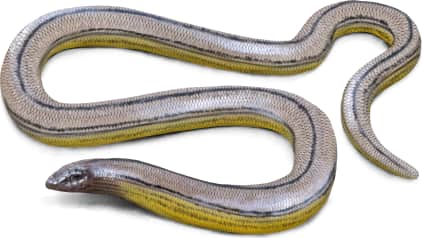
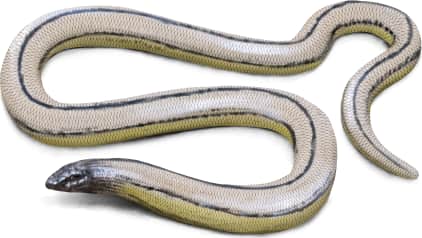
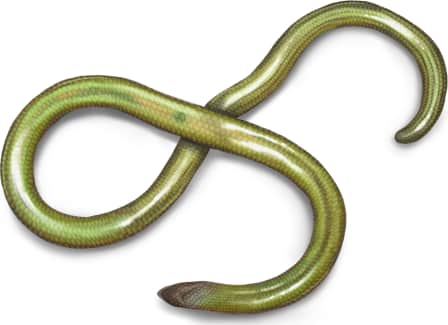
Black longitudinal stripes are sometimes faint or absent. One population in Monterey County exhibits dark brown or black dorsal coloration. Yellow ventrum coloration can be pale or vibrant.
Similar species
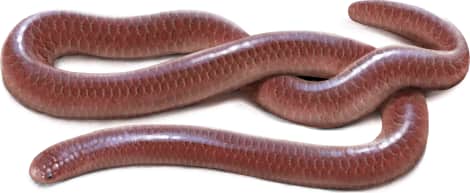
Most likely to be misidentified as the San Diegan legless lizard (*Anniella stebbinsi*), Bakersfield legless lizard (*Anniella grinnelli*), Temblor legless lizard (*Anniella alexanderae*), or Big Springs legless lizard (*Anniella campi*). It also resembles the western threadsnake (*Rena humilis*).
Name and etymology
Genus
Anniella
Latin for little (-ella) ring (annela).
Origin
Sources
- Gray, 1852. Ann. Mag. Nat. Hist., Ser. 2, Vol. 10, p. 440 ↗
Anniella. Gray, 1852 - Ann. Mag. Nat. Hist., Ser. 2, Vol. 10, p. 440
Species epithet
pulchra
Latin for beautiful
Origin
Sources
- Baur, 1893. Amer. Nat., Zool., Vol. 27, p. 675 ↗
Graptemys pulchra. Baur, 1893 - Amer. Nat., Zool., Vol. 27, p. 675
- Gray, 1852. Ann. Mag. Nat. Hist., Ser. 2, Vol. 10, p. 440 ↗
Anniella. Gray, 1852 - Ann. Mag. Nat. Hist., Ser. 2, Vol. 10, p. 440
Explore more names in the etymology index.
More illustrations
At a glance
Size
111 to 228 mm
Range
Western and central California, between San Francisco and Los Angeles.
Habitat
When not burrowing underground, this lizard can be found slithering through loose, sandy substrate or leafy ground debris, of…
Range map
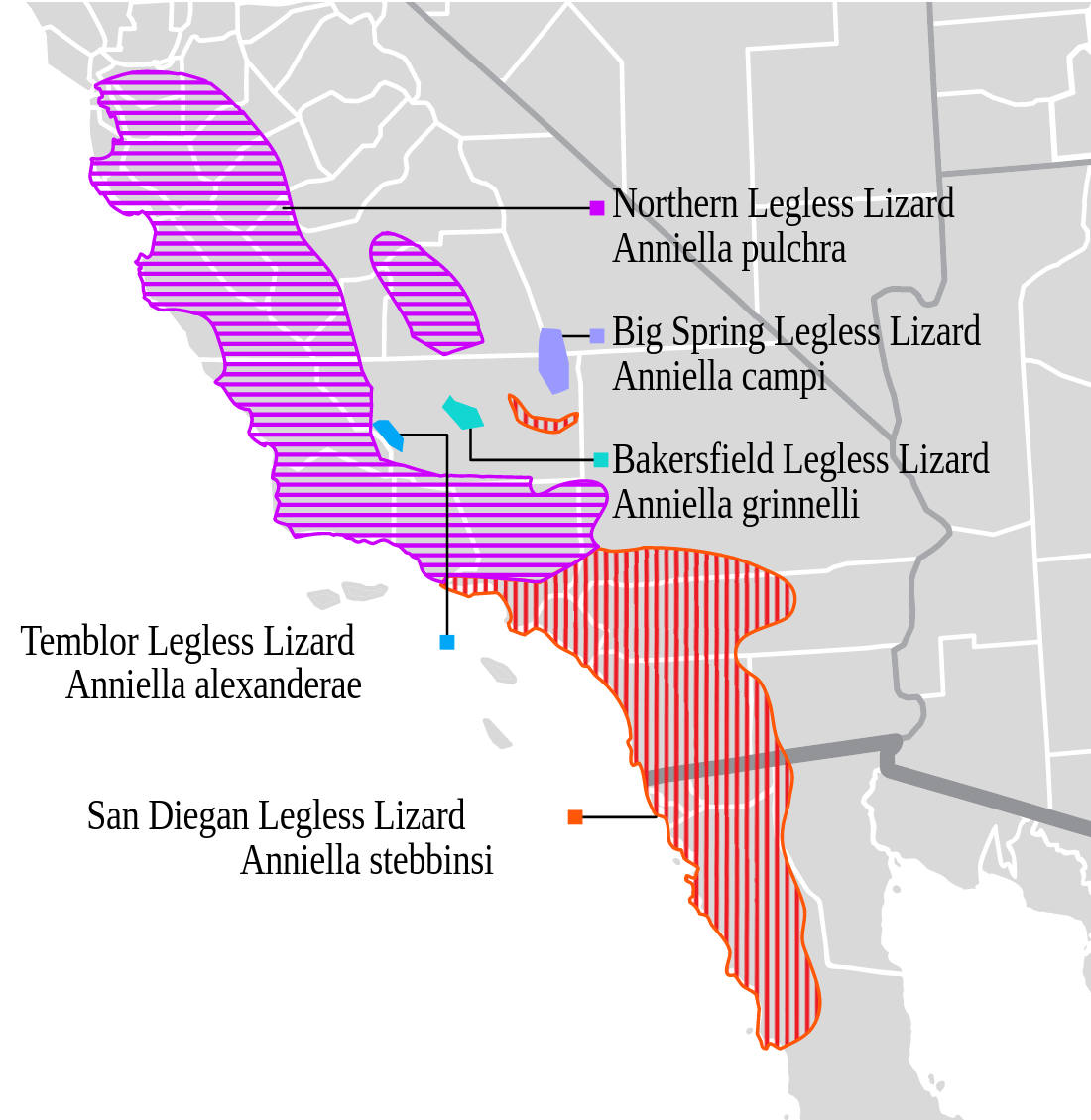
Approximate range. © Mapbox © OpenStreetMap