Temblor Legless Lizard
Anniella alexanderae
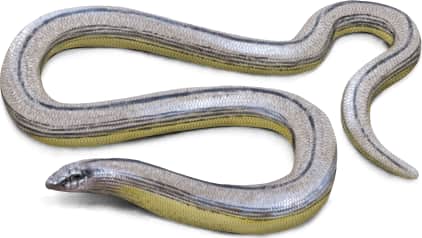
These lizards are slender legless lizards with eyelids, shiny scales, shovel-shaped snouts and blunt tails. Its sides show a very bright orange color with its dorsal part…
How to identify
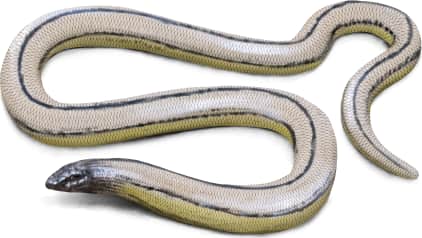
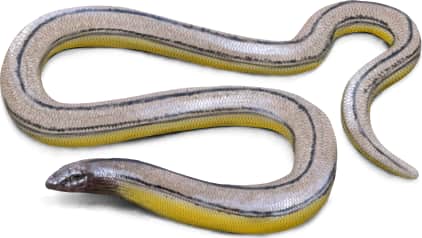
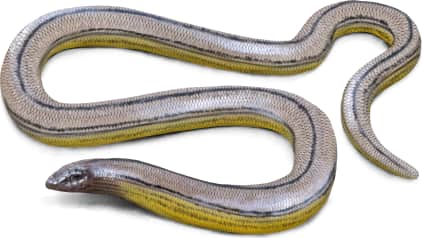
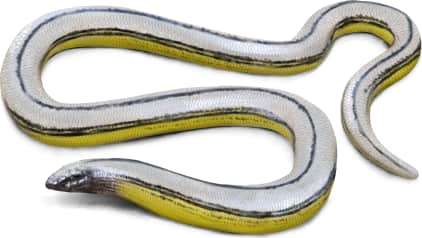
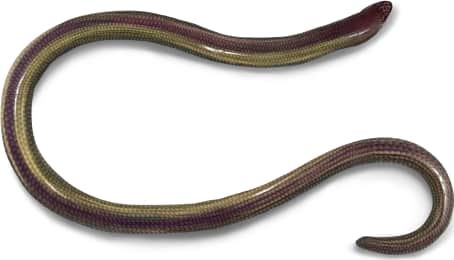
These lizards are slender legless lizards with eyelids, shiny scales, shovel-shaped snouts and blunt tails. Its sides show a very bright orange color with its dorsal part colored pale olive and agree ventral coloration. It has a light gray ventral coloration having its point of insertion at its lower jaw differentiating it from others in the Anniella Specie. It is further identified with a mid-dorsal black stripe which is present from the parentals to the tail tip.
Range
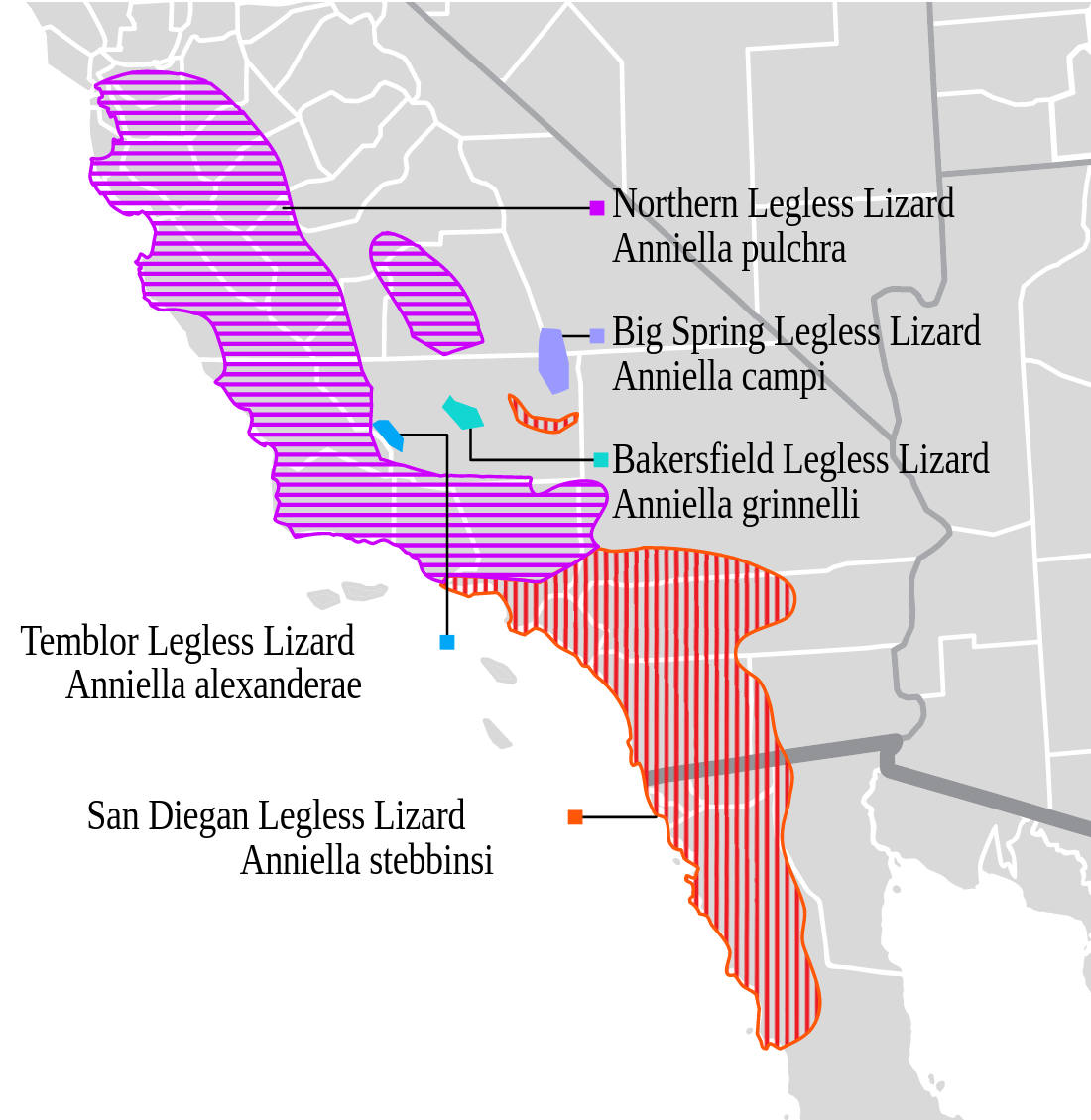
The Anniella Alexandarae is found in sandy soils of South East of the Temblor range in San Joaquin Valley in California.
Habitat
These species are found in arid areas with loose soil substrate. They are secretive animals that feed on small insects, larvae and spiders living out their entire life in small confined spaces. They avoid direct contact with sunlight being best suited in low temperatures of loose sandy soils. Breeding occurs live between early spring and July in moist warm loose soil of sparse vegetation.
Similar species
The Southern Sierra Legless Lizard (Anniella Campi) is a legless lizard with double dark lateral stripes. The Baja Legless Lizard (Anniella Geronimensis) is a secretive reptile with smooth glossy scales that vary in color from silvery to black. It is adorned with multiple black stripes and a belly lighter in color. The California Legless Lizard (Anniella Pulchra) is a silvery and yellow-colored legless lizard with smooth scales. They usually grow in length to around 7 inches long.
Name and etymology
Genus
Anniella
Latin for little (-ella) ring (annela).
Origin
Sources
- Gray, 1852. Ann. Mag. Nat. Hist., Ser. 2, Vol. 10, p. 440 ↗
Anniella. Gray, 1852 - Ann. Mag. Nat. Hist., Ser. 2, Vol. 10, p. 440
Species epithet
alexanderae
Honoring Annie Montague Alexander.
Origin
Honors
Sources
- Wikipedia: Anniella alexanderae ↗
“Anniella alexanderae.” Wikipedia. https://en.wikipedia.org/wiki/Anniella_alexanderae
Explore more names in the etymology index.
More illustrations
At a glance
Range
The Anniella Alexandarae is found in sandy soils of South East of the Temblor range in San Joaquin Valley in California.
Habitat
These species are found in arid areas with loose soil substrate. They are secretive animals that feed on small insects, larva…
Guide
Reptiles and Amphibians of North America
Range map
Approximate range. © Mapbox © OpenStreetMap