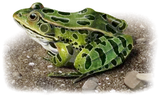
Cascades Frog
Rana cascadae
A mostly greenish brown frog with dark brown, irregular spots, a pale yellow to white underbelly, and light spots on its sides. It has a dark brown patch running from its…
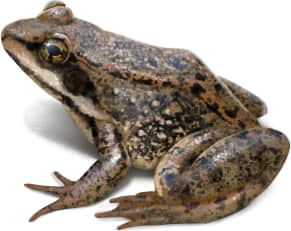
How to identify
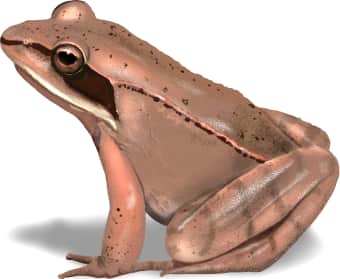
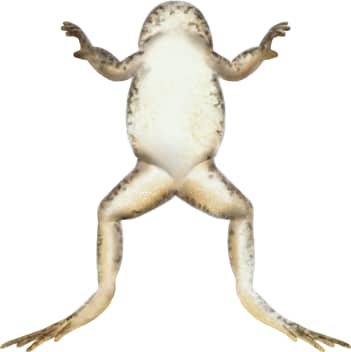
A mostly greenish brown frog with dark brown, irregular spots, a pale yellow to white underbelly, and light spots on its sides. It has a dark brown patch running from its eye to the corner of its mouth, adjacent to a white stripe running along the edge of its mouth from the rostrum to the corner of the mouth. It has dorsolateral skin folds on each side, running from behind the eye to the hip. Only partial webbing on rear toes. It grows to a length of 5-6.5 cm.
Range
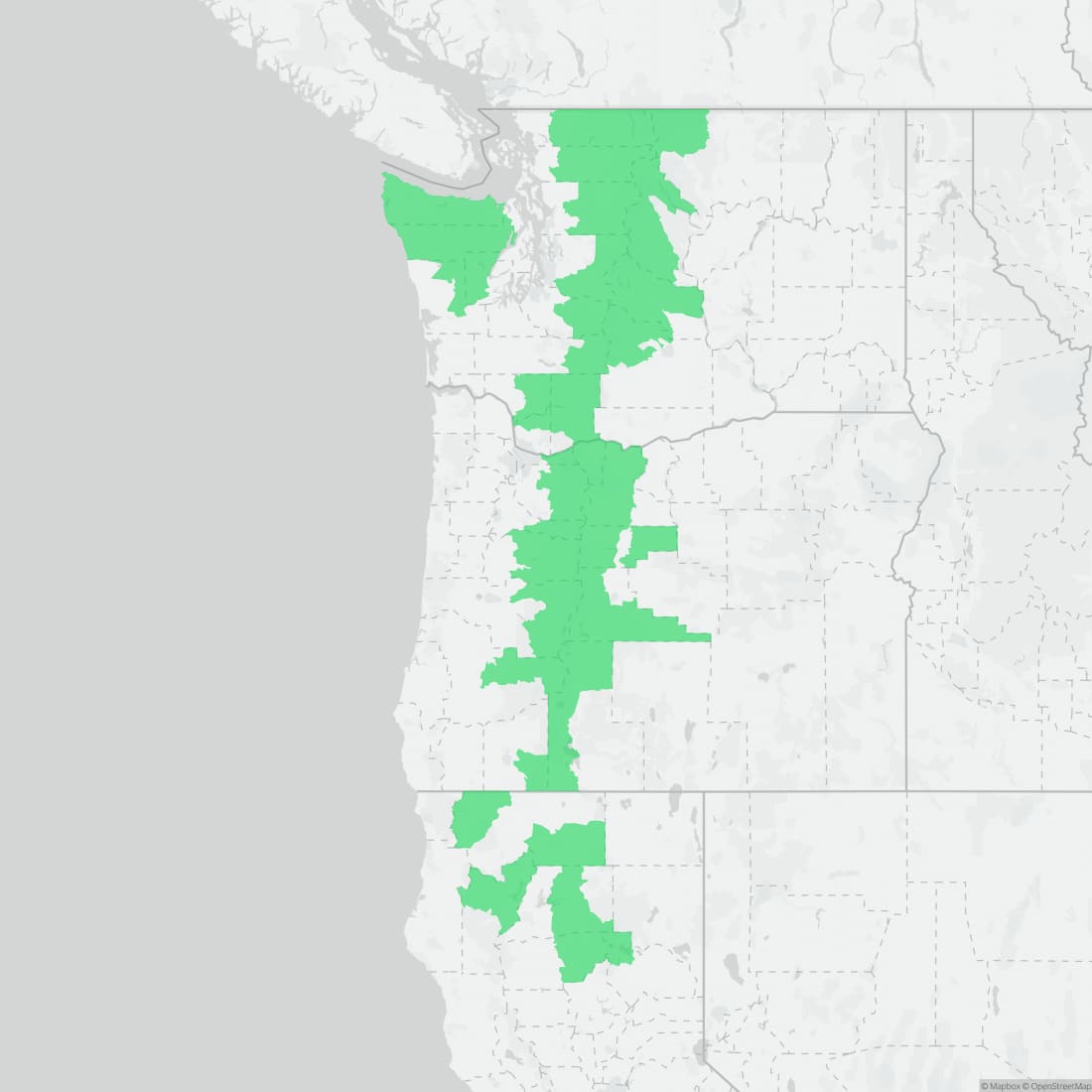
Found in the Cascade range and Olympic mountains of the pacific northwest, from Washington down to northern California.
Habitat
Species prefers temperate forests and grasslands, and will be found living near freshwater lakes, marshes, ponds, and rivers. Found at elevations from 2100-8000 feet, particularly in dense populations around volcanic areas of the mountain range. Will travel further from water during times of high humidity.
Variations
Some are strictly brown, while others have a distinct green hue. Spots on the back can be few or numerous, and vary in color from light brown to black.
Similar species
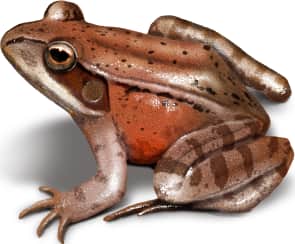
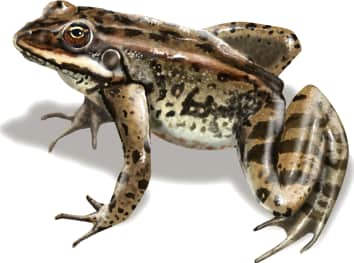
Looks similar to the wood frog (*Lithobates sylvaticus*) which ranges throughout Canada and the northeastern US. Also could be confused with the Columbia spotted frog (*Rana luteiventris*), which is found slightly east of this frog's range. The northern red-legged frog (*Rana aurora*) is found nearby and shares characteristics, but has obvious red coloration on its sides.
Name and etymology
Genus
Rana
Latin for frog.
Origin
Sources
- Linnaeus, 1758. Syst. Nat., 10th ed., Vol. 1, p. 210 ↗
Rana. Linnaeus, 1758 - Syst. Nat., 10th ed., Vol. 1, p. 210
Species epithet
cascadae
Of the Cascade Mountains.
Origin
Sources
- Good and Wake, 1992
Rhyacotriton kezeri. Good and Wake, 1992
- Slater, 1939. Herpetologica, Vol. 1, p. 145
Rana cascadae. Slater, 1939 - Herpetologica, Vol. 1, p. 145
Explore more names in the etymology index.
More illustrations
Underside
At a glance
Range
Found in the Cascade range and Olympic mountains of the pacific northwest, from Washington down to northern California.
Habitat
Species prefers temperate forests and grasslands, and will be found living near freshwater lakes, marshes, ponds, and rivers.…
Guide
Reptiles and Amphibians of North America
Range map
Approximate range. © Mapbox © OpenStreetMap