Desert Spiny Lizard
Sceloporus magister
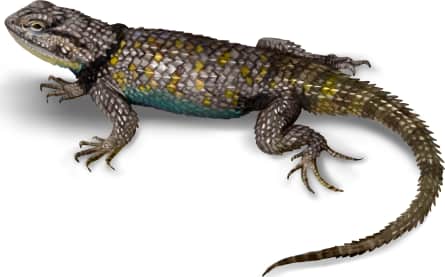
A sexually dimorphic species with rough, keeled scales over most of its body. Males are more colorful, displaying patches or speckles of blue, violet, yellow, and orange…
How to identify
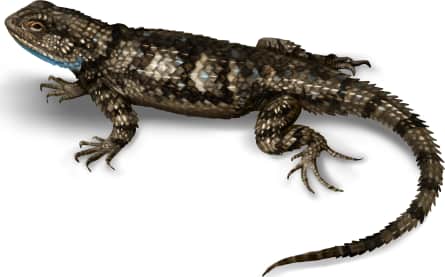
A sexually dimorphic species with rough, keeled scales over most of its body. Males are more colorful, displaying patches or speckles of blue, violet, yellow, and orange on their sides, throat, face, belly, and tail. Females and juveniles are primarily shades of grey, tan, and black, with some yellow speckling on their sides. Both sexes have a black triangular patch in front of each shoulder, and a black line on the side of the face behind the eye. It is often seen doing push-ups as a territorial display. It grows to a length of 5.6 inches from snout to vent.
Range
Ranges from southern Utah and southwestern Colorado down through most of Arizona, northeastern New Mexico, and southeastern California. It extends into western Mexico.
Habitat
Can be found in a variety of habitats including desert scrub, chaparral, semidesert grassland, and woodlands. Most often found at low elevations in areas with lots of ground cover. Frequently seen climbing trees.
Variations
Their colors become darker in the winter to absorb more heat from the sun, and lighten in the summer to reflect sunlight. Some males have a blue or violet patch down the center of their neck and upper back.
Similar species
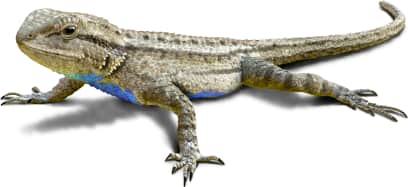
This species could be confused with the Clark's spiny lizard (*Sceloporus clarkii*) or western fence lizard (*Sceloporus occidentalis*). The yellow-backed spiny lizard (*Sceloporus uniformis*) was considered a subspecies of the desert spiny lizard until recently.
Name and etymology
Genus
Sceloporus
Greek for leg (skelos) pores (porus), referencing femoral pores on back legs.
Origin
Sources
- Wiegmann, 1828. Isis von Oken, Vol. 21, p. 369 ↗
Sceloporus. Wiegmann, 1828 - Isis von Oken, Vol. 21, p. 369
Species epithet
magister
Latin for teacher.
Origin
Sources
- Hallowell, 1854. Proc. Acad. Nat. Sci. Philadelphia, Vol. 7, p. 93 ↗
Sceloporus magister. Hallowell, 1854 - Proc. Acad. Nat. Sci. Philadelphia, Vol. 7, p. 93
Explore more names in the etymology index.
At a glance
Range
Ranges from southern Utah and southwestern Colorado down through most of Arizona, northeastern New Mexico, and southeastern C…
Habitat
Can be found in a variety of habitats including desert scrub, chaparral, semidesert grassland, and woodlands. Most often foun…
Guide
Reptiles and Amphibians of North America
Range map
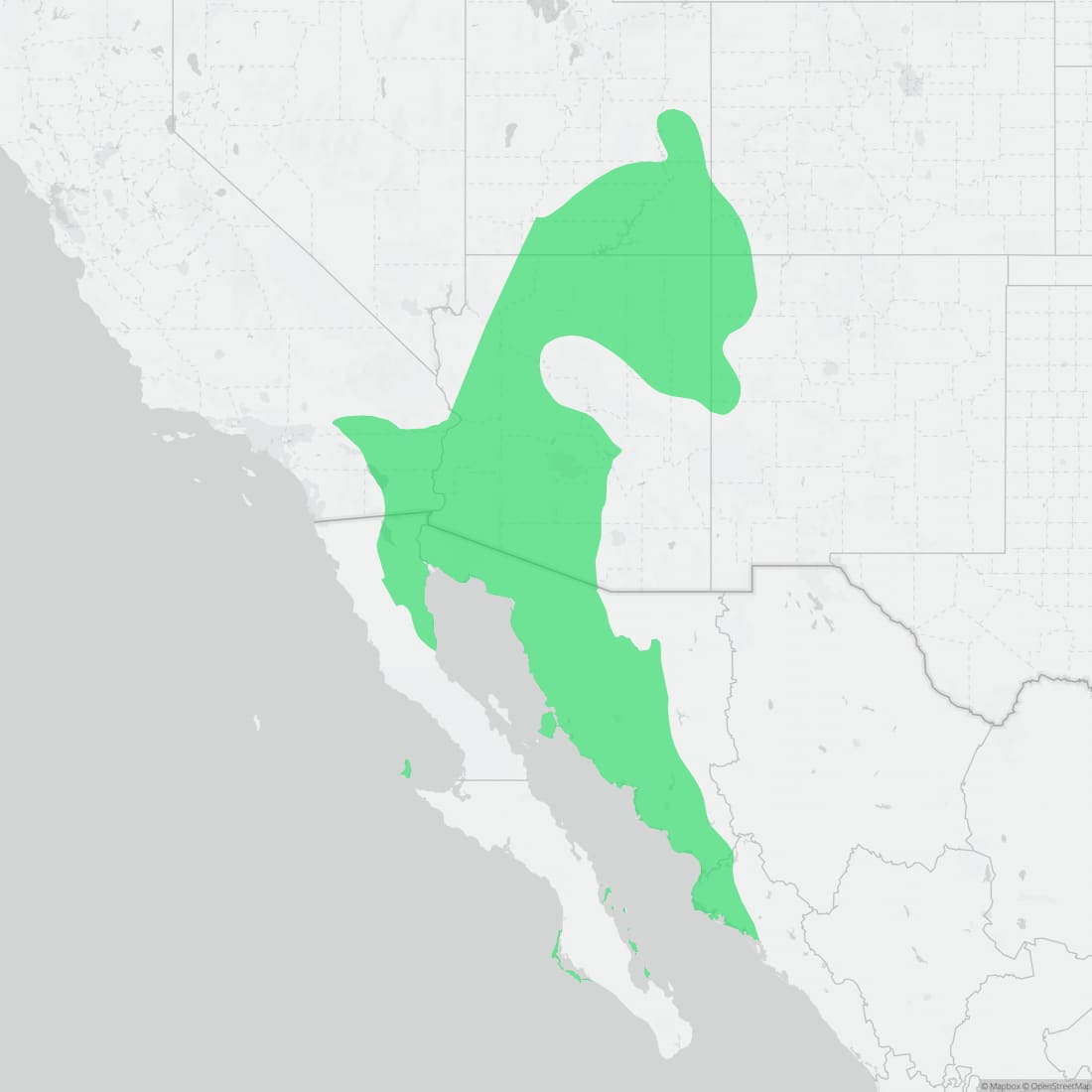
Approximate range. © Mapbox © OpenStreetMap