Green Tree Frog
Hyla cinerea
The green tree frog is about 2.5 inches. They are usually in different shades of green ranging from yellowish green to lime green. The underside is pale yellow to white.…
How to identify
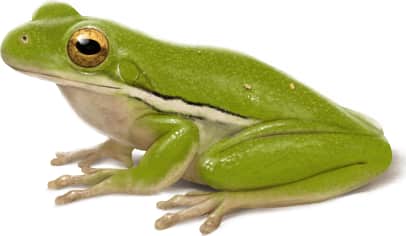
The green tree frog is about 2.5 inches. They are usually in different shades of green ranging from yellowish green to lime green. The underside is pale yellow to white. Their colors change with the temperature. They have a pale yellow, white or cream line which runs from the jaw to the groin. The skin is smooth and they have big toe pads. The male has a wrinkled throat and is usually smaller than the female.
Range
The dryophytes cinereus occupies much of southeastern and Central United States. They can be found in Central Texas East to Florida, up to Southern New Jersey and West to as far as Delaware.
Habitat
The American green tree frog can be found in places with floating vegetation, grasses, marshes and water bodies such as streams, ponds and your backyard swimming pool. They are nocturnal and feed primarily on insects. They make great beginners pets but do not do too well with a lot of handling. They are oviparous and breed once in a year. The female can lay several clutches during the mating season and a clutch can contain up to 400 eggs depending on her size.
Similar species
The pine woods tree frog (Dryophytes femoralis) is grayish green to grayish brown. The bird-voiced tree frog (Dryophytes avivoca) is pale green and changes according to the temperature and its activity. The underside is a dappled brown or pale gray.
Name and etymology
Genus
Hyla
Honoring Hylas, an Argonaut from greek mythology, who name means "belonging to the woods"
Origin
Honors
Sources
- Laurenti, 1768. Syn. Rept., p. 32
Hyla. Laurenti, 1768 - Syn. Rept., p. 32
Species epithet
cinerea
Latin for ash-colored referencing the color of a preserved specimen
Origin
Sources
- (Schneider, 1799). Hist. Amph., Vol. 1, p. 174
Hyla cinerea. (Schneider, 1799) - Hist. Amph., Vol. 1, p. 174
Explore more names in the etymology index.
At a glance
Range
The dryophytes cinereus occupies much of southeastern and Central United States. They can be found in Central Texas East to F…
Habitat
The American green tree frog can be found in places with floating vegetation, grasses, marshes and water bodies such as strea…
Guide
Reptiles and Amphibians of North America
Range map
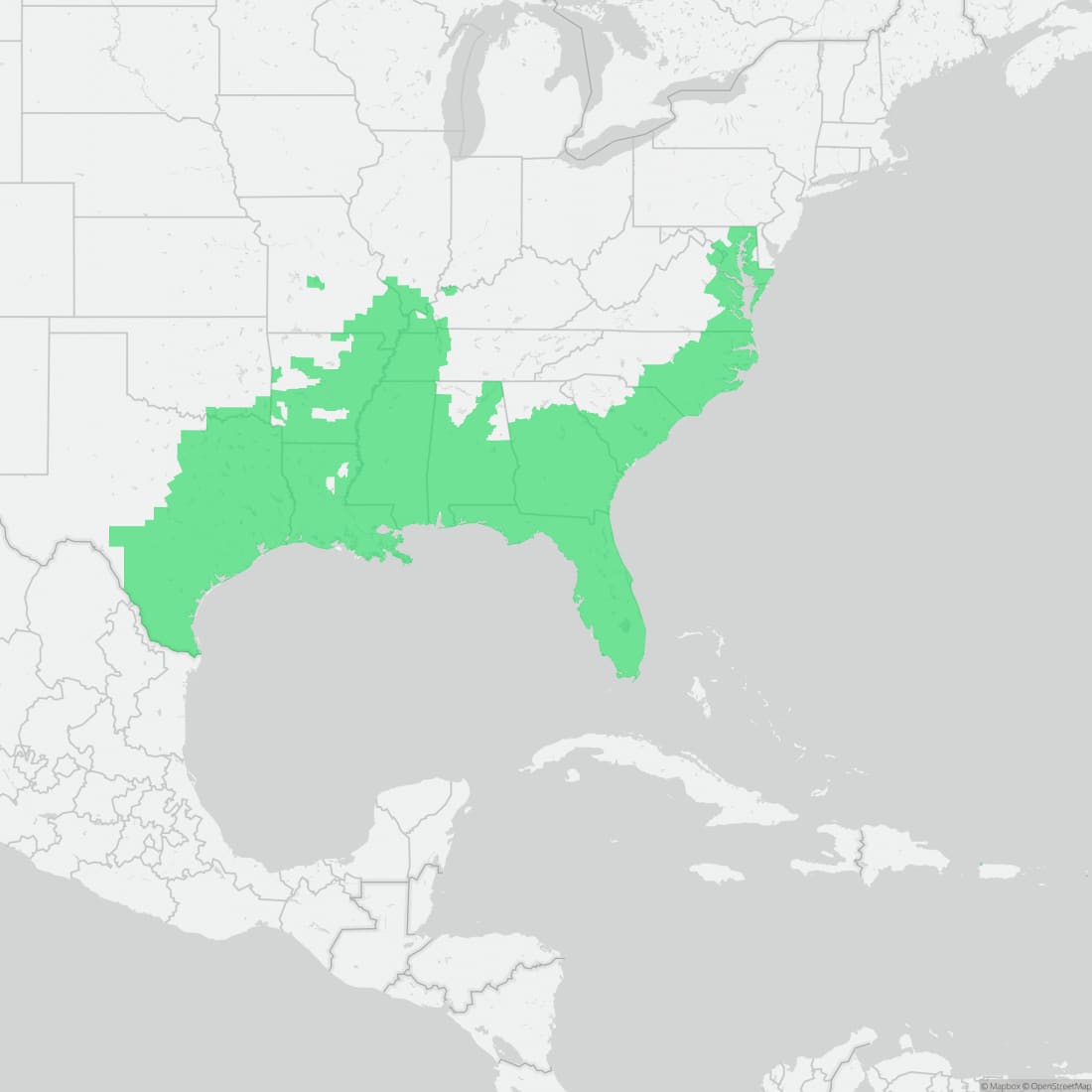
Approximate range. © Mapbox © OpenStreetMap