
Mediterranean House Gecko
Hemidactylus turcicus
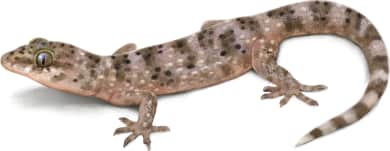
This small gecko averages 10-13 cm in total length. It is primarily pinkish white with dark grey spots all over its body. These spots merge into bands on the tail, break…
How to identify
This small gecko averages 10-13 cm in total length. It is primarily pinkish white with dark grey spots all over its body. These spots merge into bands on the tail, break up into speckles on the head, and become faded on the limbs. It has raised circular bumps all over its dorsum, except for its face and the end of its tail. It has large eyes with vertical pupils. Its ventrum is white and unmarked. Like most geckos, it has enlarged pads on all of its toes for gripping on almost any surface.
Range
Native to almost all coastal areas surrounding the Mediterranean Sea, but it has been introduced to many places outside of its native range. It is established throughout much of the southern United States and Mexico. It's been found as far north as Chicago and New York City.
Habitat
This species thrives in human habitation. It has successfully established itself all over the world wherever the climate is similar to that of the Mediterranean. It likes to hide in small crevices of man made structures, and will often hunt insects around artificial lights. It is strictly nocturnal, and most often seen clinging to vertical surfaces.
Variations
Some have a yellow hue all over, while others are grey instead of white. The color of the dark markings varies greatly. Sometimes they are light tan and very faint, and sometimes they are dark black and very distinct.
Similar species
It looks quite similar to the keeled rock gecko (*Cyrtopodion scabrum*) and spotted house gecko (*Hemidactylus parvimaculatus*), which are also introduced species in the US. As for native species, it resembles the much larger, ground-dwelling Texas banded gecko (*Coleonyx brevis*) and western banded gecko (*Coleonyx variegatus*)
Name and etymology
Genus
Hemidactylus
Greek for half (hemisys) finger (daktylos).
Origin
Sources
- Wikipedia: Hemidactylus ↗
“Hemidactylus.” Wikipedia. https://en.wikipedia.org/wiki/Hemidactylus
Species epithet
turcicus
Belong to (icus) Turkey.
Origin
Sources
- Wikipedia: Hemidactylus turcicus ↗
“Hemidactylus turcicus.” Wikipedia. https://en.wikipedia.org/wiki/Mediterranean_house_gecko
Explore more names in the etymology index.
At a glance
Range
Native to almost all coastal areas surrounding the Mediterranean Sea, but it has been introduced to many places outside of it…
Habitat
This species thrives in human habitation. It has successfully established itself all over the world wherever the climate is s…
Guide
Reptiles and Amphibians of North America
Range map
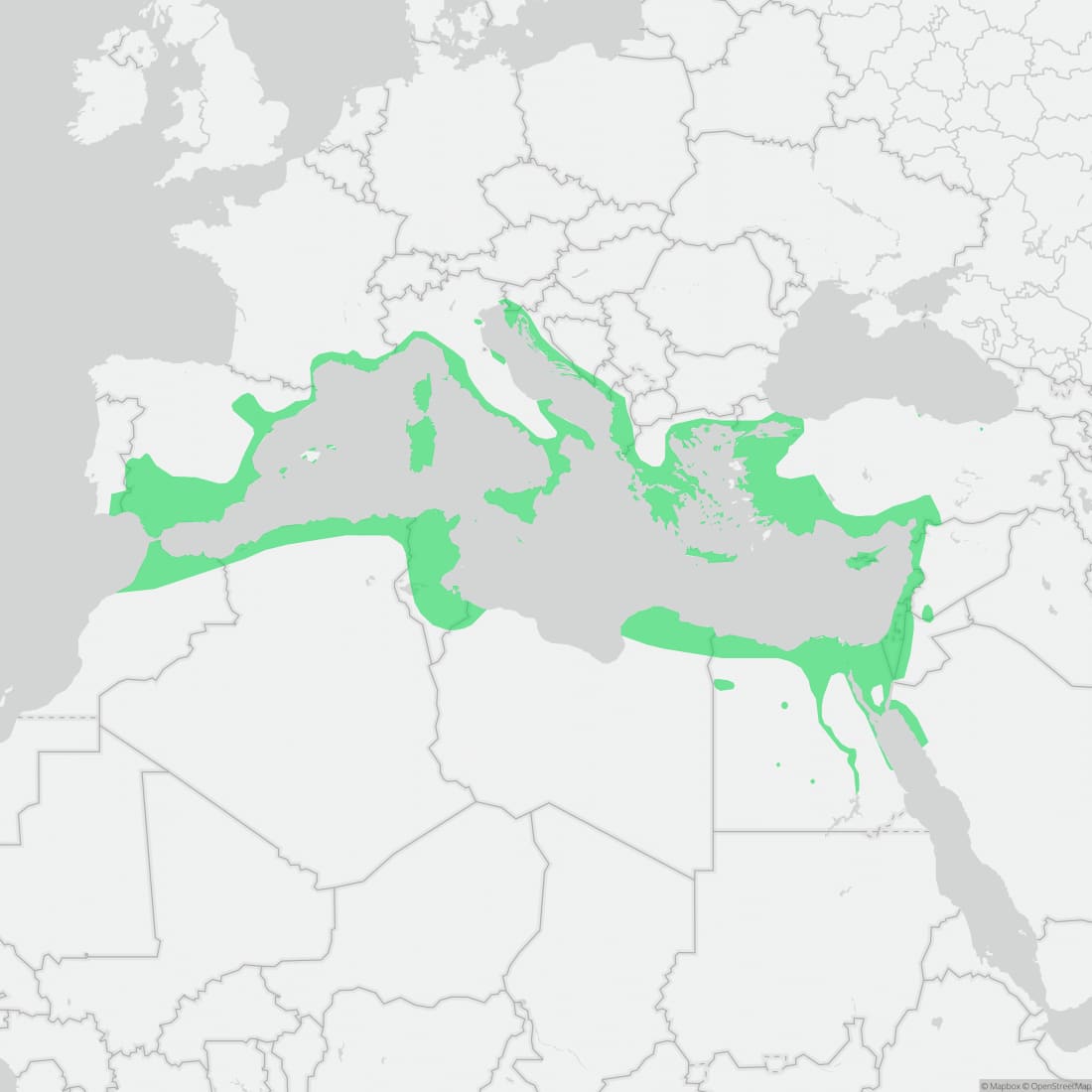
Approximate range. © Mapbox © OpenStreetMap