Western Red-backed Salamander
Plethodon vehiculum
This is a very slender animal that is built with relatively short fore and hind limbs. When in adult stage, it’s snout-to-vent can measure about 38mm to 55mm and its tota…
How to identify
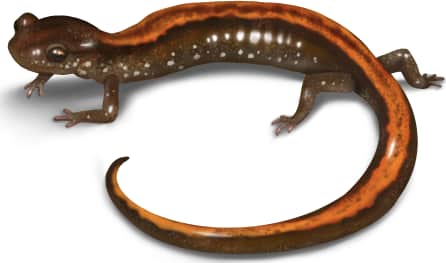
This is a very slender animal that is built with relatively short fore and hind limbs. When in adult stage, it’s snout-to-vent can measure about 38mm to 55mm and its total length can be about 76mm to 115mm, this includes its tail. On its dorsum, it has a colored stripe dorsum which runs from the anterior of the head to the end of the tail and while this stripe’s color can vary from typical reddish orange to bright yellow, melanism is also recorded in this species.
Range
Western redback species of salamander is found in extreme southwestern Canada and northwestern United States, in southwestern Oregon, western Washington, southwestern British Columbia and Vancouver Island.
Habitat
They occur on some coastal areas in altitudes of about 800m although it has been seen in altitudes as high as 1,250m. It is not strictly associated with a particular habitat as a variety of habitats have been recorded for this species including the temperate forests, rocky talus slopes and riparian areas. Western red-backed salamander species can be found beneath logs, moss, bark, stones in cool, shaded areas and in drier summers its adult go down to moist underground sites. This species does not migrate during its migrating season; it always maintains its usual habitat. Its reproduction is terrestrial and can mate variably from November to early March and this is determined by its incumbent geographical location. The female usually has biennial reproductive cycles, and retreats to their subsurface to lay her eggs. During the spring or early summer, she oviposits eggs which are usually 4-19 in a clutch and can be as large as 4.4m – 6.0mm in diameter. She also broods the eggs till they become hatchlings. Its food includes small invertebrates like annelids, isopods, snails, spiders, mites etc. and it is food for the garter snakes, shrew moles and carabid beetles.
Similar species
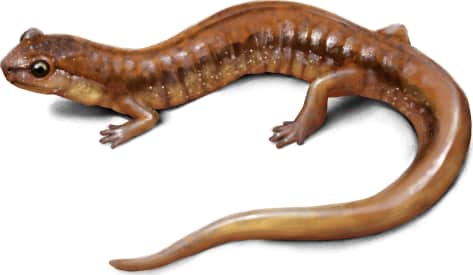
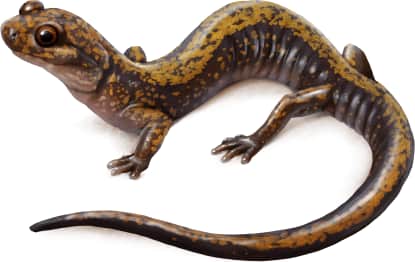
Van Dyke salamander or Plethodon vandykei is a small terrestrial salamander with relatively long legs and ranging in sizes of 95mm- 105mm in adult total length and 45mm- 60mm in snout-to-vent length also in adults. Its modal number of coastal groups is 14 and it is often colored differently. Dunn’s salamander or Plethodon dunni is a moderate size with this species, an adult can grow up to 60mm- 75mm in snout-to-vent length but 100mm- 155mm in total length. Its body is dark brown or black.
Name and etymology
Genus
Plethodon
Greek for full of (plethore) teeth (odon).
Origin
Sources
- Tschudi, "1838" 1839. reprinted in Classif. Batr., Mem. Soc. Sci. Nat. Neuchatel, p. 92 ↗
Plethodon. Tschudi, "1838" 1839 - reprinted in Classif. Batr., Mem. Soc. Sci. Nat. Neuchatel, p. 92
Species epithet
vehiculum
Latin for vehicle
Origin
Sources
- (Cooper, 1860). Rep. Expl. Surv. R.R. Route Mississippi-Pacific Ocean, 36th Cong. 1st Sess., House Ex. Doc. 56, Vol. 12, (Book 2, Pt. 3, No. 4), p. viii (list of illustrations), pl. 31, fig. 4
Plethodon vehiculum. (Cooper, 1860) - Rep. Expl. Surv. R.R. Route Mississippi-Pacific Ocean, 36th Cong. 1st Sess., House Ex. Doc. 56, Vol. 12, (Book 2, Pt. 3, No. 4), p. viii (list of illustrations), pl. 31, fig. 4
Explore more names in the etymology index.
At a glance
Range
Western redback species of salamander is found in extreme southwestern Canada and northwestern United States, in southwestern…
Habitat
They occur on some coastal areas in altitudes of about 800m although it has been seen in altitudes as high as 1,250m. It is n…
Guide
Reptiles and Amphibians of North America
Range map
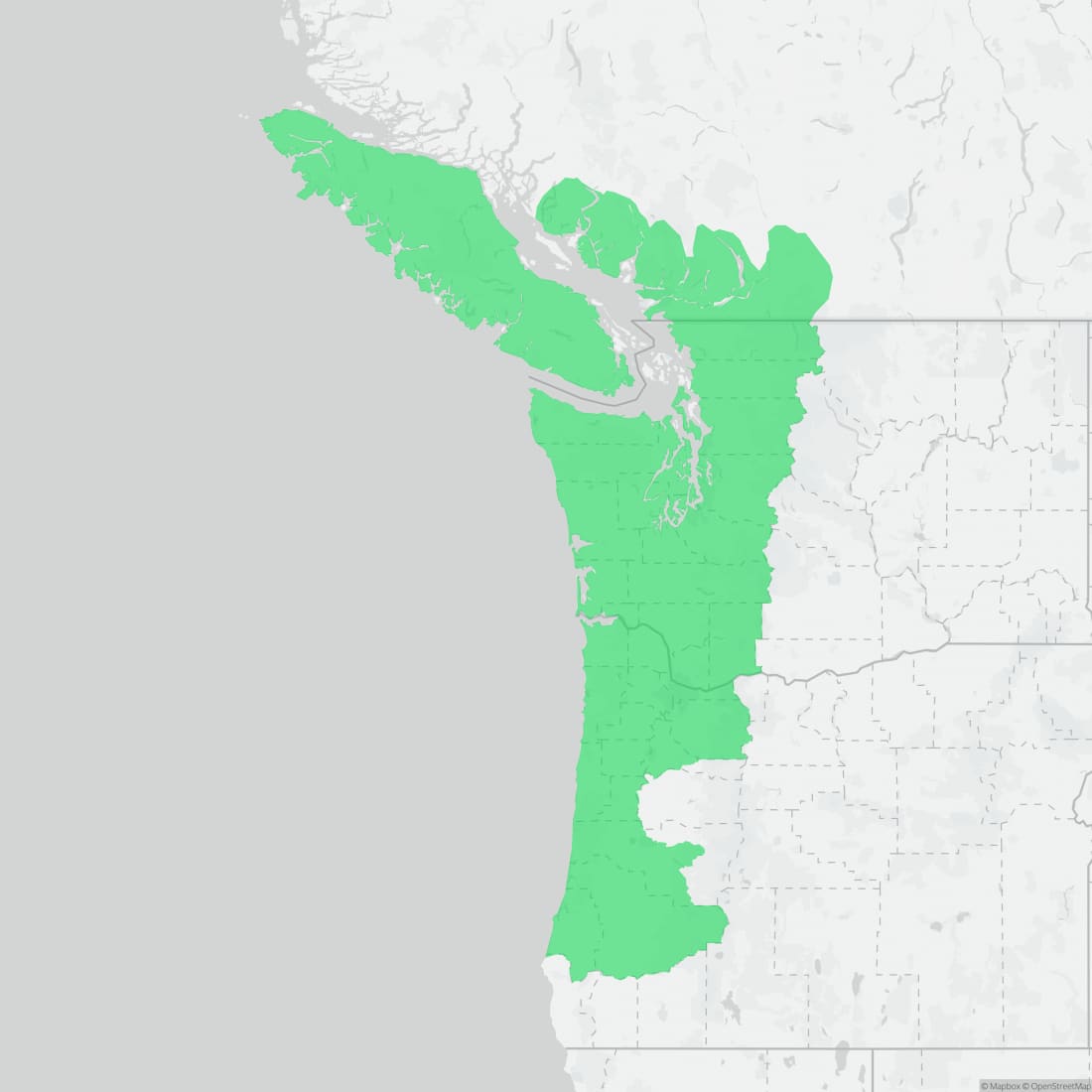
Approximate range. © Mapbox © OpenStreetMap