Van Dyke's Salamander
Plethodon vandykei
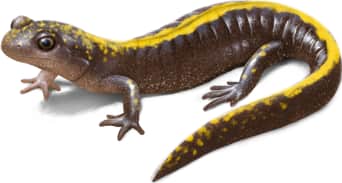
Plethodon vandykei is a sturdy salamander that can reach a length of up to 4 inches. The feet are wide and somewhat webbed. Behind the eyes, there are parotoid glands. Th…
How to identify
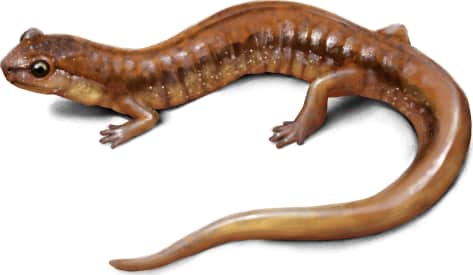
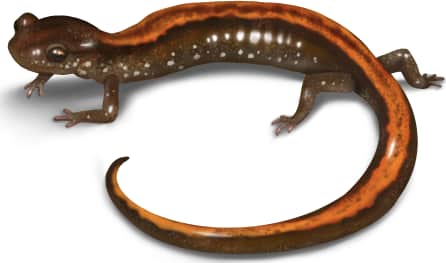
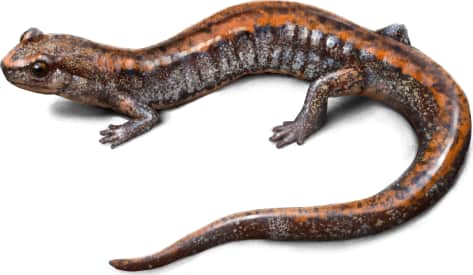
Plethodon vandykei is a sturdy salamander that can reach a length of up to 4 inches. The feet are wide and somewhat webbed. Behind the eyes, there are parotoid glands. The salamander has a dark and light color phase based on color. Colors included are black, pink, or yellow. Dark phase displays a black background color and a red or yellow stripe on the dorsum with extensions of colors on the sides. The dark phase specimens may also have white flecks on their sides and a throat of yellow. While the light phase displays a tan or yellow color and a stripe that is not clearly defined. They do not have a larval stage and the newly hatched appear as juveniles.
Range
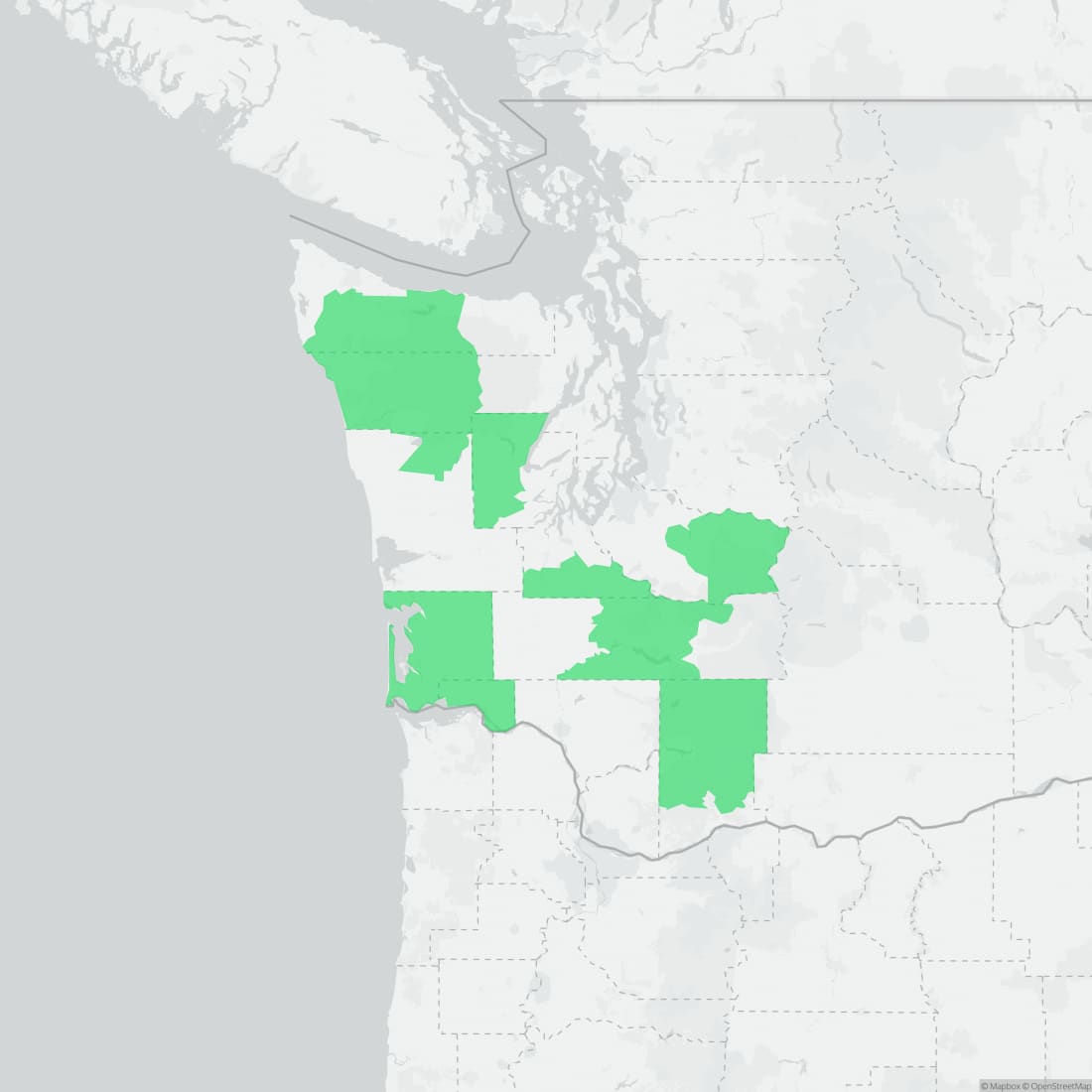
The Van Dyke’s salamander is found naturally in west Washington. They are in three disjunct populations: the Willapa Hills, the Olympic Peninsula, and the southern Cascade Range.
Habitat
They are found in small communities associated with streams, seepages, and rock outcrops. These salamanders are found in areas with frequent rainfall. In the coastal regions, they can be found typically in old forest stands with reasonable levels of wood debris. They use decaying logs and moss-covered stones for nesting habitat. Females lay a clutch of between 7-14 eggs. Van Dyke salamanders feed on small invertebrates.
Similar species
The western red-backed salamander (Plethodon vehiculum) is slender and small with an average length range between 1.5-2.0 inches (snout-to-vent length) and 3.0-4.5 in full length (tail included). This salamander has a broad stripe that runs from the head to the tip of the tail. The long-toed salamander (Ambystoma macrodactylum) has a black background color and a tan, olive-green, or yellow dorsal stripe and white or light-blue flecks on the sides. The stripes may be broken into spots. The Larch Mountain salamander (Plethodon larselli) is small (snout-to-vent length of 1.4-2.2 inches). It has a dorsal stripe that may be light brown, yellow, or orange. It has a brown background color and a distinct red venter.
Name and etymology
Genus
Plethodon
Greek for full of (plethore) teeth (odon).
Origin
Sources
- Tschudi, "1838" 1839. reprinted in Classif. Batr., Mem. Soc. Sci. Nat. Neuchatel, p. 92 ↗
Plethodon. Tschudi, "1838" 1839 - reprinted in Classif. Batr., Mem. Soc. Sci. Nat. Neuchatel, p. 92
Species epithet
vandykei
Honoring Edwin C. Van Dyke.
Origin
Honors
Sources
- Van Denburgh, 1906. Proc. California Acad. Sci., Ser. 3, Zool., Vol. 4, p. 61 ↗
Plethodon vandykei. Van Denburgh, 1906 - Proc. California Acad. Sci., Ser. 3, Zool., Vol. 4, p. 61
Explore more names in the etymology index.
At a glance
Range
The Van Dyke’s salamander is found naturally in west Washington. They are in three disjunct populations: the Willapa Hills, t…
Habitat
They are found in small communities associated with streams, seepages, and rock outcrops. These salamanders are found in area…
Guide
Reptiles and Amphibians of North America
Range map
Approximate range. © Mapbox © OpenStreetMap