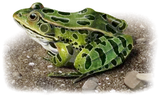
Coastal Plain Dwarf Salamander
Eurycea quadridigitata
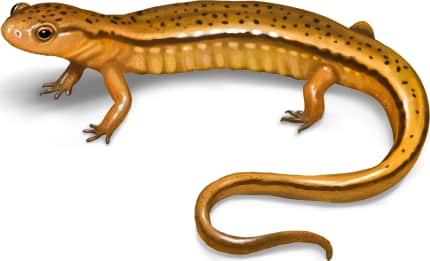
The Coastal plains dwarf salamander grows from 2 to 3.5 inches in length, having a slender body and a long tail. It is yellow-brown in color with darker brown blotching a…
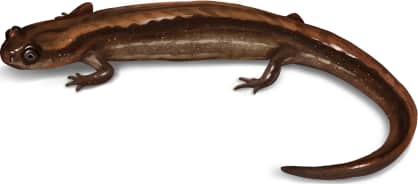
How to identify
The Coastal plains dwarf salamander grows from 2 to 3.5 inches in length, having a slender body and a long tail. It is yellow-brown in color with darker brown blotching and dark stripes down each side, but the pattern and coloration can vary widely within the some species. It’s scientific name denotes that each of its feet has four toes.
Range
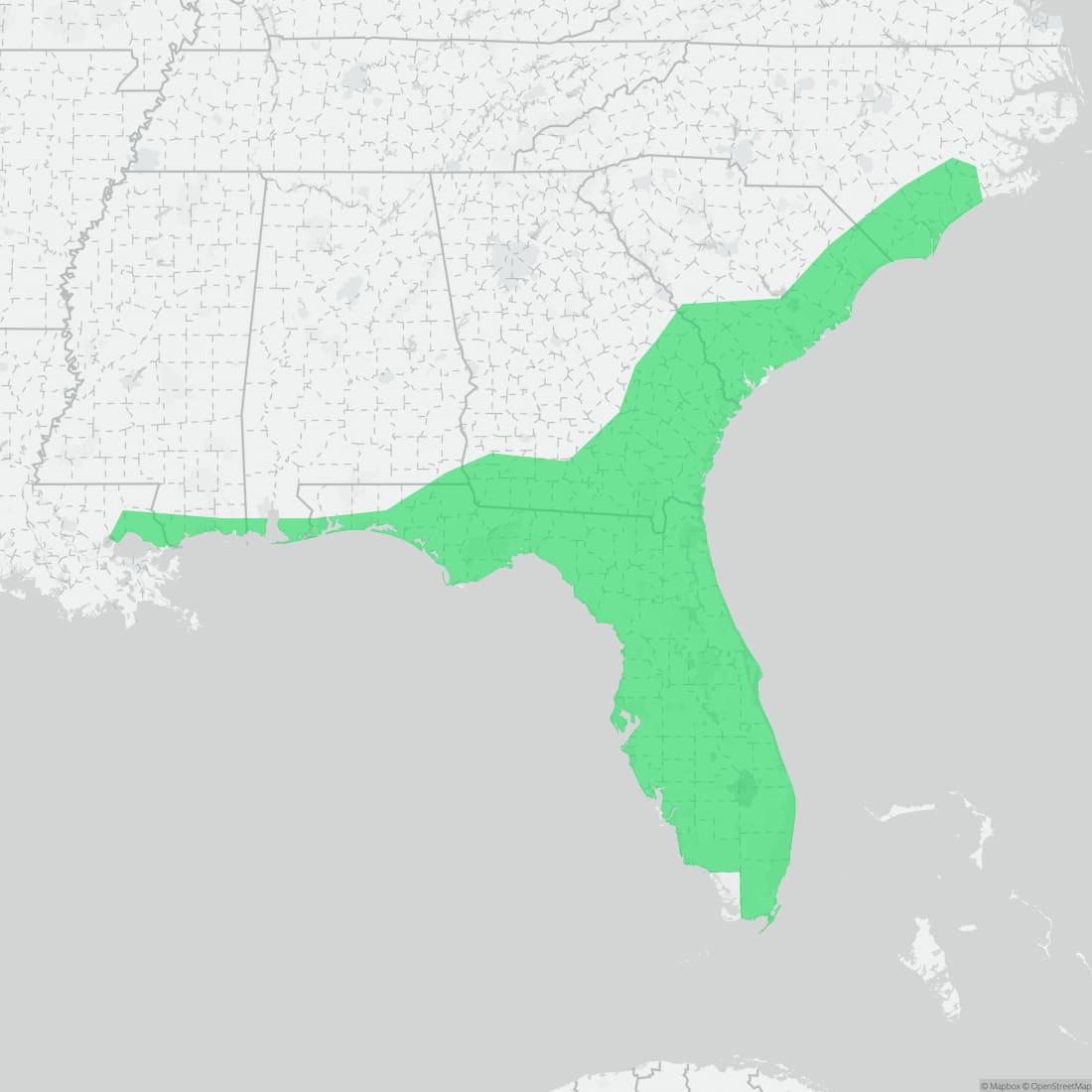
The coastal plains dwarf salamander is a species of salamander, endemic to the Southern United States, from North Carolina, Oklahoma, south to the state of Texas along the Gulf of Mexico to Northern Florida.
Habitat
The coastal plain dwarf salamander is naturally adaptable to swampy pine woods. It is mostly active at night and spends most of its time under leaf litter or forest floor debris. It may also be found around swamps and bottomland hardwood forests, frequently encountered in seepage areas around ponds and streams. The eggs hatch during march and females attain sexual maturity 8-9 months after hatching. They breed during fall, with the females laying 12 to 48 eggs singly or in small clutches attached to submerged debris in shallow or still water. The larvae are benthic feeders but mature species feed on small vertebrates, zooplanktons, and insect larvae. They are diurnal feeders.
Similar species
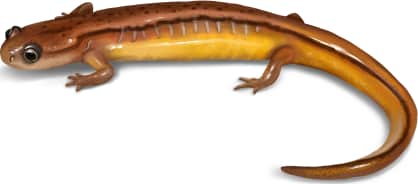
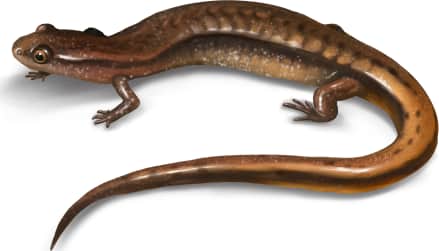
The southern two-lined salamander (eurycea cirrigera) is a small thin salamander with deep-light brown skin anna length of 6.5–12 cm. The Hillis dwarf Salamander (eurycea hills) is a tiny species, having a total body length of 2.8 inches, with a skin pigmentation consisting of a bronze or coppery-brown dorsum and sides, separated by a chocolate-brown stripe that runs through each eye. The Chamberlain’s Dwarf Salamander or eurycea Chamberlaini a golden yellow or golden brown skin with dark brown stripes, running from the edge of its eyes to the tail.
Name and etymology
Genus
Eurycea
Probably honoring Eurydice the wife of Orpheus in Greek mythology. Although Rafinesque, who named the genus, only wrote "mythological"
Origin
Honors
Sources
- Rafinesque, 1822. Kentucky Gazette, Lexington, N. S., Vol. 1, No. 9, Feb. 28, p. 3, column 6
Eurycea. Rafinesque, 1822 - Kentucky Gazette, Lexington, N. S., Vol. 1, No. 9, Feb. 28, p. 3, column 6
Species epithet
quadridigitata
Latin for having (-ata) four (quadra) digits (digita), referencing the number of toes on its feet.
Origin
Sources
- (Holbrook, 1842). N. Amer. Herp., Ed. 2, Vol. 5, p. 65, pl. 21 ↗
Eurycea quadridigitata. (Holbrook, 1842) - N. Amer. Herp., Ed. 2, Vol. 5, p. 65, pl. 21
Explore more names in the etymology index.
At a glance
Range
The coastal plains dwarf salamander is a species of salamander, endemic to the Southern United States, from North Carolina, O…
Habitat
The coastal plain dwarf salamander is naturally adaptable to swampy pine woods. It is mostly active at night and spends most…
Guide
Reptiles and Amphibians of North America
Range map
Approximate range. © Mapbox © OpenStreetMap