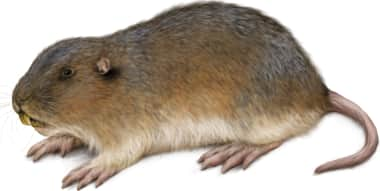
Western Pocket Gopher
Thomomys mazama
T. mazama is characterized by its medium size and dark coloration, typically dark brown to blackish. The upper incisors are smooth, lacking grooves. This is a key diagnos…
How to identify
T. mazama is characterized by its medium size and dark coloration, typically dark brown to blackish. The upper incisors are smooth, lacking grooves. This is a key diagnostic characteristic. Cranial characteristics, particularly the shape of the incisors and the size of the auditory bullae, are also important for distinguishing this species.
Range
T. mazama is found in the Cascade Mountains of Oregon and Washington, as well as in some isolated populations in northern California.
Habitat
T. mazama prefers well-drained soils in subalpine meadows, forests, and other high-elevation habitats in the Cascade Range.
Similar species
T. mazama can be confused with other dark-colored Thomomys species in areas where their ranges may overlap. Careful comparison of cranial characteristics is important for accurate identification.
Name and etymology
Genus
Thomomys
Greek for mound (thomos) mouse (mys)
Origin
Sources
- Palmer, Index Generum Mammalium (1904) ↗
Palmer, T. S. 1904. Index Generum Mammalium: a list of the genera and families of mammals. North American Fauna 23. Government Printing Office, Washington. https://doi.org/10.5962/bhl.title.39809
Species epithet
mazama
Named after Mount Mazama an ancient volcano that formed Crater Lake
Origin
Honors
Sources
- Wikipedia: Thomomys mazama ↗
“Thomomys mazama.” Wikipedia. https://en.wikipedia.org/wiki/Mazama_pocket_gopher
Explore more names in the etymology index.
At a glance
Range
T. mazama is found in the Cascade Mountains of Oregon and Washington, as well as in some isolated populations in northern Cal…
Habitat
T. mazama prefers well-drained soils in subalpine meadows, forests, and other high-elevation habitats in the Cascade Range.
Guide
Mammals of North America
Range map
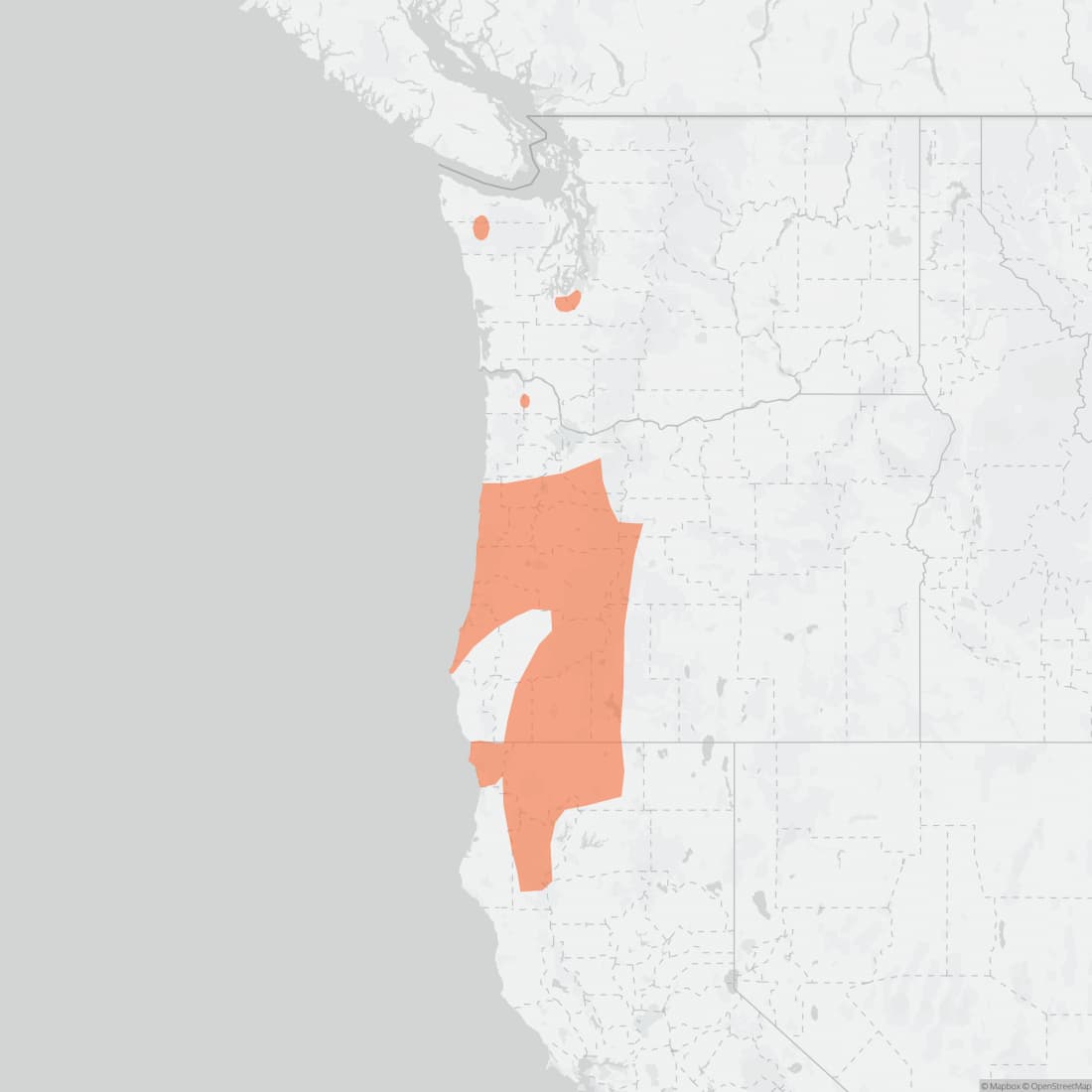
Approximate range. © Mapbox © OpenStreetMap