Yarrow's Spiny Lizard
Sceloporus jarrovii
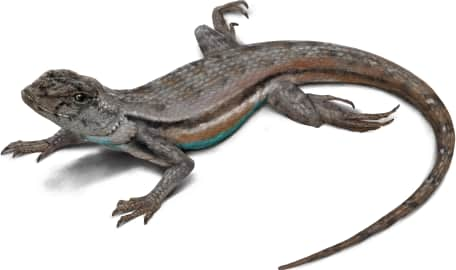
Snout-vent length can range up to 105 mm. Displays a thick black stripe around neck mimicking a collar that is bordered by a thin, white stripe. Dorsum is either gray or…
How to identify
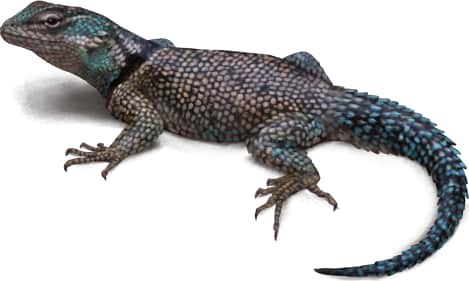
Snout-vent length can range up to 105 mm. Displays a thick black stripe around neck mimicking a collar that is bordered by a thin, white stripe. Dorsum is either gray or olive colored. Venter can be whitish or gray. Scales are large and keeled. Tail scales appear bigger than scales on rest of body. Males and females mate in the fall; females live-bear young in late June.
Range
From extreme southwestern New Mexico and southeastern Arizona southward through Durango and Zacatecas.
Habitat
Only found in mountainous areas like cliffs, rocky canyons, and hillsides. Terrain can be oak woodland, mixed oak and pine, and thornscrub. Occasionally climbs trees.
Variations
Males display blue markings on either side of venter and throat; females have either faint or no blue markings.
Similar species
Name and etymology
Genus
Sceloporus
Greek for leg (skelos) pores (porus), referencing femoral pores on back legs.
Origin
Sources
- Wiegmann, 1828. Isis von Oken, Vol. 21, p. 369 ↗
Sceloporus. Wiegmann, 1828 - Isis von Oken, Vol. 21, p. 369
Species epithet
jarrovii
Honors Henry C. Yarrow.
Origin
Honors
Sources
- Cope, 1875.
Sceloporus undulatus tristichus. Cope, 1875 -
Explore more names in the etymology index.
At a glance
Range
From extreme southwestern New Mexico and southeastern Arizona southward through Durango and Zacatecas.
Habitat
Only found in mountainous areas like cliffs, rocky canyons, and hillsides. Terrain can be oak woodland, mixed oak and pine, a…
Guide
Reptiles and Amphibians of North America
Range map
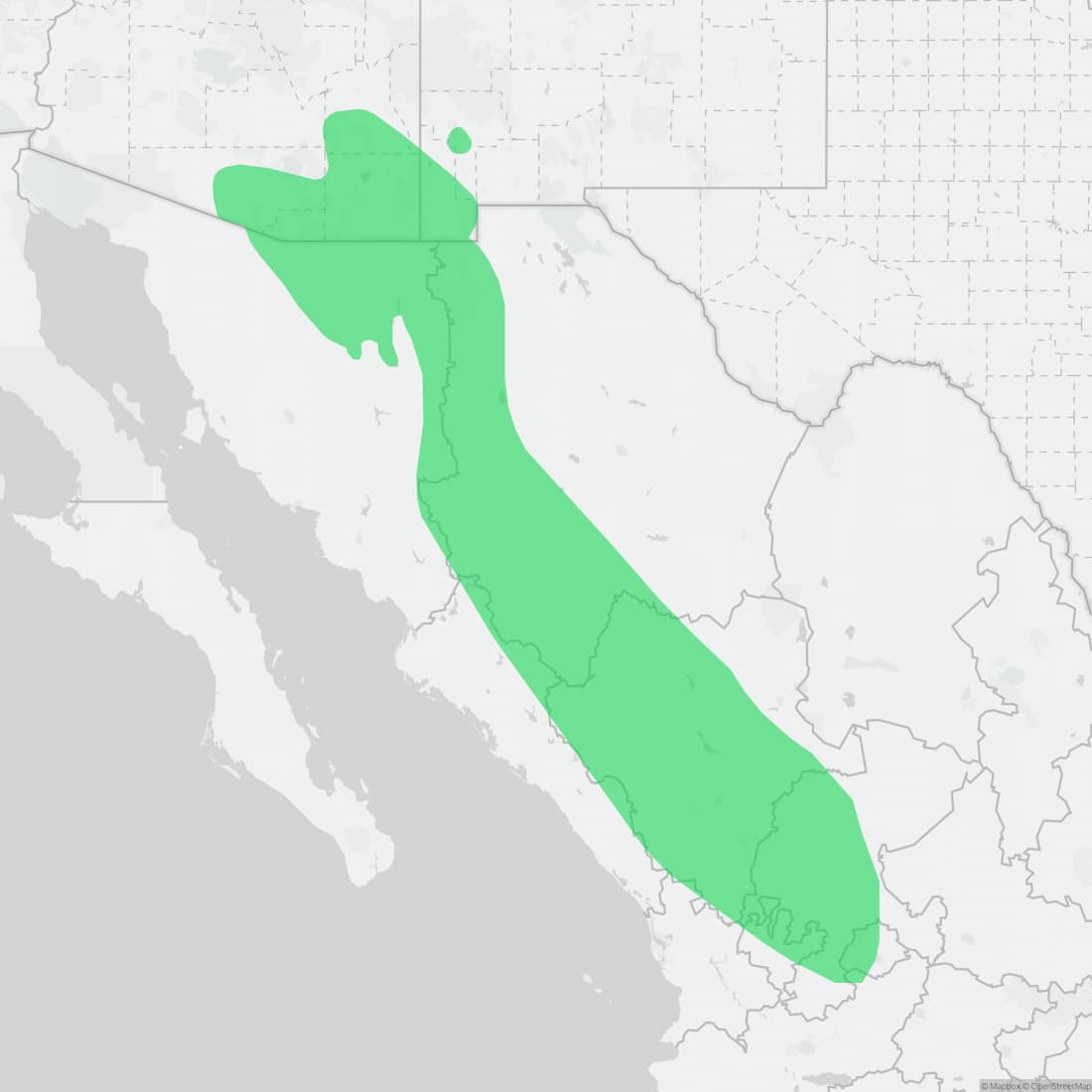
Approximate range. © Mapbox © OpenStreetMap