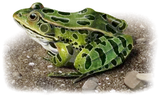
Dwarf Waterdog
Necturus punctatus
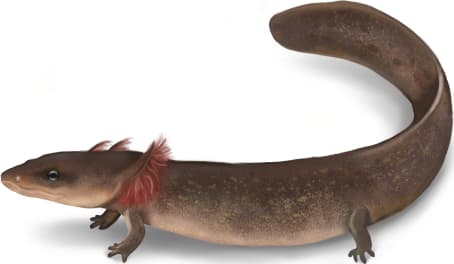
A small species of aquatic salamander that retains its juvenile features like external gills and tail fins. It is light brown with tan speckles, pink gills, and a pale un…
How to identify
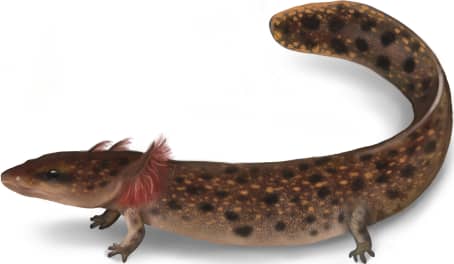
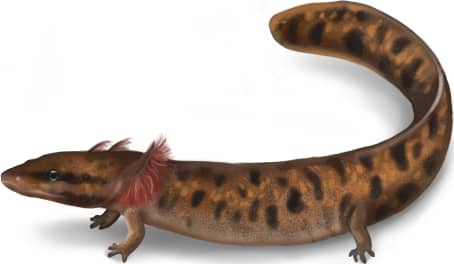
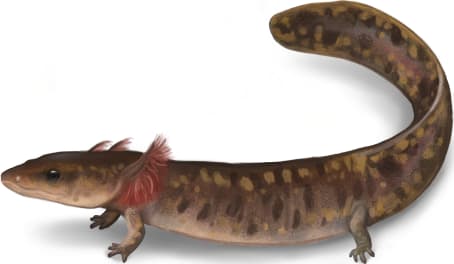
A small species of aquatic salamander that retains its juvenile features like external gills and tail fins. It is light brown with tan speckles, pink gills, and a pale underside. Its legs are tiny and underdeveloped and it has 4 toes on each foot. It has a lateral black bar across the center of its eye. Distinguished from other members of this family by the lack of any black spots. It has a bluish-white stripe down the midline of its ventrum.
Range
Central to eastern North and South Carolina and Georgia, as well as a small area of southeastern Virginia.
Habitat
Lives in slow-moving freshwater streams or irrigation ditches with muddy or sandy bottoms.
Variations
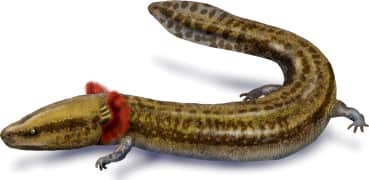
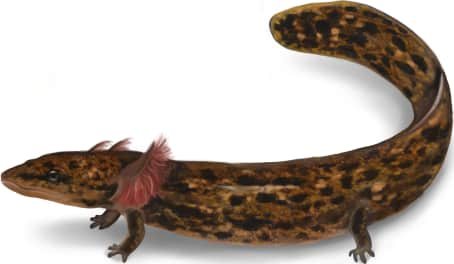
Color ranges from light tan to grey to nearly black.
Similar species
Similar morphology to other members of the genus *Necturus*, such as the common mudpuppy (*Necturus maculosus*), Alabama waterdog (*Necturus alabamensis*), or Red River mudpuppy (*Necturus louisianensis*), all of which have dissimilar dark markings.
Name and etymology
Genus
Necturus
Greek for swimming (nektos) tail (oura).
Origin
Sources
- Rafinesque, 1819. Journ. Phys. Chim. Hist. Nat. Blainville, Vol. 88, June, pp. 417-418
Necturus. Rafinesque, 1819 - Journ. Phys. Chim. Hist. Nat. Blainville, Vol. 88, June, pp. 417-418
Species epithet
punctatus
Latin for having spot
Origin
Sources
- (Gibbes, 1850). Proc. Amer. Assoc. Adv. Sci., Vol. 3, Charleston, p. 159
Necturus punctatus. (Gibbes, 1850) - Proc. Amer. Assoc. Adv. Sci., Vol. 3, Charleston, p. 159
Explore more names in the etymology index.
At a glance
Range
Central to eastern North and South Carolina and Georgia, as well as a small area of southeastern Virginia.
Habitat
Lives in slow-moving freshwater streams or irrigation ditches with muddy or sandy bottoms.
Guide
Reptiles and Amphibians of North America
Range map
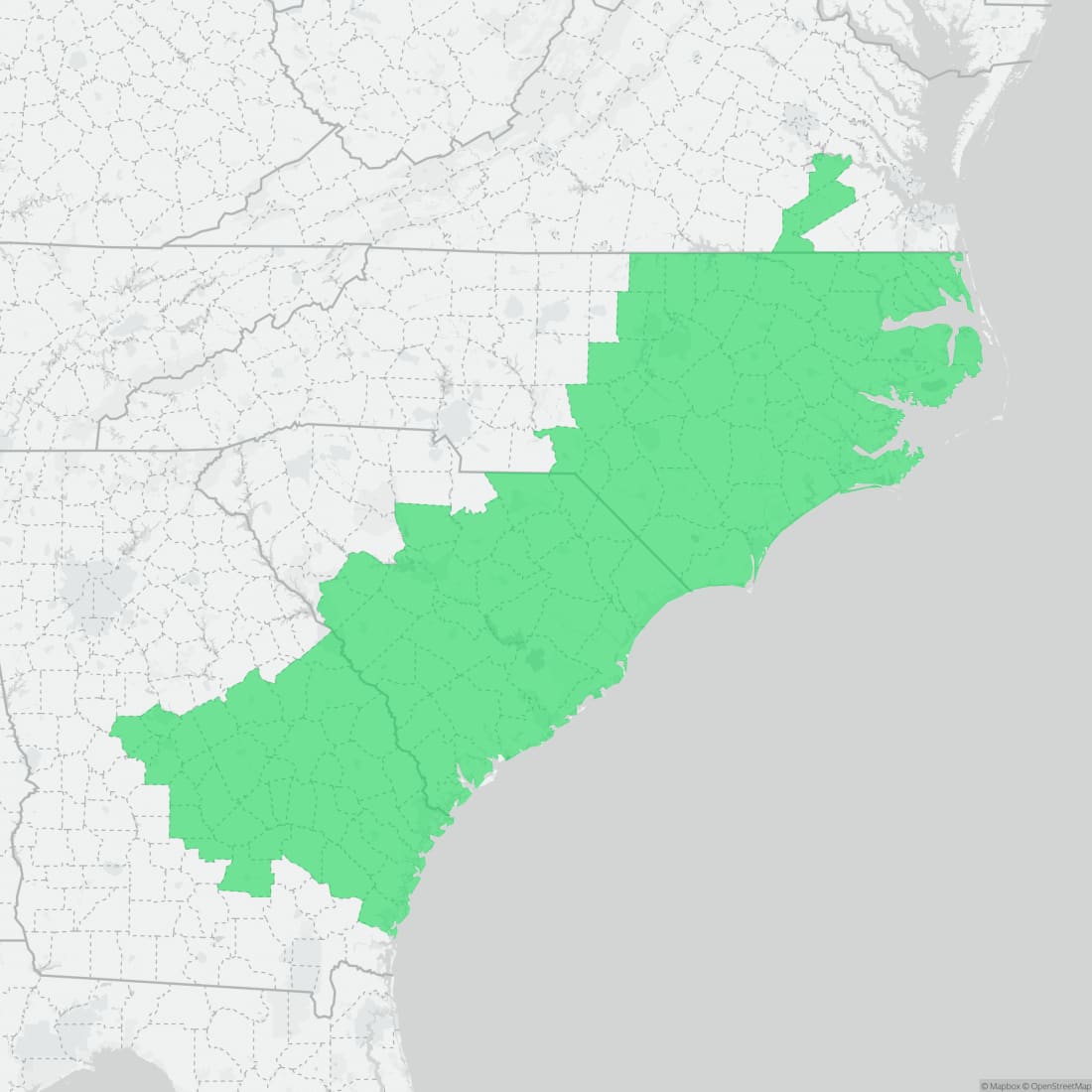
Approximate range. © Mapbox © OpenStreetMap