Gulf Coast Waterdog
Necturus beyeri
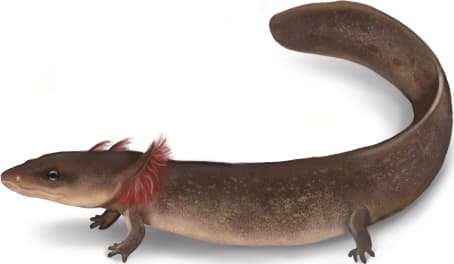
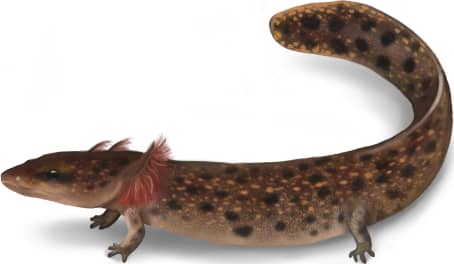
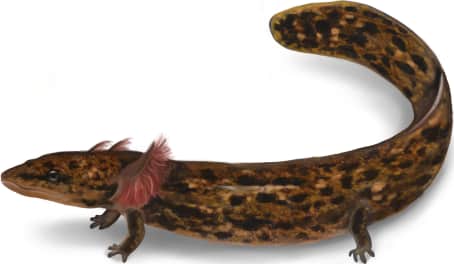
The adults of the Gulf Coast Waterdog or Necturus Beyeri are usually 6 to 8.5 inches in length with a light brown color skin having black speckles or spots that have a ne…
How to identify
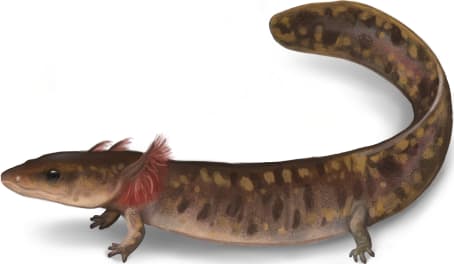
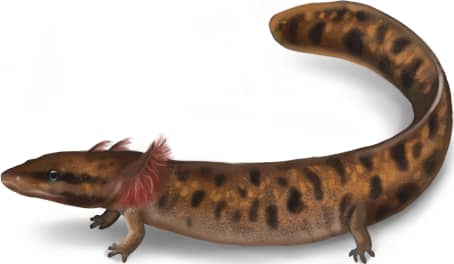
The adults of the Gulf Coast Waterdog or Necturus Beyeri are usually 6 to 8.5 inches in length with a light brown color skin having black speckles or spots that have a net-like structure. The spots are usually irregular in shape and arranged. Some individual members may have a dark stripe through the eye. It shows a delay in the physiological development of its members during growth process thus exhibiting neoteny. This species also retains its larva-like tail and gills into adulthood.
Range
The Gulf Coast waterdog or Necturus Beyeri is endemic to the southeastern United States. Its range includes, Alabama, Georgia, Florida, Mississippi and Texas.
Habitat
This species inhabits streams having sandy bottoms. The Gulf Coast waterdog or Necturus Beyeri can also be found in large rivers and standing backwater. It could hide in debris, remain on the substrate or burrow into it. This species consumes fish, eggs, aquatic mollusks, worms and other small aquatic life forms. The fertilization process is made feasible by spermatophores. To offer protection from aquatic predators, eggs are often laid on the bottom surface of debris.
Variations
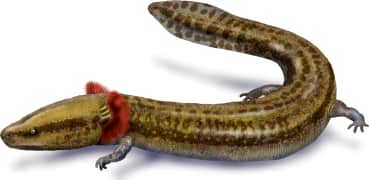
The Alabama Waterdog or Necturus alabamensis is genetically inseparable from the Gulf Coast Waterdog. This species has four toes and a tail that is laterally compressed. The gills are busy, red and permanent. It has no spotting and exhibit a black or brown dorsum.
Similar species
The Neuse River Waterdog or Necturus lewisi is rusty-brown on its dorsal side and has many large, bluish-black spots. The snout of this species is also compressed dorsally and it is truncated. The common mudpuppy or Necturus maculosus possesses a rusty brown skin color with grey and black and has a blackish-blue spot. They exhibit larger gills in stagnant water but have a smaller one in running streams. The dwarf waterdog or Necturus punctatus has no black spot and is dark brown above and its belly is gray in color with a bluish-white band across the midline.
Name and etymology
Genus
Necturus
Greek for swimming (nektos) tail (oura).
Origin
Sources
- Rafinesque, 1819. Journ. Phys. Chim. Hist. Nat. Blainville, Vol. 88, June, pp. 417-418
Necturus. Rafinesque, 1819 - Journ. Phys. Chim. Hist. Nat. Blainville, Vol. 88, June, pp. 417-418
Species epithet
beyeri
Honoring George E. Beyer.
Origin
Honors
Sources
- Viosca, 1937. Copeia, p. 123 ↗
Necturus beyeri. Viosca, 1937 - Copeia, p. 123
Explore more names in the etymology index.
At a glance
Range
The Gulf Coast waterdog or Necturus Beyeri is endemic to the southeastern United States. Its range includes, Alabama, Georgia…
Habitat
This species inhabits streams having sandy bottoms. The Gulf Coast waterdog or Necturus Beyeri can also be found in large riv…
Guide
Reptiles and Amphibians of North America
Range map
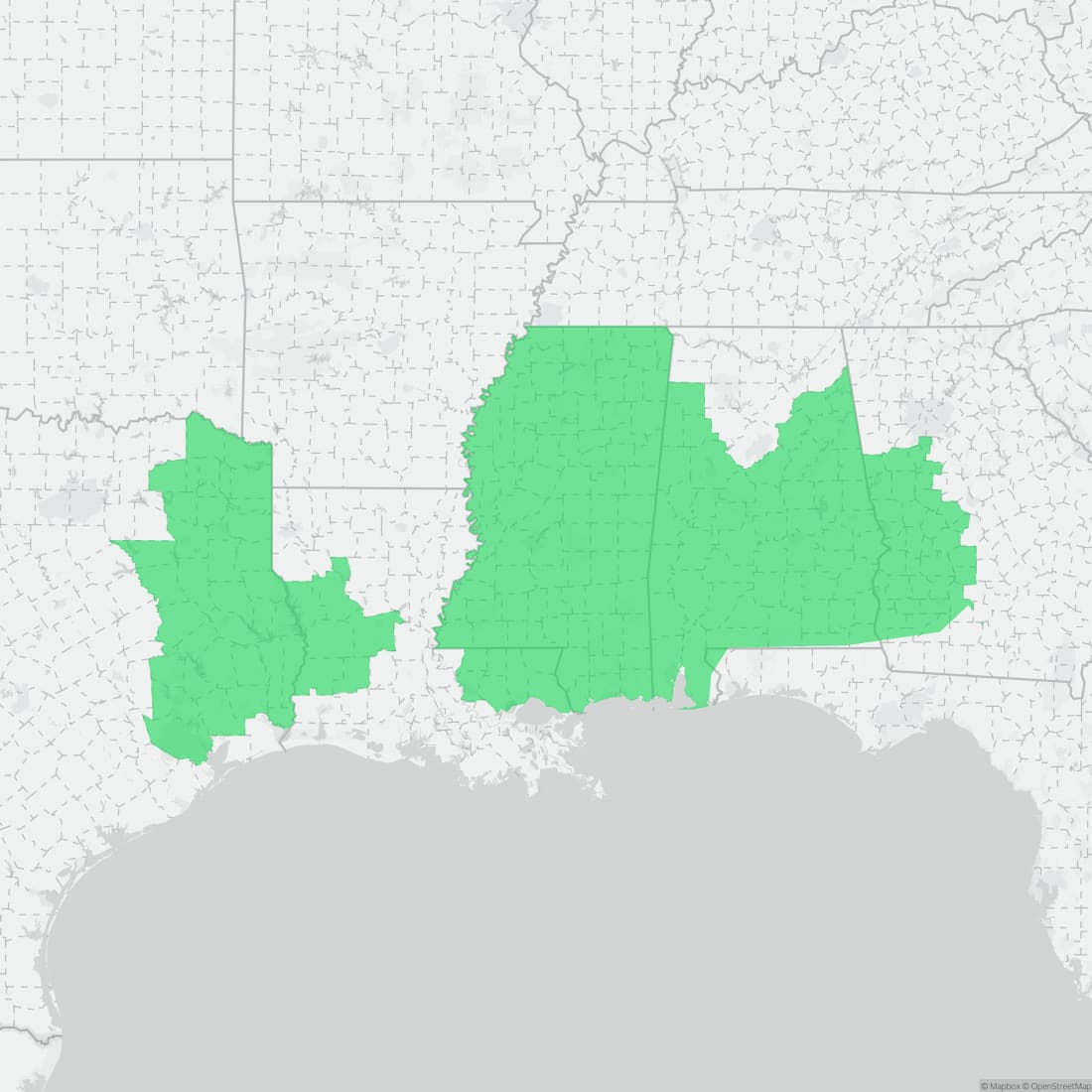
Approximate range. © Mapbox © OpenStreetMap