Shasta Black Salamander
Aneides iecanus
Aneides iecanus belongs to the Aneides flavipunctatus complex of robust black salamanders with white speckles. It has a large triangular head with strong jaws and nasolab…
How to identify
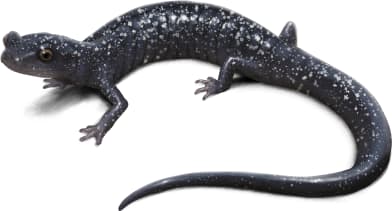
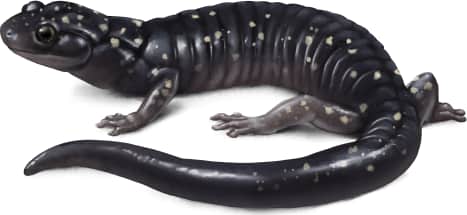
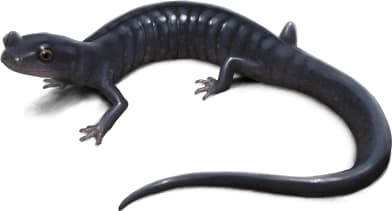
Aneides iecanus belongs to the Aneides flavipunctatus complex of robust black salamanders with white speckles. It has a large triangular head with strong jaws and nasolabial grooves. The snout-vent length averages 75.8 mm in males and 70.1 mm in females. It has moderately long limbs that are separated by three intercostal spaces and slender digits with terminal expansions. The tail is moderately long and can regenerate if lost. The coloration is black with moderate to heavy white speckling on the head, body, and tail, which is consistent in both adults and juveniles.
Range
Aneides iecanus inhabits the north-central and western parts of Shasta County and extends into the southeastern corner of Siskiyou County in California, USA. Its range may also include the Central Valley edges of the Coast Ranges in western Tehama and Glenn Counties, California, USA.
Habitat
Aneides iecanus is mainly found below 1000 m elevation near Shasta Lake and Castle Crags, where it lives near streams and on steep canyon slopes.
Similar species
Aneides iecanus belongs to the Aneides flavipunctatus complex, which includes three other species that share a similar body size and shape. However, A. iecanus can be identified by its heavy speckling and geographic range, as well as having fewer trunk vertebrae than A. klamathensis and A. niger. It differs from A. aeneus by its larger and rounder body, shorter limbs and digits, and black coloration. It is bigger and more robust than A. hardii, A. ferreus, and A. vagrans, which also have more prehensile tails and longer digits and limbs. It is smaller and darker than A. lugubris, which has a lighter coloration, more prehensile tail, and longer limbs and digits. No other Aneides species coexists with A. iecanus in the same area.
Name and etymology
Genus
Aneides
Greek for lacking (an-) shape (eidos).
Origin
Sources
- Baird, 1849.
Aneides. Baird, 1849 -
Species epithet
iecanus
Derived from local Native American word "Iëka" referencing Mount Shasta.
Origin
Sources
- Wikipedia: Aneides iecanus ↗
“Aneides iecanus.” Wikipedia. https://en.wikipedia.org/wiki/Shasta_black_salamander
Explore more names in the etymology index.
More illustrations
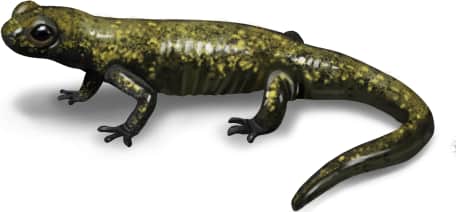
Juvenile
At a glance
Range
Aneides iecanus inhabits the north-central and western parts of Shasta County and extends into the southeastern corner of Sis…
Habitat
Aneides iecanus is mainly found below 1000 m elevation near Shasta Lake and Castle Crags, where it lives near streams and on…
Guide
Reptiles and Amphibians of North America
Range map
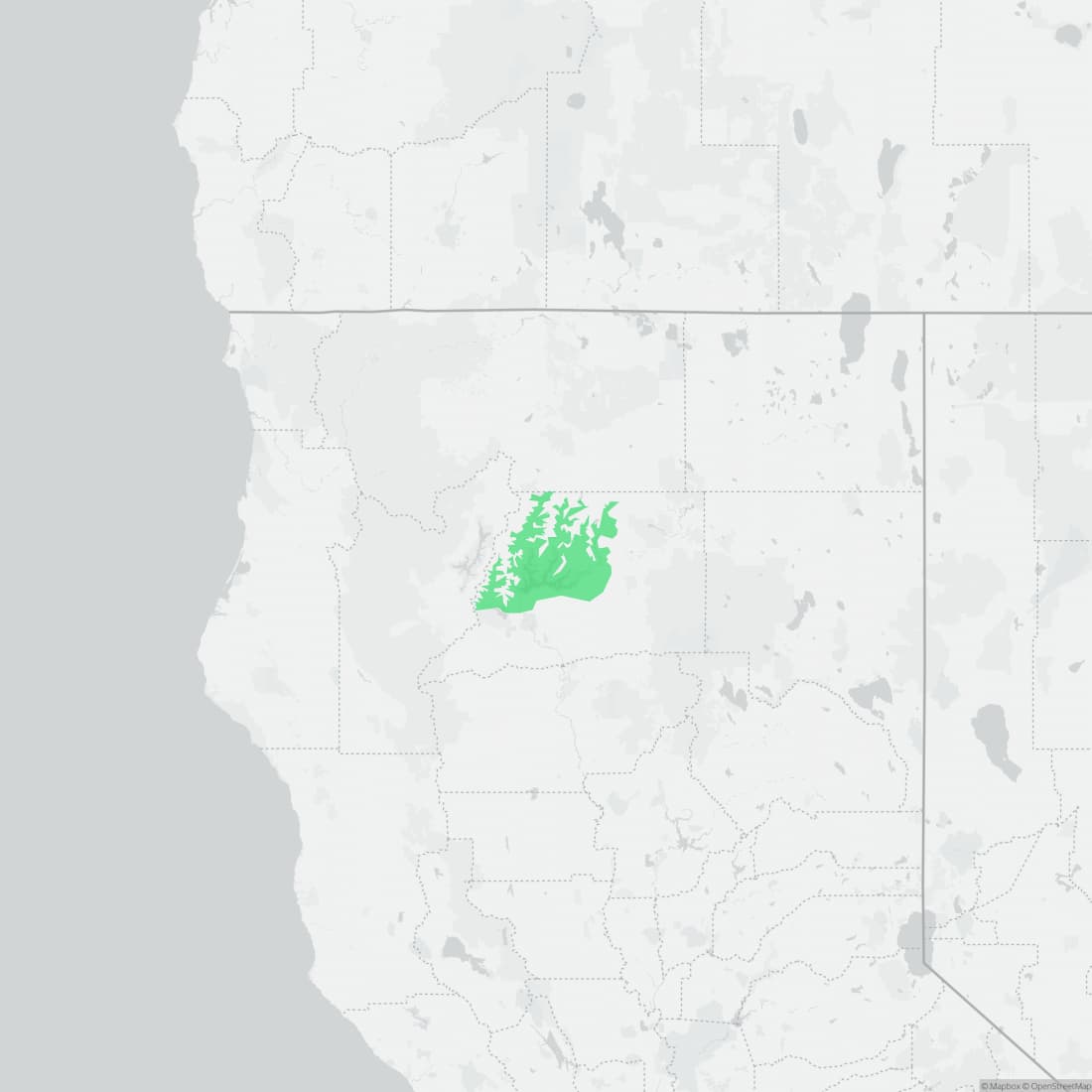
Approximate range. © Mapbox © OpenStreetMap