Klamath Black Salamander
Aneides klamathensis
Aneides klamathensis belongs to the Aneides flavipunctatus complex and has a large and robust body. Its standard length ranges from 68.2 mm to 84.8 mm depending on the se…
How to identify
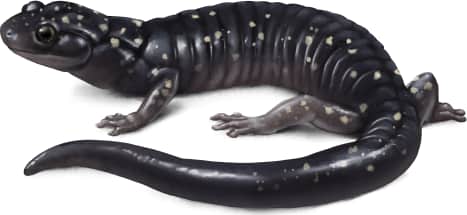
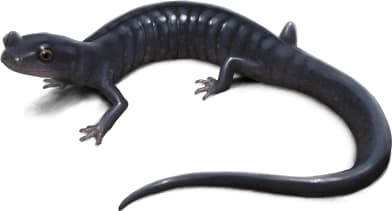
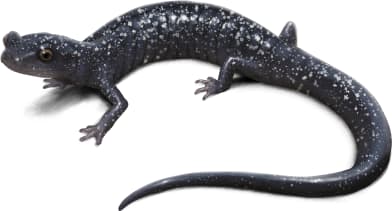
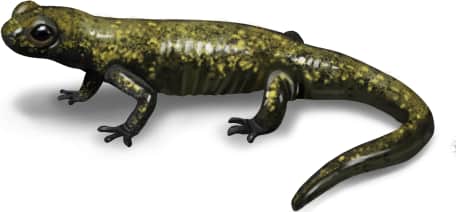
Aneides klamathensis belongs to the Aneides flavipunctatus complex and has a large and robust body. Its standard length ranges from 68.2 mm to 84.8 mm depending on the sex, but its total length is often distorted by tail regeneration. It has a very large and flat head with a broad and rounded snout that protrudes beyond the lower jaw. The nostrils are closer to the snout than the eye and are less apart than the eyes. The nasolabial protuberances are modest and the jaw muscles are prominent and bulging. The eyes are moderately large and prominent but not protruding. The number of premaxillary teeth varies from 3 to 8 depending on the sex. It has a large and prominent mental gland that is oval-shaped and wider than long. The head has distinct integumentary grooves and a well-defined neck. A. klamathensis has a black body and various patterns of white markings. The back and sides are sprinkled with white or gray, while the belly has white speckles that increase with size. Some individuals have cream-colored patches on their limbs. The eyes and pupils are dark. When preserved, the black color remains on most of the body, except for some white spots on the edges and limbs. The chin, throat, hands, feet and tail tip are unpigmented or pale. The mental gland and nasolabial features are also lightly pigmented or not at all.
Range
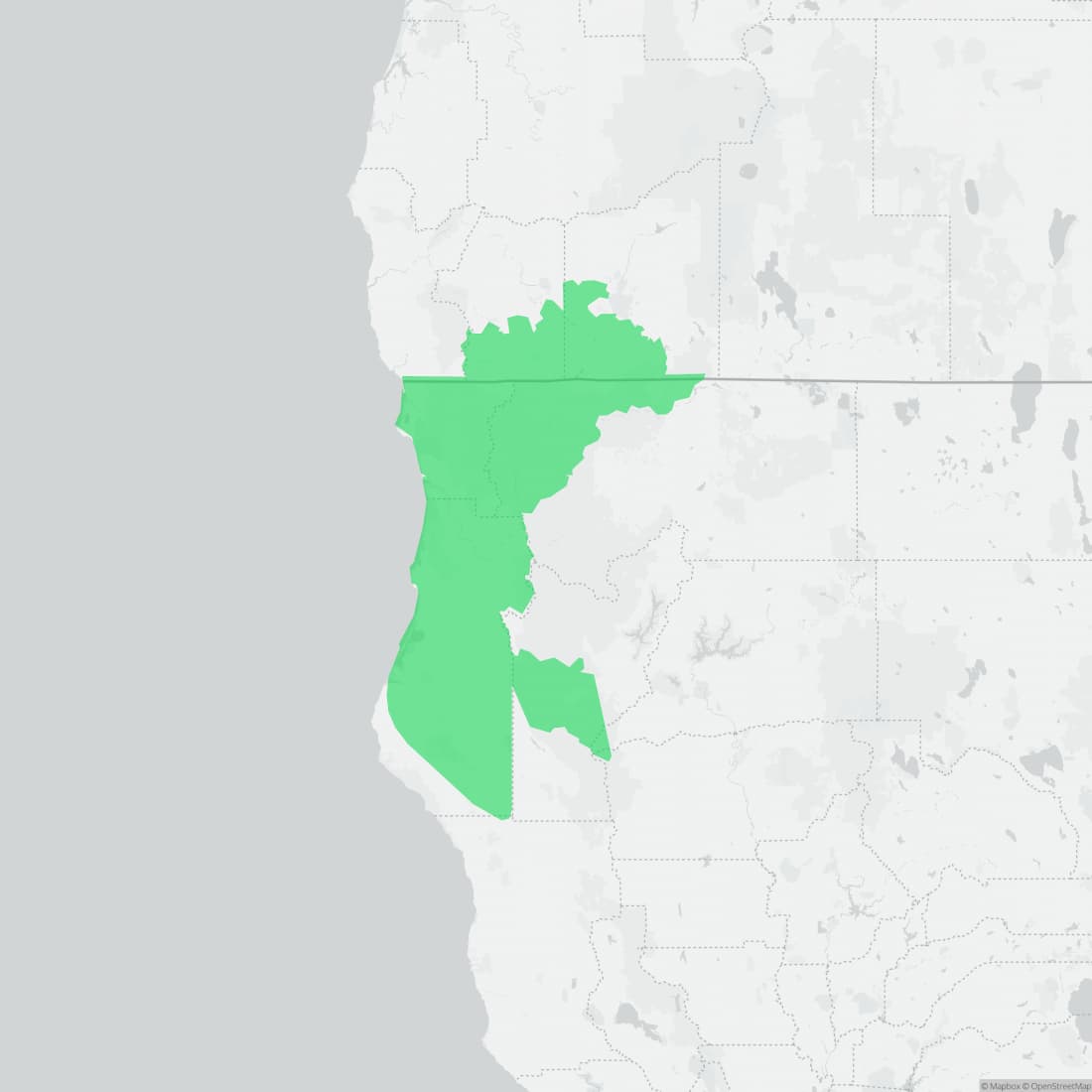
Aneides klamathensis habitat covers parts of northern California and southern Oregon in the USA, including Jackson County in Oregon and Del Norte, Siskiyou, and Humboldt Counties in California. It inhabits areas near the Applegate, Smith, Klamath, Trinity, and Van Duzen rivers.
Habitat
Aneides klamathensis usually occurs at low elevations below 500 m, but it has been recorded at around 1000 m near Hilt in Siskiyou County. A. klamathensis is a terrestrial salamander found in moss-covered rockslides and under surface covers in conifer forests.
Similar species
Aneides klamathensis is a salamander species that belongs to the A. flavipunctatus complex, but has several distinctive features. It has a medium-sized body, short limbs, and a strong and flexible tail. It also has some white spots on its back, unlike the solid black A. niger. It differs from other closely related species in the number of dorsal iridophores and trunk vertebrae. Its geographical range overlaps with A. flavipunctatus in Humboldt County, California, where they are hard to tell apart by morphology alone. DNA analysis is needed to confirm their identity.
Name and etymology
Genus
Aneides
Greek for lacking (an-) shape (eidos).
Origin
Sources
- Baird, 1849.
Aneides. Baird, 1849 -
Species epithet
klamathensis
Referencing the Klamath Mountains of Northern California.
Origin
Sources
- Wikipedia: Aneides klamathensis ↗
“Aneides klamathensis.” Wikipedia. https://en.wikipedia.org/wiki/Klamath_black_salamander
Explore more names in the etymology index.
More illustrations
Juvenile
At a glance
Range
Aneides klamathensis habitat covers parts of northern California and southern Oregon in the USA, including Jackson County in…
Habitat
Aneides klamathensis usually occurs at low elevations below 500 m, but it has been recorded at around 1000 m near Hilt in Sis…
Guide
Reptiles and Amphibians of North America
Range map
Approximate range. © Mapbox © OpenStreetMap