Desert Night Lizard
Xantusia vigilis
A long, narrow-bodied lizard with a somewhat dull appearance and a thick tail. Its head is small with relatively large, round eyes. Its smallish legs are set far apart. I…
How to identify
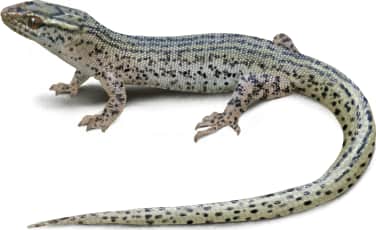
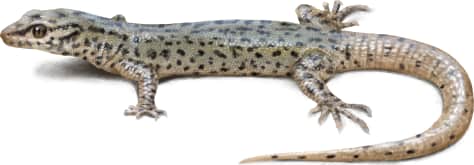
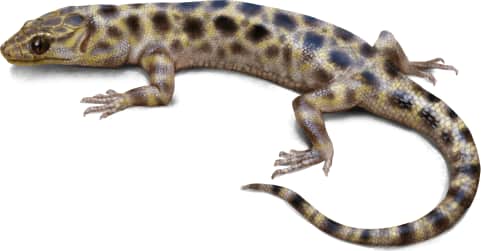
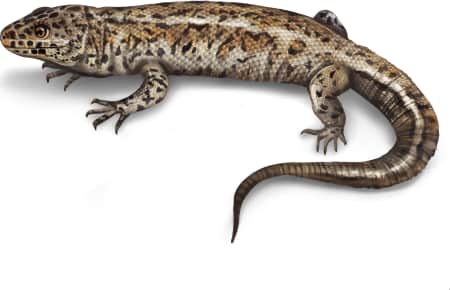
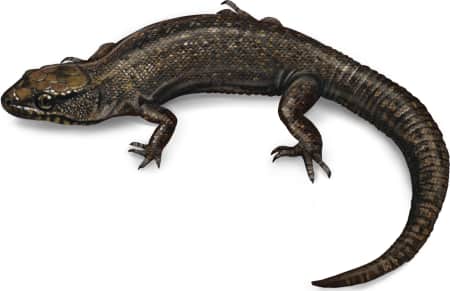
A long, narrow-bodied lizard with a somewhat dull appearance and a thick tail. Its head is small with relatively large, round eyes. Its smallish legs are set far apart. It is primarily olive-grey with slightly darker faded speckling all over. The speckles are arranged in several lines down the center of its back. It has a single light stripe running from behind each eye and fading into the neck. It is known to change color to a darker brown during the day. The scales on its head are shiny and smooth, while its body scales are granulated. It reaches a total length of 3-5.5 inches.
Range
Most of inland southern California through southern Nevada and far western Arizona. Also some areas of southern Utah.
Habitat
Inhabits arid or semi-arid environments, often near various yucca species such as the Joshua tree, Spanish dagger, or Spanish bayonet. It usually hides under natural ground debris, inside plants, or between rocks.
Variations
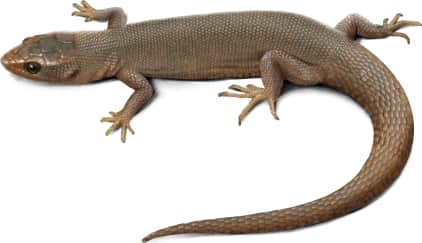
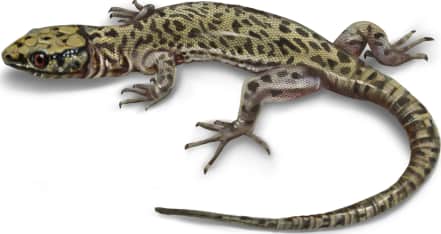
Some have more distinct speckled patterning, while others have very faded markings.
Similar species
Most similar to the Baja California (Wiggins') night lizard (*Xantusia wigginsi*).
Name and etymology
Genus
Xantusia
Honoring John Xantus
Origin
Honors
Sources
- Baird, 1858. Proc. Acad. Nat. Sci. Philadelphia, Vol. 10, p. 255 ↗
Xantusia. Baird, 1858 - Proc. Acad. Nat. Sci. Philadelphia, Vol. 10, p. 255
Species epithet
vigilis
Latin for watchful or vigilant (vigilia)
Origin
Sources
- Baird, 1858. Proc. Acad. Nat. Sci. Philadelphia, Vol. 10, p. 255 ↗
Xantusia. Baird, 1858 - Proc. Acad. Nat. Sci. Philadelphia, Vol. 10, p. 255
Explore more names in the etymology index.
At a glance
Range
Most of inland southern California through southern Nevada and far western Arizona. Also some areas of southern Utah.
Habitat
Inhabits arid or semi-arid environments, often near various yucca species such as the Joshua tree, Spanish dagger, or Spanish…
Guide
Reptiles and Amphibians of North America
Range map
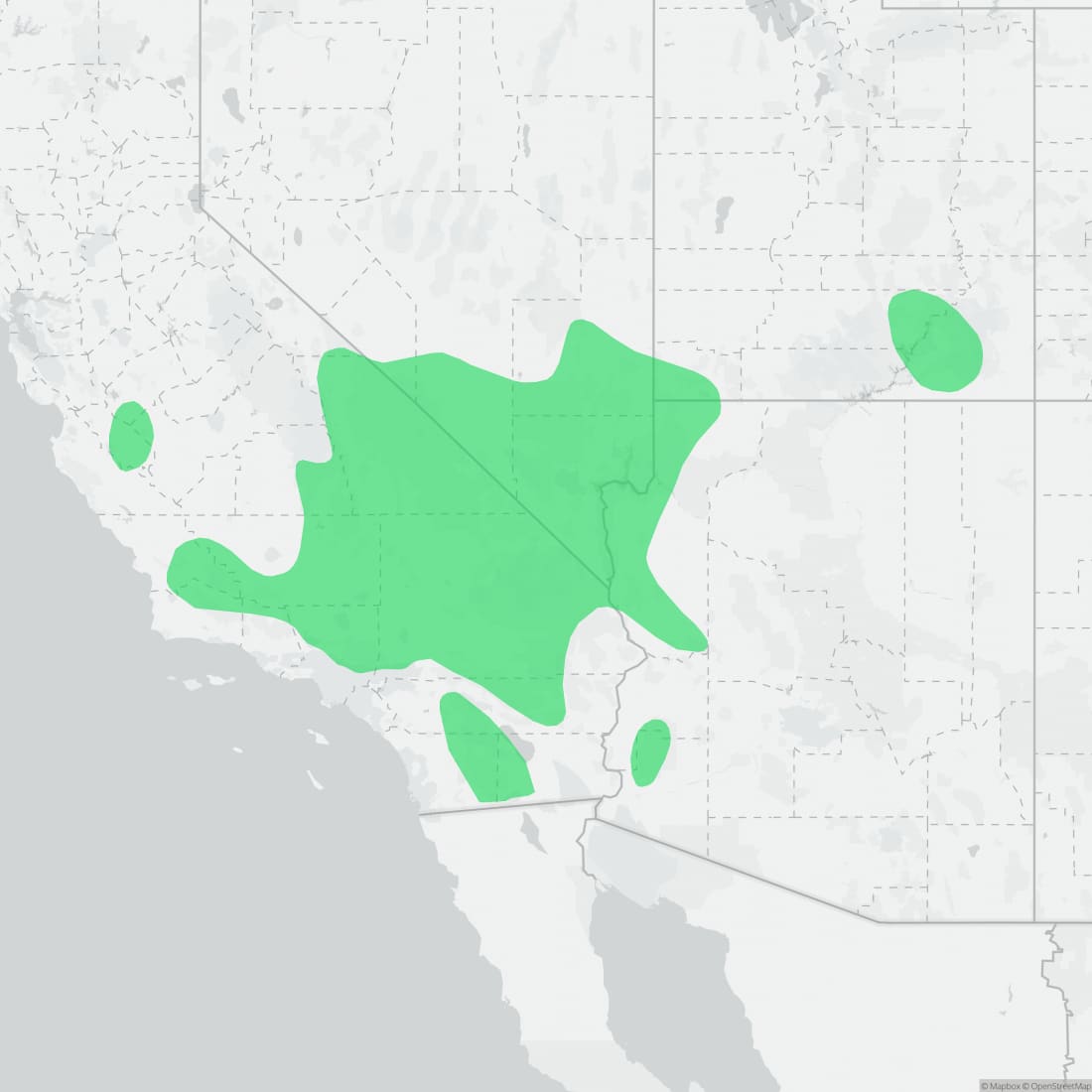
Approximate range. © Mapbox © OpenStreetMap