Chihuahuan Nightsnake
Hypsiglena jani
This snake averages 10-16 inches in length and has a light tan background with dark tan patterning. The top of its head is solid dark tan, with a light tan jawline. It ha…
How to identify
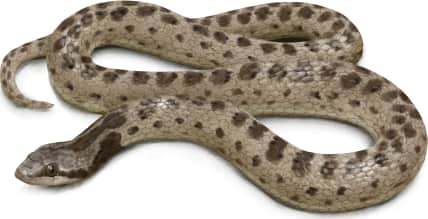
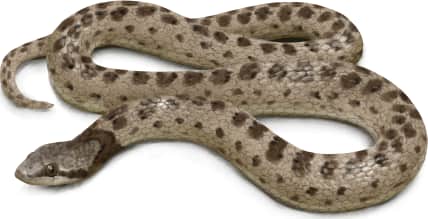
This snake averages 10-16 inches in length and has a light tan background with dark tan patterning. The top of its head is solid dark tan, with a light tan jawline. It has more prevalent dark tan on its neck, which can be a solid collar, or irregular thick patterning. The pattern down its body consists of large blotches down the center, sometimes in 2 alternating rows, with smaller irregular spots on the sides of its body. Ventrum is unmarked and pale. Has vertically elliptical pupils.
Range
Central and west Texas through most of New Mexico and north into western Oklahoma and southeastern Colorado. Also extends south into central Mexico.
Habitat
Can be found in a wide range of habitats, but generally prefers rocky soil and semi-arid surroundings. Most abundant in desert scrub and grassland areas in elevations from 3000-8500 feet. As its name suggests, it is a nocturnal snake.
Variations
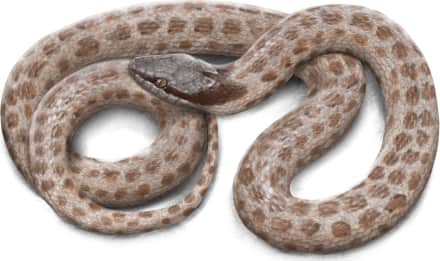
Colors can be shades of grey rather than tan, or have a reddish hue. Blotches can be large or less prominent, and sometimes appear blurry and less defined.
Similar species
Looks most like the Coast nightsnake (*Hypsiglena ochrorhynchus*) which is found in California and the Baja Peninsula. Also similar to the desert nightsnake (*Hypsiglena chlorophaea*) which has a range further west than the Chihuahuan nightsnake and tends to be lighter with less patterning.
Name and etymology
Genus
Hypsiglena
Greek for high (hypsi) eyeball (glenes).
Origin
Sources
- Cope, 1860. Proc. Acad. Nat. Sci. Philadelphia, Vol. 12, p. 246 ↗
Hypsiglena. Cope, 1860 - Proc. Acad. Nat. Sci. Philadelphia, Vol. 12, p. 246
Species epithet
jani
Honoring George Jan.
Origin
Honors
Sources
- (Duges, 1866). Mem. Acad. Sci. Lett. Montpellier, Vol. 6, p. 32
Hypsiglena torquata jani. (Duges, 1866) - Mem. Acad. Sci. Lett. Montpellier, Vol. 6, p. 32
Explore more names in the etymology index.
At a glance
Range
Central and west Texas through most of New Mexico and north into western Oklahoma and southeastern Colorado. Also extends sou…
Habitat
Can be found in a wide range of habitats, but generally prefers rocky soil and semi-arid surroundings. Most abundant in deser…
Guide
Reptiles and Amphibians of North America
Range map
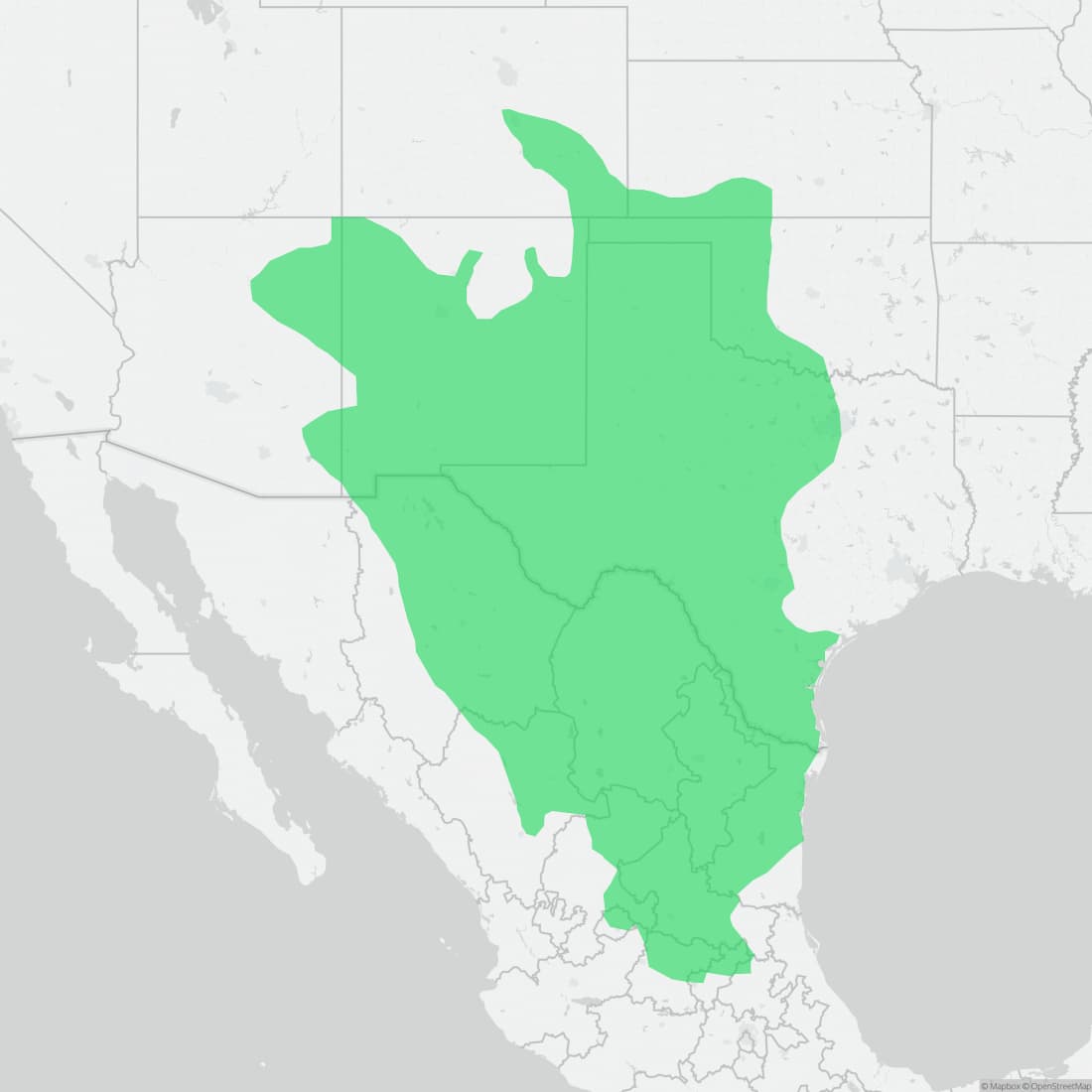
Approximate range. © Mapbox © OpenStreetMap