Desert Nightsnake
Hypsiglena chlorophaea
Mildly venomous, not considered dangerous to humans. Adult length between 8 and 26 inches, however rare to see any over 16 inches long. Small and slender with narrow, fla…
How to identify
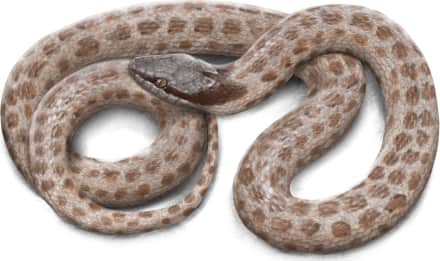
Mildly venomous, not considered dangerous to humans. Adult length between 8 and 26 inches, however rare to see any over 16 inches long. Small and slender with narrow, flat head. 21 rows of smooth scales, vertical pupils. Color varies based on habitat & substrate, occurs in shades of light brown, beige, tan, cream, or light grey. Dark brown or grey blotches on dorsum and sides. Typically have a pair of large dark marks on neck. Light colored, white or yellow, undersides.
Range
Found in the western United States and northern Mexico. Range extends north to Washington, south to Sinaloa, east to Utah, and west to the Pacific Ocean.
Habitat
Terrestrial. Arid regions such as deserts, meadows, grasslands, and suburban lots. Typically found in areas with abundant foliage.
Similar species
Name and etymology
Genus
Hypsiglena
Greek for high (hypsi) eyeball (glenes).
Origin
Sources
- Cope, 1860. Proc. Acad. Nat. Sci. Philadelphia, Vol. 12, p. 246 ↗
Hypsiglena. Cope, 1860 - Proc. Acad. Nat. Sci. Philadelphia, Vol. 12, p. 246
Species epithet
chlorophaea
Greek for dark (phaios) green (chloros).
Origin
Sources
- Wikipedia: Hypsiglena chlorophaea ↗
“Hypsiglena chlorophaea.” Wikipedia. https://en.wikipedia.org/wiki/Hypsiglena_chlorophaea
Explore more names in the etymology index.
At a glance
Range
Found in the western United States and northern Mexico. Range extends north to Washington, south to Sinaloa, east to Utah, an…
Habitat
Terrestrial. Arid regions such as deserts, meadows, grasslands, and suburban lots. Typically found in areas with abundant fol…
Guide
Reptiles and Amphibians of North America
Range map
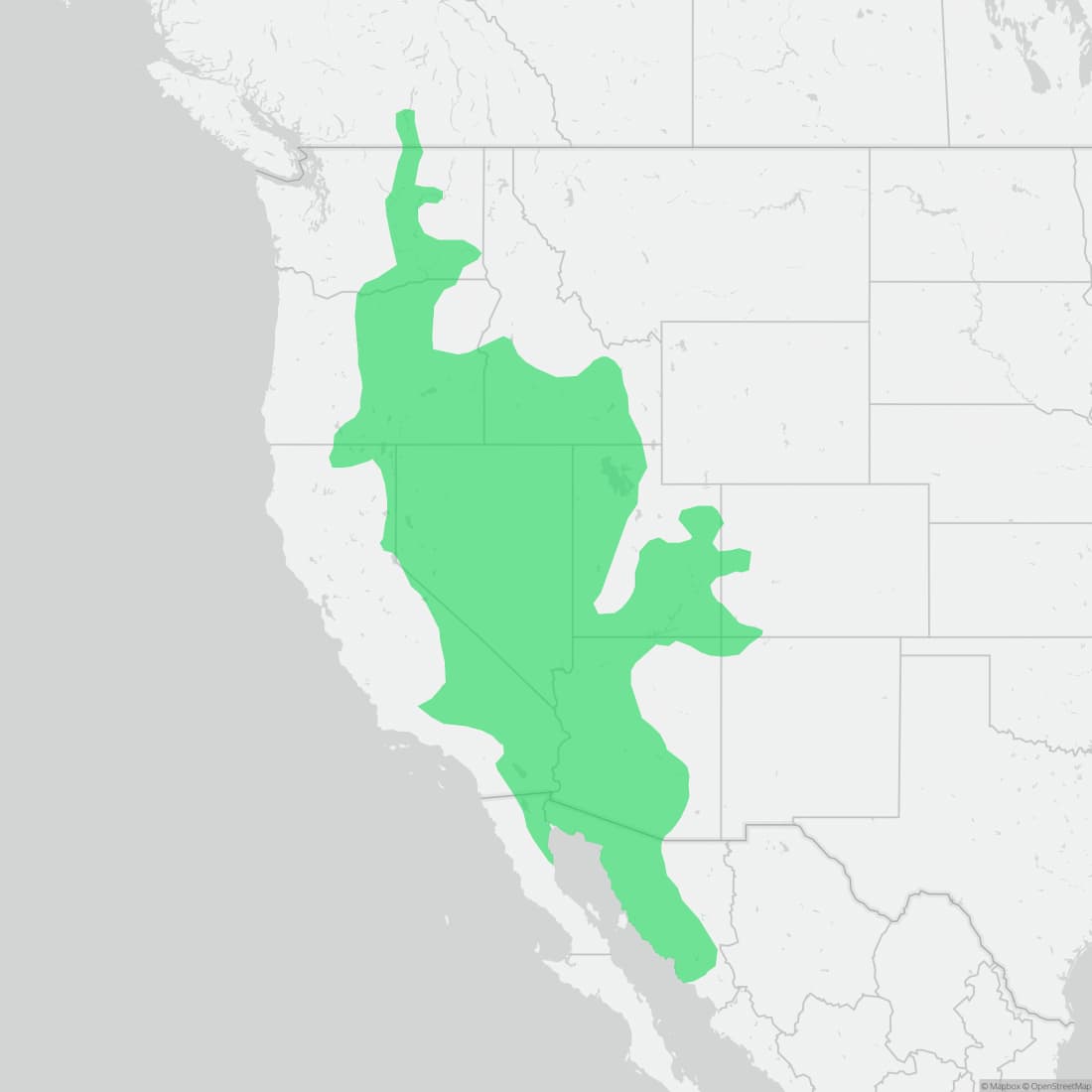
Approximate range. © Mapbox © OpenStreetMap