Sonoran Lyre Snake
Trimorphodon lambda
These are medium-sized snakes which grow to about 1,026 mm at the adult stage. They are light grey-brown or grey. They have a distinct dark brown lyre-shaped marking on t…
How to identify
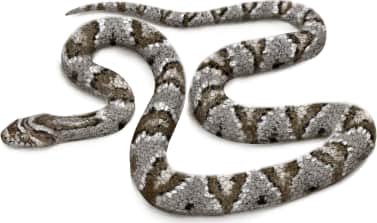
These are medium-sized snakes which grow to about 1,026 mm at the adult stage. They are light grey-brown or grey. They have a distinct dark brown lyre-shaped marking on their heads. They also have a dark bar which crosses the middle of their eyes. They usually have a mean of twenty-four dark, orange-brown, jagged-edged blotching on their backs. These snakes also have broad heads which are easily distinguishable from their slim necks. They have big eyes with vertically elliptical pupils. Little dark markings can also be noticed on the sides of the snake’s body. These can be seen through the middle of the main markings. It has been noticed that their undersides have dark brown markings.
Range
This snake can be located in most of southern Arizona and are typically located towards the western part of the state.
Habitat
They have been found in rocky habitats above the flats. They are nocturnal but bask during warm days during spring and fall. Their diet is made of mammals, reptiles, birds among others. They lay in clutches comprising of about twenty eggs. These are given birth to late in the summer.
Similar species
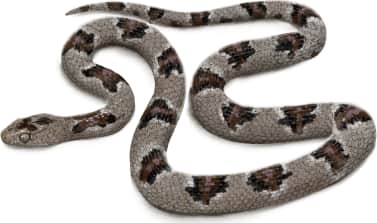
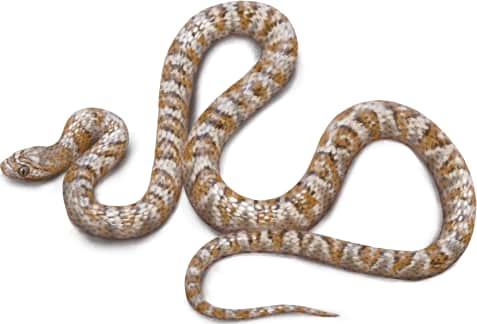
The Western Lyresnake or the Trimorphodon biscutatus. These are moderate-sized snakes that grow to about 1,000 mm. They are mostly brown, tan or grey. This background colour is then marked by dark brown blotching on its back. The Texas Lyresnake or the Trimorphodon vilkinsonii. They are also medium-sized snakes approximately 1,000 mm. They are also brown tan or grey with about 17 – 24 brown blotches on its back. The California Lyresnake or the Trimorphodon lyrophanes. These differ from the Sonoran lyre snake as they have more dark blotches on their bodies. These usually average 34. These body blotches are also more narrowly separated.
Name and etymology
Genus
Trimorphodon
Greek for three (tri) shape (morph) teeth (odon).
Origin
Sources
- Cope, 1861. Proc. Acad. Nat. Sci. Philadelphia, Vol. 13, p. 297 ↗
Trimorphodon. Cope, 1861 - Proc. Acad. Nat. Sci. Philadelphia, Vol. 13, p. 297
Species epithet
lambda
Greek letter of the alphabet.
Origin
Sources
- Cope, 1886. Proc. Amer. Philos. Soc., Vol. 23, p. 286 ↗
Trimorphodon biscutatus lambda. Cope, 1886 - Proc. Amer. Philos. Soc., Vol. 23, p. 286
Explore more names in the etymology index.
At a glance
Range
This snake can be located in most of southern Arizona and are typically located towards the western part of the state.
Habitat
They have been found in rocky habitats above the flats. They are nocturnal but bask during warm days during spring and fall.…
Guide
Reptiles and Amphibians of North America
Range map
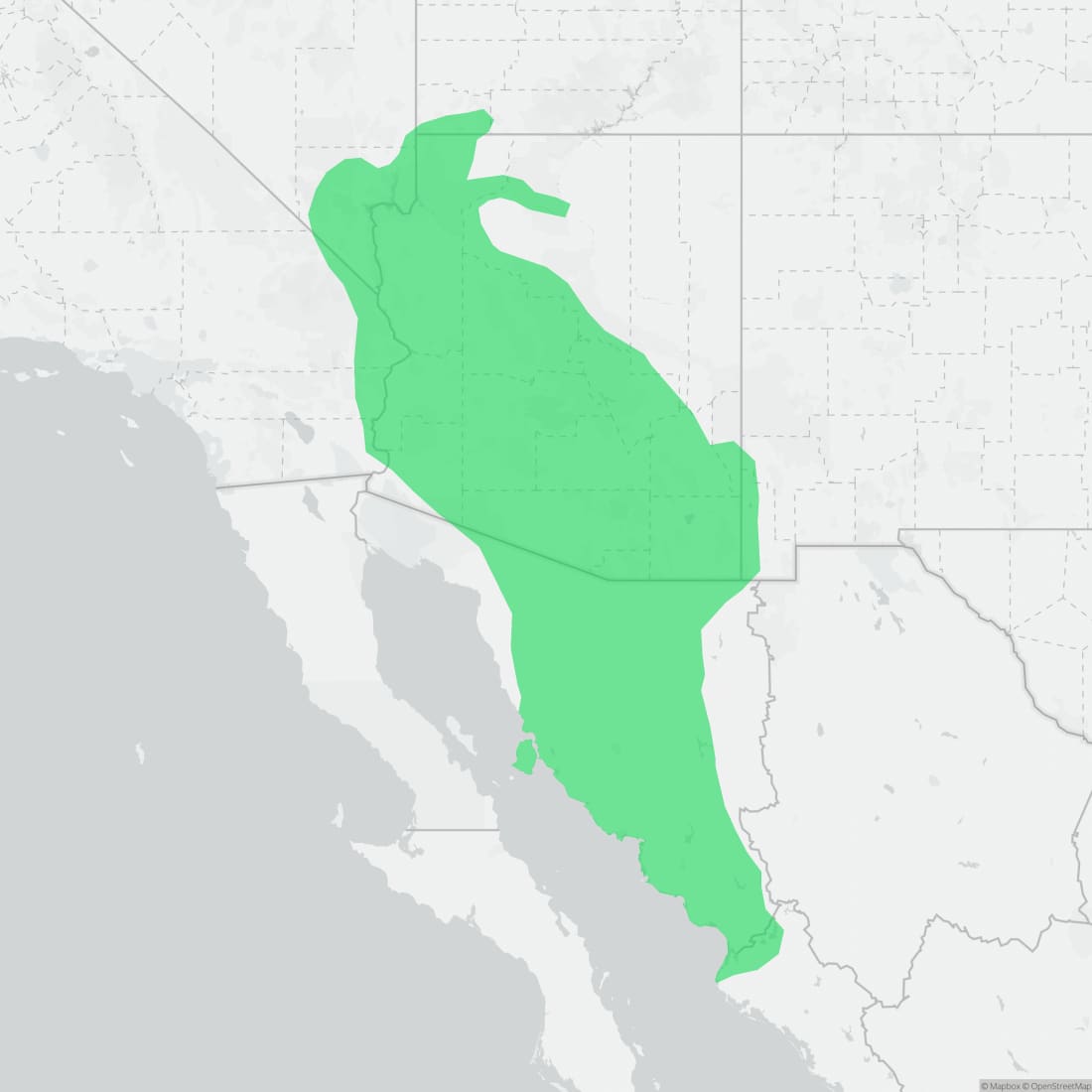
Approximate range. © Mapbox © OpenStreetMap