Southern Zigzag Salamander
Plethodon ventralis
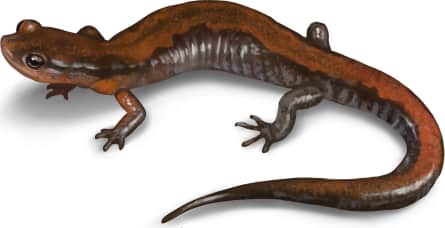
The Southern zigzag salamander is a dark grey colored salamander with a wavy or a more like jagged “zigzag” stripe which runs down back, however this stripe is usually da…
How to identify
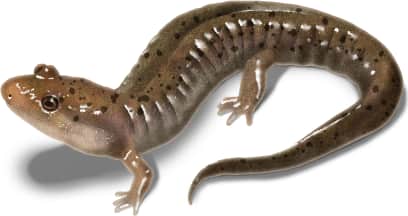
The Southern zigzag salamander is a dark grey colored salamander with a wavy or a more like jagged “zigzag” stripe which runs down back, however this stripe is usually dark and thus hard to distinguish from the body on first observation. Its lateral sides are also dark but with some speckling of white color. While the belly is typically dark grey, it may show small traces of yellow or red pigments. Its head is slender with the sides behind the eyes slightly coming together to the lateral extensions of its gular fold. Its snout is also unusually bluntly pointed. It measures about 64mm -89mm in length, no wonder it’s one of the small salamanders.
Range
It is endemic in the United States of America and has been found in small areas of western North Carolina (in Asheville), northwestern Georgia and northern Alabama all in the USA.
Habitat
This salamander is rare and may be found in wooded areas, especially near cave mouths and springs that are in such areas. It also lives in rocky areas that provide deep, cool crevices and slits. Summer highly deactivates the Southern zigzag salamander and it then retreats underground or just becomes inactive. Its female deposit eggs after moving to underground retreats by the end of spring or beginning of summer. These eggs can averagely be up to 5 eggs in a clutch which are attached within cave formations by sticky outer membranes. They dine on a wide choice of invertebrates and insects they forage from the forest floor and while they are prey to many hungry forest carnivores.
Similar species
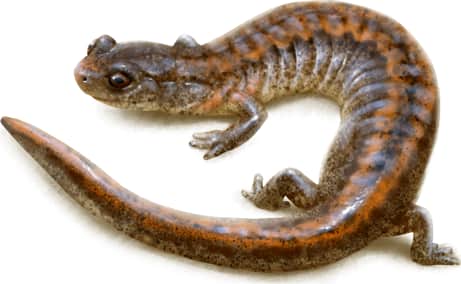
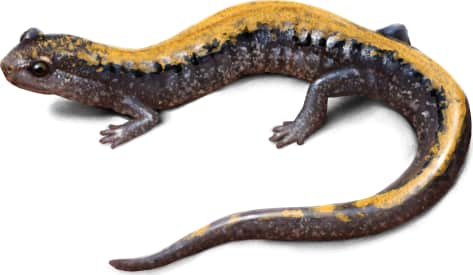
Couer d’Alene salamander Plethodon vandykei idahoensis is a slender species of salamander which can be up to 51-105mm long in adult stage, also its adult has parotid glands, a nasolabial groove and presence of parasphenoid teeth. It has a dark ground color with a yellow-gold stripe that is found running the entire back and extending through the length of the organism. Its toes are unusually shorter than a similar species, the long toes salamander. Seal salamander or Desmognathus monticola can grow up to 140mm in total length which includes its compressed tail that is sharply keeled and having a pointed tip. It can be tan to brown with darker spots or markings that are worm-like on its back. Its belly is either transparent or very pale and it has 14 coastal groves. Webster’s salamander or Plethodon websteri is a small salamander that prefers the woodlands. It can grow u to 70mm- 82mm. it can be distinguished by a wavy stripe on its dorsum that varies from reddish to yellowish in color. Its venter is also differentiated by a mottled orange or reddish color.
Name and etymology
Genus
Plethodon
Greek for full of (plethore) teeth (odon).
Origin
Sources
- Tschudi, "1838" 1839. reprinted in Classif. Batr., Mem. Soc. Sci. Nat. Neuchatel, p. 92 ↗
Plethodon. Tschudi, "1838" 1839 - reprinted in Classif. Batr., Mem. Soc. Sci. Nat. Neuchatel, p. 92
Species epithet
ventralis
Latin for of the belly.
Origin
Sources
- Highton, 1997
Plethodon ventralis. Highton, 1997
- (Linnaeus, 1766). Syst. Nat., 12th ed., Vol. 1, p. 391 ↗
Ophisaurus ventralis. (Linnaeus, 1766) - Syst. Nat., 12th ed., Vol. 1, p. 391
Explore more names in the etymology index.
At a glance
Range
It is endemic in the United States of America and has been found in small areas of western North Carolina (in Asheville), nor…
Habitat
This salamander is rare and may be found in wooded areas, especially near cave mouths and springs that are in such areas. It…
Guide
Reptiles and Amphibians of North America
Range map
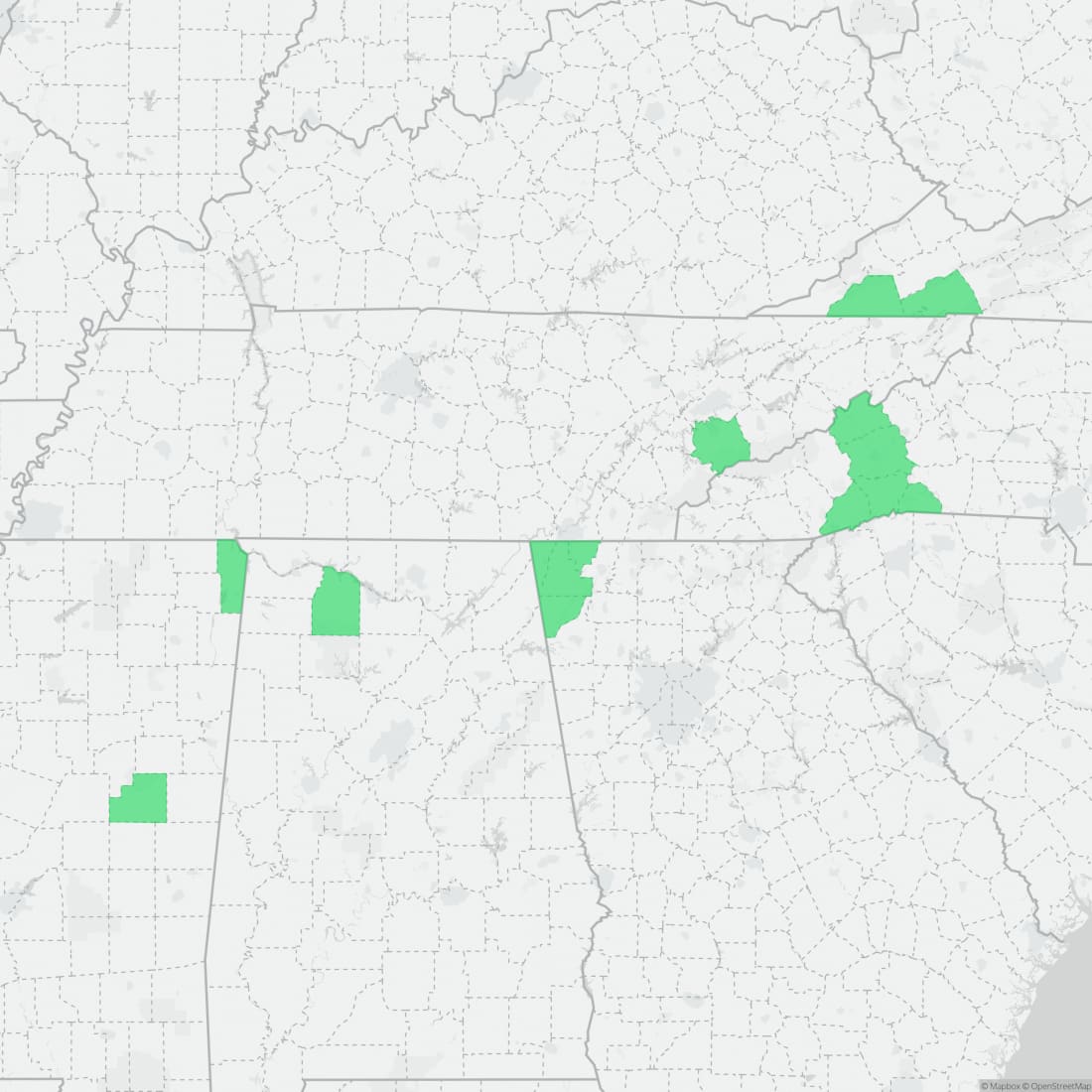
Approximate range. © Mapbox © OpenStreetMap