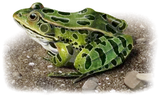
Coeur D'alene Salamander
Plethodon idahoensis
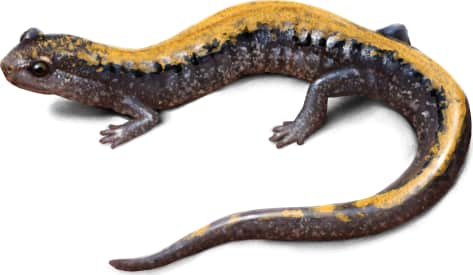
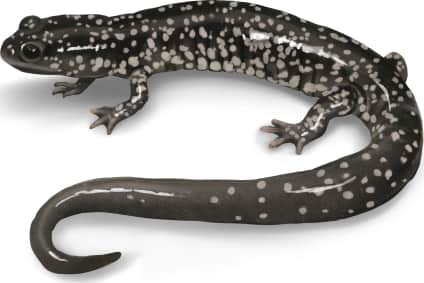
Primary color is black with a yellow patch on throat and a stripe down the back that is either yellow, green, orange, or red. Legs are proportionally long with smaller we…
How to identify
Primary color is black with a yellow patch on throat and a stripe down the back that is either yellow, green, orange, or red. Legs are proportionally long with smaller webbed toes. Can reach a maximum snout-vent length of 62 mm. Males and females mate any time between August and October and will sometimes mate in spring months from April to May. Eggs can be distinguished as appearing in grape-sized balls that are held together by one thread. There are about four to 13 eggs per clutch on average.
Range
Southeastern British Columbia, Canada south to western Montana and northern Idaho.
Habitat
Typically found along river banks and margins, close to springs, and under logs or rocks in wet valleys. During especially arid summers will burrow into piles of leaves or underground to seek cooler temperature. They are almost exclusively nocturnal, coming above ground at night and feeding on other nocturnal creatures like worms and arthropods. Females lay their eggs in wet areas under shelter including logs, damp natural debris, and underground burrows.
Variations
Young grow at a slower rate than those of other plethodon. They typically will have growth spurts during periods of wet weather either in the spring or fall. When males turn around 3.5 years old, they reach sexual maturity. Females do not reach sexual maturity until they are at least 4.5 years old.
Similar species
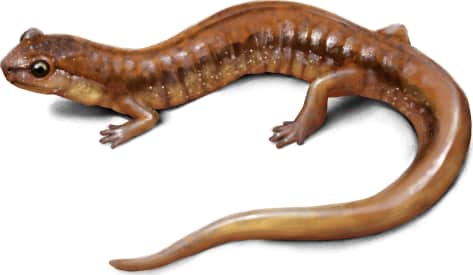
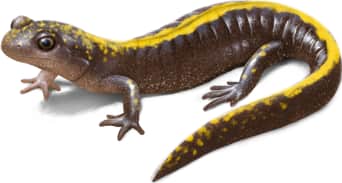
Van Dyke's Salamander - Plethodon vandykei Long-toed Salamander - Ambystoma macrodactylum Plethodon albagula - Western Slimy Salamander
Name and etymology
Genus
Plethodon
Greek for full of (plethore) teeth (odon).
Origin
Sources
- Tschudi, "1838" 1839. reprinted in Classif. Batr., Mem. Soc. Sci. Nat. Neuchatel, p. 92 ↗
Plethodon. Tschudi, "1838" 1839 - reprinted in Classif. Batr., Mem. Soc. Sci. Nat. Neuchatel, p. 92
Species epithet
idahoensis
Belonging to Idaho.
Origin
Sources
- Slater and Slip, 1940. Occ. Papers Dept. Biol. Univ. Puget Sound, Vol. 8, p. 38, figs. 1-2
Plethodon idahoensis. Slater and Slip, 1940 - Occ. Papers Dept. Biol. Univ. Puget Sound, Vol. 8, p. 38, figs. 1-2
Explore more names in the etymology index.
At a glance
Range
Southeastern British Columbia, Canada south to western Montana and northern Idaho.
Habitat
Typically found along river banks and margins, close to springs, and under logs or rocks in wet valleys. During especially ar…
Guide
Reptiles and Amphibians of North America
Range map
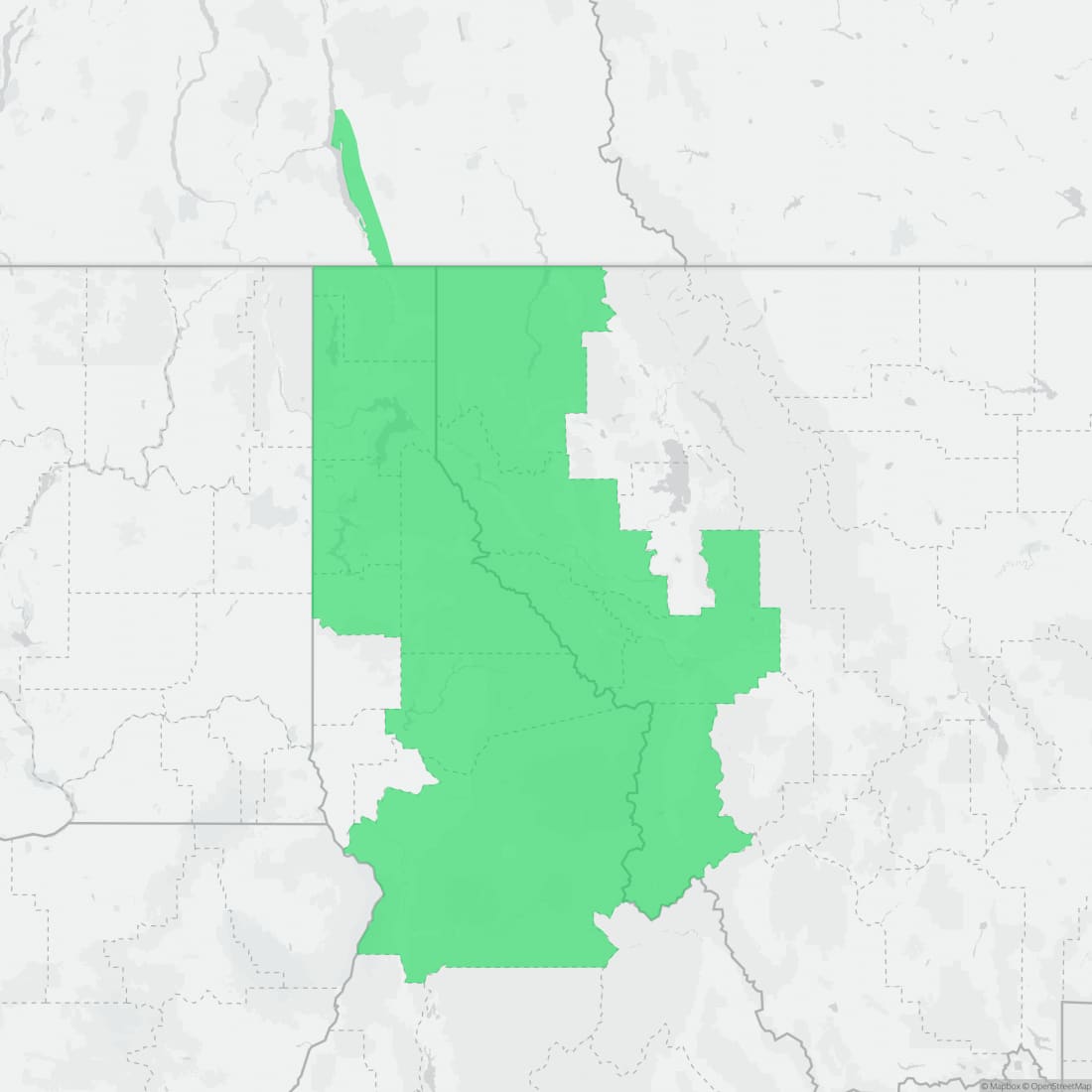
Approximate range. © Mapbox © OpenStreetMap