Little Brown Skink
Scincella lateralis
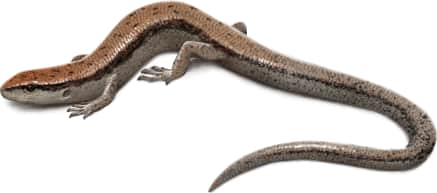
A very small skink that resembles a salamander in size and shape. It only reaches 3-5.5 inches in total length and has a small head with a short pointed snout. Its legs a…
How to identify
A very small skink that resembles a salamander in size and shape. It only reaches 3-5.5 inches in total length and has a small head with a short pointed snout. Its legs are moderately long for a skink, but they are scrawny. It has 2 distinct dark lateral lines running from the tip of the snout, through the eyes, down the body, and part of the tail. The wide dorsal stripe between the lines is typically some shade of brown with dark speckles, while the sides of the body below the lines is greyish. Its ventrum is pale and unmarked.
Range
Large range throughout the southeastern United States, from central Texas to the Atlantic coast, with northern borders from northeast Kansas to central New Jersey.
Habitat
Like most skinks, this species likes to slither through ground debris and leaf litter. It can be found in forests, hedgerows, and riparian areas.
Variations
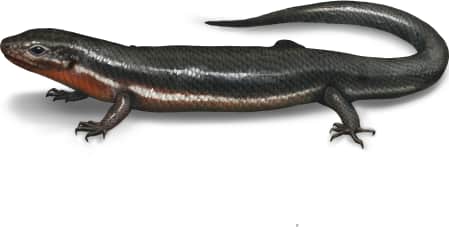
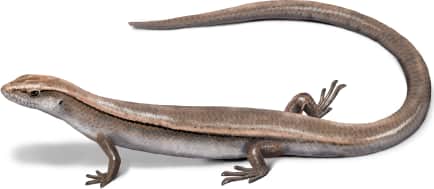
The dorsal stripe ranges from tan to coppery brown, and may or may not have speckles. The top of the head may be orange. Some individuals are very dark all over, appearing almost black.
Similar species
This species looks similar to the much larger coal skink (*Plestiodon anthracinus*). It bears strong resemblance to the delicate garden skink (*Lampropholis delicata*), which is only found in Hawaii and abroad, or the forest ground skink (*Scincella gemmingeri*) which is only found in Mexico.
Name and etymology
Genus
Scincella
Latin for little (-ella) skink (scincus).
Origin
Sources
- Mittleman, 1950. Herpetologica, Vol. 6, p. 19
Scincella. Mittleman, 1950 - Herpetologica, Vol. 6, p. 19
Species epithet
lateralis
Latin for of the side.
Origin
Sources
- (Hallowell, 1853). Proc. Acad. Nat. Sci. Philadelphia, Vol. 6, p. 237 ↗
Masticophis lateralis. (Hallowell, 1853) - Proc. Acad. Nat. Sci. Philadelphia, Vol. 6, p. 237
- (Say, 1823).
Thamnophis proximus. (Say, 1823) -
Explore more names in the etymology index.
At a glance
Range
Large range throughout the southeastern United States, from central Texas to the Atlantic coast, with northern borders from n…
Habitat
Like most skinks, this species likes to slither through ground debris and leaf litter. It can be found in forests, hedgerows,…
Guide
Reptiles and Amphibians of North America
Range map
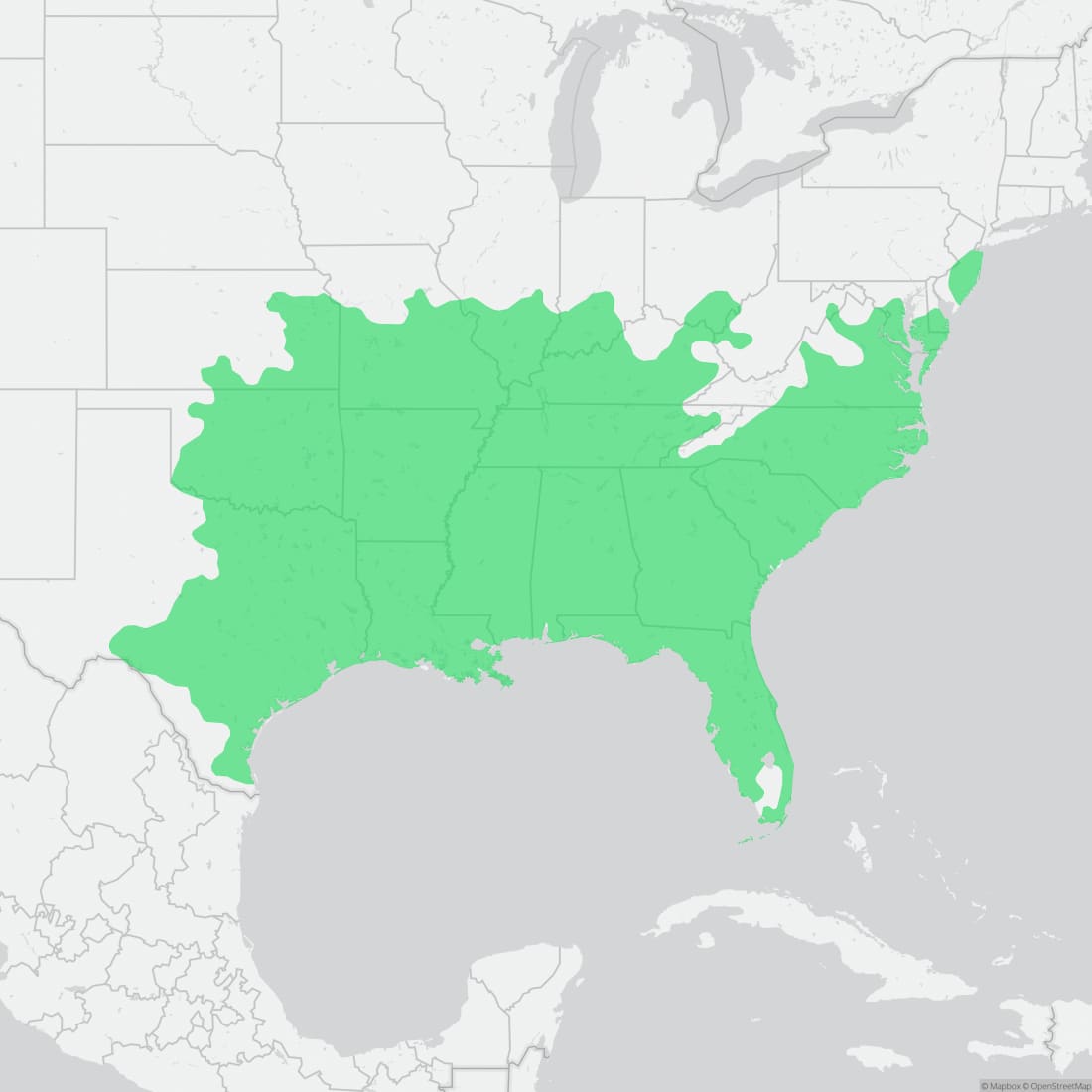
Approximate range. © Mapbox © OpenStreetMap