Delicate Garden Skink
Lampropholis delicata
Lampropholis roughly translates to mean “glistening ones.” This species is identified by their shiny and slender skins which makes them seem to be going faster than they…
How to identify
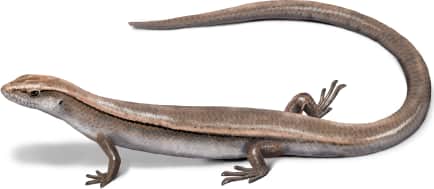
Lampropholis roughly translates to mean “glistening ones.” This species is identified by their shiny and slender skins which makes them seem to be going faster than they actually are when in movement. This species has a grey or very rich deep brown color which is evident all around it’s body from the dorsum but gets paler upon getting towards the belly. Of course, the skin also feels softer in the belly area. It has line features running down the sides of its back, one black above and one brown below on each side. It is a small animal, rarely measuring more than 40 mm in Snout-to-vent length, and having a tail of about 55 mm usually more than its head and body length. Their total length doesn’t exceed 95 mm. It has 22 medial body scale rows. All of its other features are small, complementary to its size, like its short front and hind feet, small eyes and ears and a small slender head which has a narrow rounded nozzle.
Range
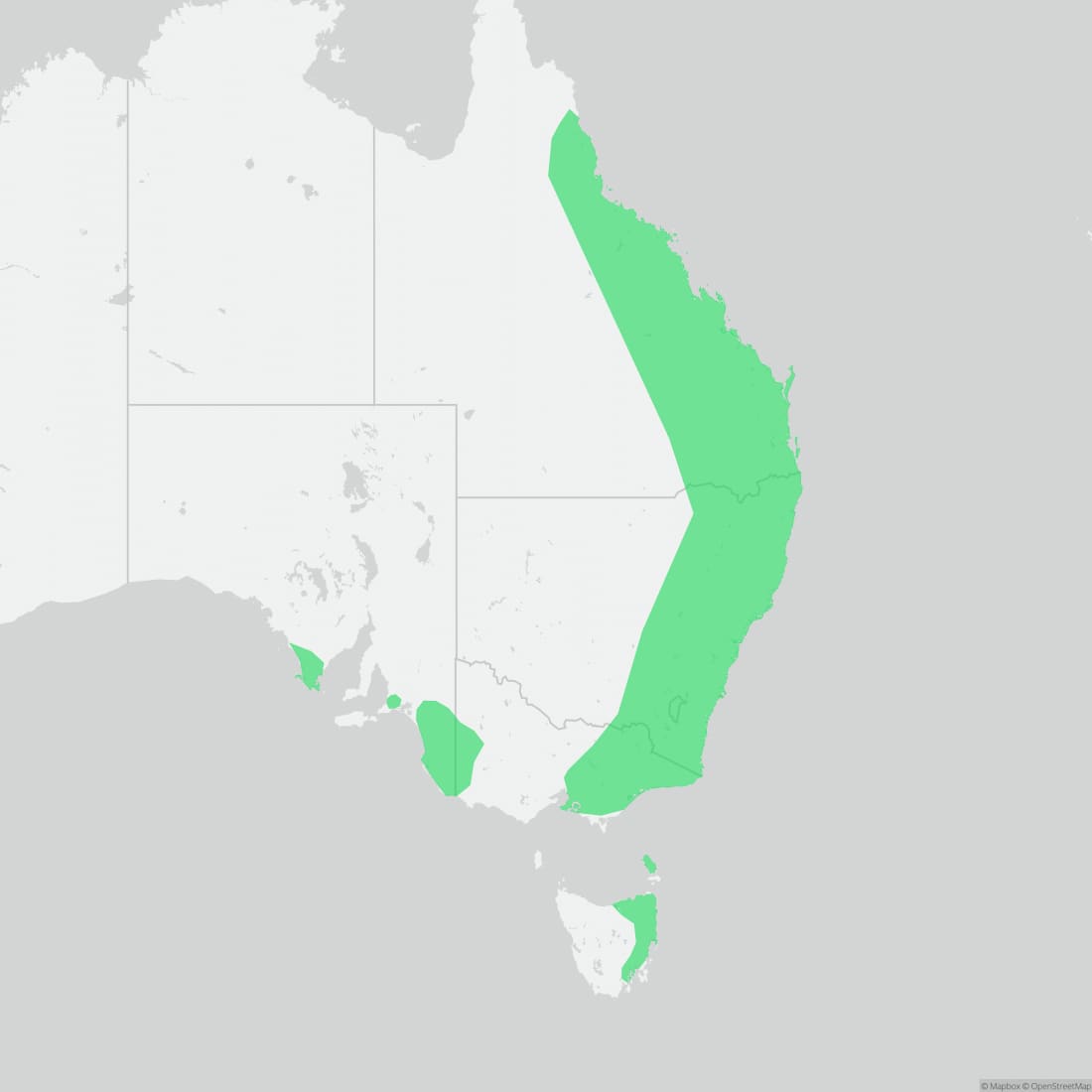
This species of skink is endemic to Australia. It is found almost on every part of the Eastern Coast of Australia and also in almost all areas of New Zealand. It is also seen on Lord Rowe Island.
Habitat
Recently, more population is observed in suburban gardens. Naturally, it is found habited favorably in rainforest exteriors, coastal vegetation and wooded lands. It is typically a terrestrial animal. Reproduction is oviparous and it practices communal nesting. This makes for the conclusion that it is a social creature. An adult female can lay up to 1-5 eggs at once, and communal nests may hold up to 250-300 eggs from different females at a time. It is a forager. This skink can be found gliding on shrubs, under brushes and leaf litter piles searching for what to feed on. Its favorite edibles includes insects and other variety of invertebrates. It is prey to wild cats and foxes and when found in domestic perimeters become good for domestic cats. Its response to threat is flight, and can distract a predator by detaching its tail while making an escape.
Similar species
Montane Sunskink (Lampropholis caligula) has a small head and body measuring about 50 mm, and is made to look longer and more slender by the presence of a tail about 60 mm of length. Comparatively it is longer than most similar skinks with a total length of about 110 mm. An adult has up to twenty-three mid-body scales. Its dorsal grey brown color is usually not without occasional darker flecks in its upper and lower flanks. Friendly Sunskink (Lampropholis amicula) measures about 35 mm from snout-to-vent and 80 mm in total length (head and body and tail). Its body is small and slender, like a copper brown worm with limbs. It has got about 19-22 mid-body scale rows. Grass skink (Lampropholis guichenoti) has a dorsum that is grey brown and has vertebral markings, dark stripes running from the base of the tail up to the neck. These stripes gets smaller on getting to the head and may be seen to contribute to this species narrow pointed nozzle. Its snout-to-vent measures 48 mm and a total length of 100-105mm in adults.
Name and etymology
Genus
Lampropholis
Latin for glistening ones.
Origin
Sources
- Wikipedia: Lampropholis ↗
“Lampropholis.” Wikipedia. https://en.wikipedia.org/wiki/Lampropholis
Species epithet
delicata
Latin for delicate.
Origin
Sources
- Wikipedia: Lampropholis delicata ↗
“Lampropholis delicata.” Wikipedia. https://en.wikipedia.org/wiki/Lampropholis_delicata
Explore more names in the etymology index.
At a glance
Range
This species of skink is endemic to Australia. It is found almost on every part of the Eastern Coast of Australia and also in…
Habitat
Recently, more population is observed in suburban gardens. Naturally, it is found habited favorably in rainforest exteriors,…
Guide
Reptiles and Amphibians of North America
Range map
Approximate range. © Mapbox © OpenStreetMap