Black-tailed Brush Lizard
Urosaurus nigricauda
It is a small lizard averaging 1.5 – 2 in. in length. The scales are small and grainy with larger scales running down the middle its back where there is sometimes a brown…
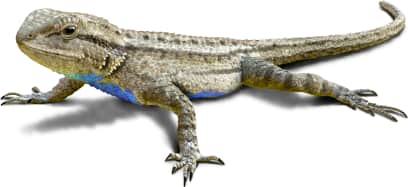
How to identify
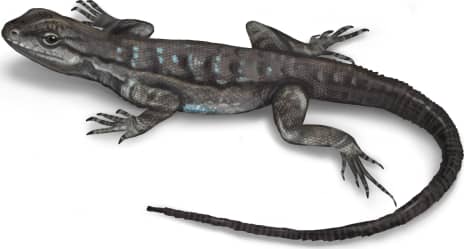
It is a small lizard averaging 1.5 – 2 in. in length. The scales are small and grainy with larger scales running down the middle its back where there is sometimes a brown or gray stripe. It has a long thin tail with keeled scales that detaches easily but regenerates. This tail is usually black (especially with males) except for the ones west of the mountains. The lizard is colored brown, sooty, spotting on its back a pattern of dark blotches and in some cases crossbars instead. It sometimes has yellow-brown or rust-colored markings on its neck, tail and upper sides. The underside is white or gray-yellow with darker colors under its tail. The males display orange or yellow (or both colors) in the middle of the throat and wide blue patches on the belly which may extend to meet at the center and cover the entire belly. Meanwhile, the females have no blue on the belly but also have orange, yellow or white colors on the throat.
Range
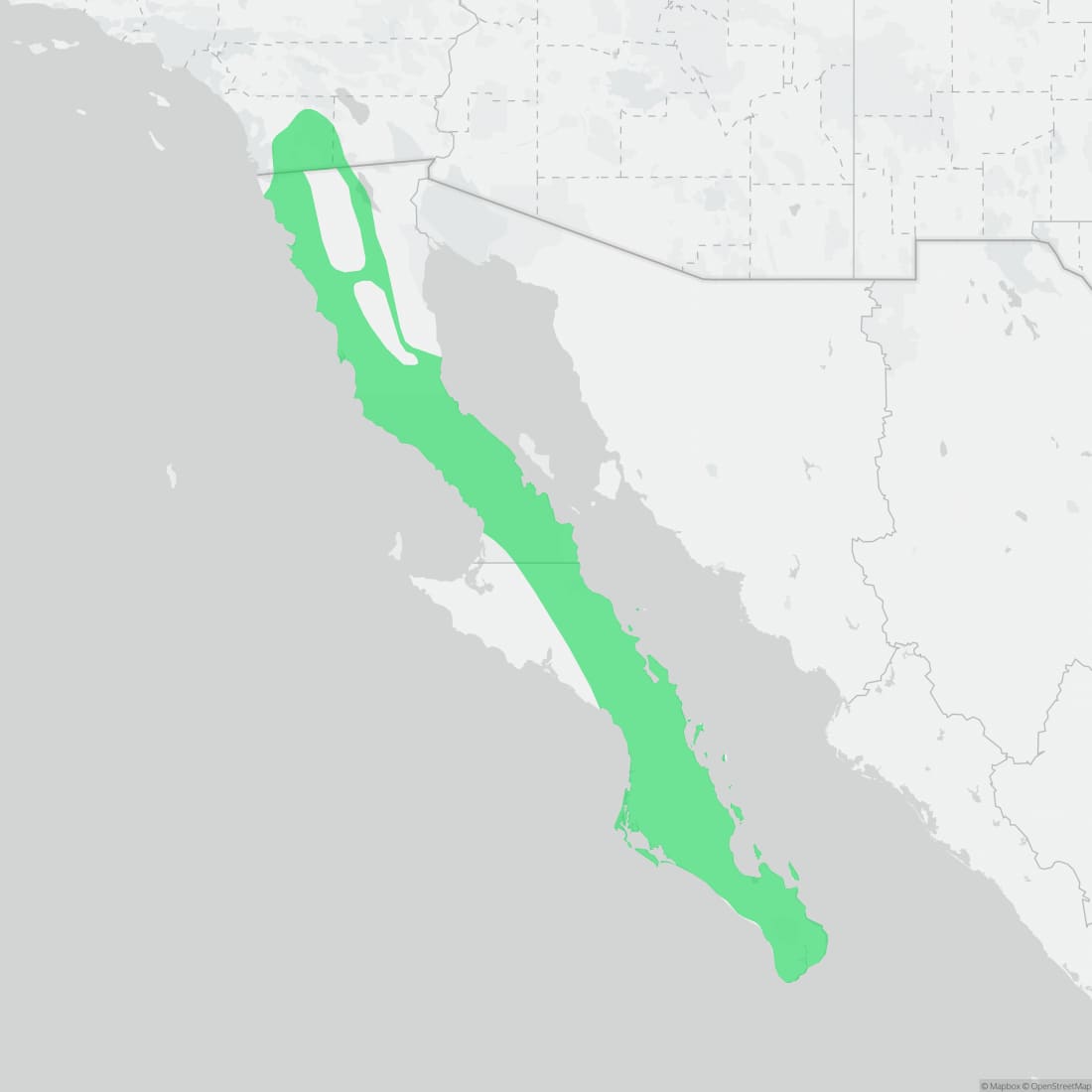
The Baja California brush lizard or the black-tailed brush lizard is endemic to Mexico, particularly Baja California. Its range also extends to adjacent pacific islands including Espiritu Santo, Ballena, San José, Islas Las Islitas, Las Tijeras, Isla Pardo, and Islas Los Candeleros.
Habitat
They occur in a wide variety of habitats. They can be found in rocky places with reasonable vegetation. In desert locales, they need plants for cover but avoids extreme desert conditions. They feed on small invertebrates and our quick to run underground to escape predators. This species of lizard is oviparous and breeds through summer in April. They lay eggs in one or two clutches of 4 – 8 eggs.
Similar species
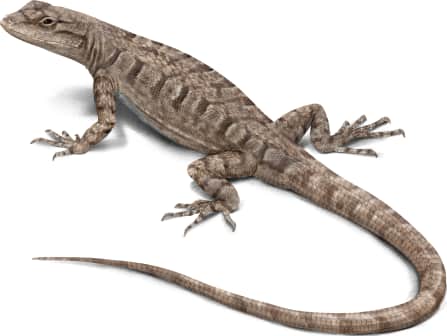
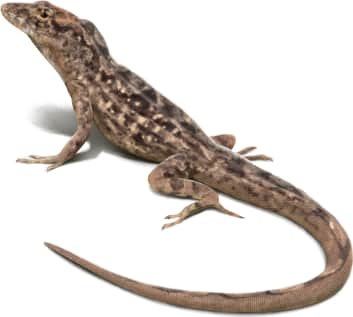
Ornate tree lizard or (Urosaurus ornatus) has a bright-colored throat just like the Urosaurus nigricauda and is roughly the same size. However, the ornate tree lizard has a much greater variety of color which is what has earned it its name. The brown anole (Anolis sagrei) is another similar lizard, with similar scales and most cases color. But the male brown anole usually has a brightly colored extending dewlap. The most distinguishing characteristic of the brown anole is the size. The brown anoles can be four times larger than the Baja California brush lizard. Another similarly-sized lizard with a colored throat is the western fence lizard (Sceloporus occidentalis). Unlike the Baja California brush lizard, the western fence lizard has a blue throat. Furthermore, the scales here are larger and overlap with prickly spines.
Name and etymology
Genus
Urosaurus
Greek for tail (oura) lizard (saurus).
Origin
Sources
- Hallowell, 1854. Proc. Acad. Nat. Sci. Philadelphia, Vol. 7, p. 92 ↗
Urosaurus. Hallowell, 1854 - Proc. Acad. Nat. Sci. Philadelphia, Vol. 7, p. 92
Species epithet
nigricauda
Latin for black (niger) tailed (caudus).
Origin
Sources
- Wikipedia: Urosaurus nigricauda ↗
“Urosaurus nigricauda.” Wikipedia. https://en.wikipedia.org/wiki/Urosaurus_nigricauda
Explore more names in the etymology index.
At a glance
Range
The Baja California brush lizard or the black-tailed brush lizard is endemic to Mexico, particularly Baja California. Its ran…
Habitat
They occur in a wide variety of habitats. They can be found in rocky places with reasonable vegetation. In desert locales, th…
Guide
Reptiles and Amphibians of North America
Range map
Approximate range. © Mapbox © OpenStreetMap