Banded Watersnake
Nerodia fasciata
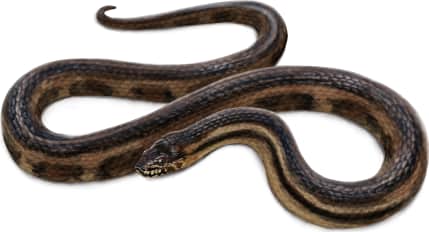
Dorsum can be yellowish, reddish, or grayish. Displays around 40 crossbands across body that can be either black, brown, or red. Scales are heavily keeled and are elongat…
How to identify
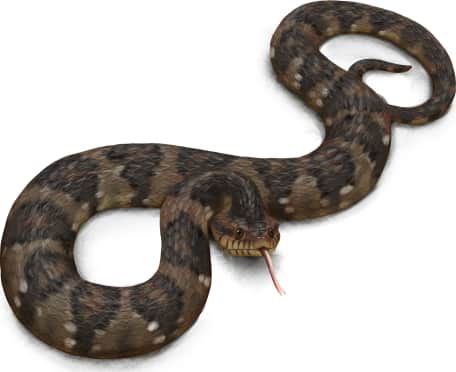
Dorsum can be yellowish, reddish, or grayish. Displays around 40 crossbands across body that can be either black, brown, or red. Scales are heavily keeled and are elongated under tail. Dark stripes run from corner of eye to end of mouth. Venter is usually light colored and displays dark spots, blotches, or lines. When threatened, issues feces and musk from its cloaca; lies close to the ground and will strike.
Range
Southeastern and southcentral United States eastward from Texas through North Carolina. As far south as southern Florida. A separate population exists in Sacramento County, California.
Habitat
Mostly inhabits areas near water sources including marshes, lakes, ponds, streams, swamps, and rivers. Can even be found near the sea at the edge of saltwater sources like marshes and swamps. Will take shelter in burrows or under vegetative covering.
Variations
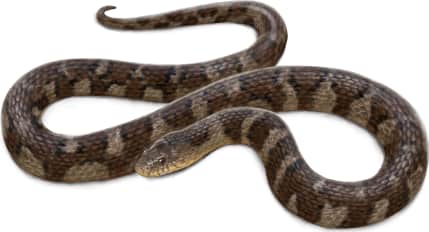
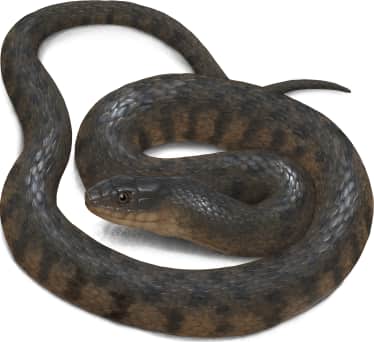
Juveniles are lighter in color and display more definite patterns than adults. Some older snakes turn dark brown completely.
Similar species
Name and etymology
Genus
Nerodia
From Nereis the sea nymphs of Greek mythology.
Origin
Sources
- Baird and Girard, 1853. Cat. N. Amer. Rept., Pt. 1, p. 47 ↗
Nerodia. Baird and Girard, 1853 - Cat. N. Amer. Rept., Pt. 1, p. 47
Species epithet
fasciata
Latin for banded
Origin
Sources
- (Linnaeus, 1766). Syst. Nat., 12th ed., Vol. 1, p. 378 ↗
Nerodia fasciata. (Linnaeus, 1766) - Syst. Nat., 12th ed., Vol. 1, p. 378
Explore more names in the etymology index.
At a glance
Size
61 to 106.7 cm
Range
Southeastern and southcentral United States eastward from Texas through North Carolina. As far south as southern Florida. A s…
Habitat
Mostly inhabits areas near water sources including marshes, lakes, ponds, streams, swamps, and rivers. Can even be found near…
Range map
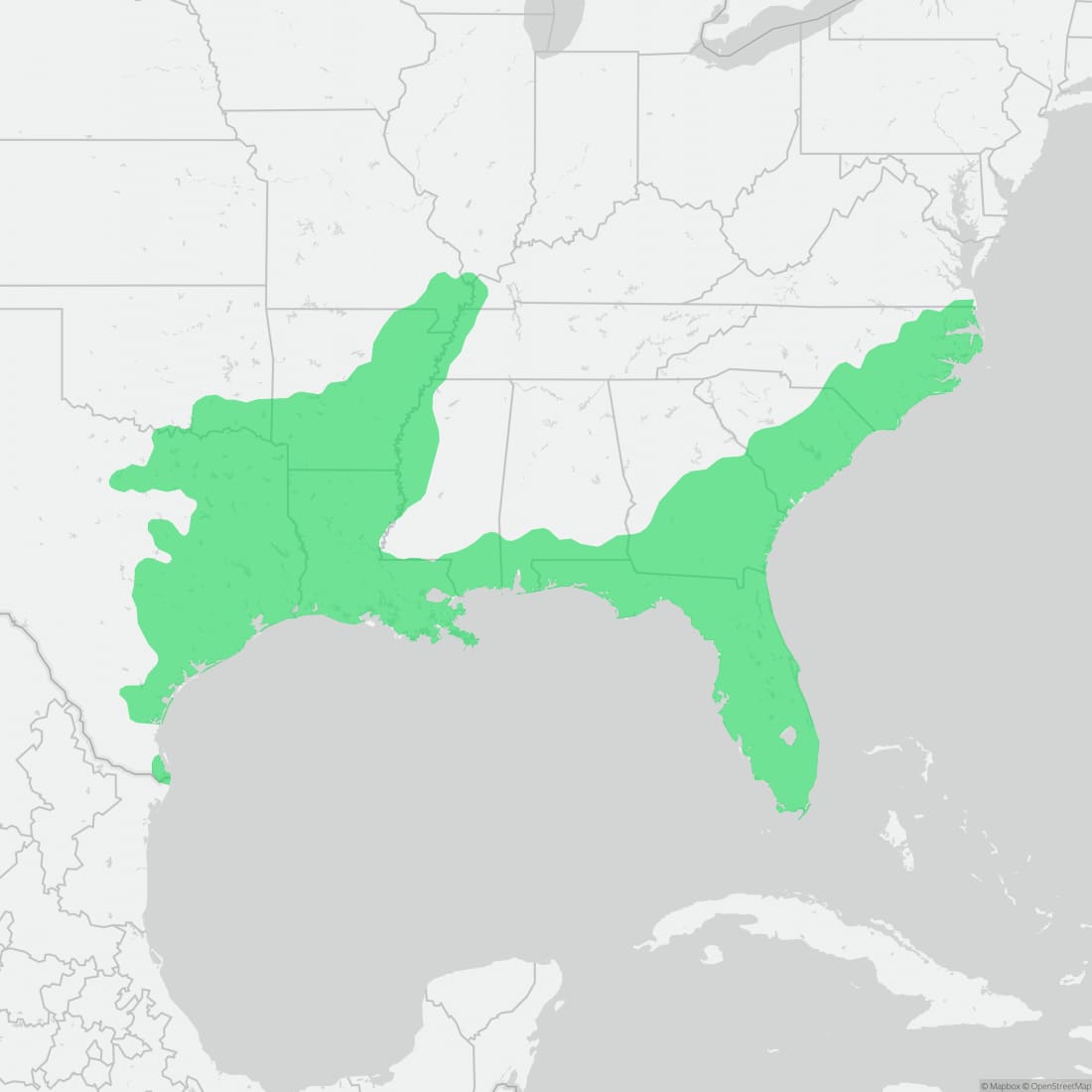
Approximate range. © Mapbox © OpenStreetMap