Wehrle's Salamander
Plethodon wehrlei
This salamander has a mouth full of paravomerine teeth. It can grow to about 15cm. Its body may be brown or dark gray, spotted with an uneven course of yellowish, bluish…
How to identify
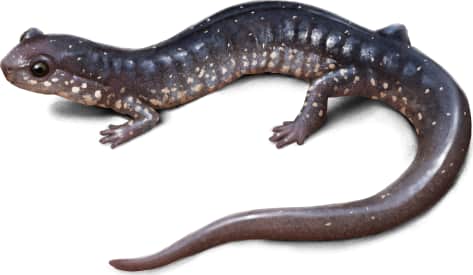
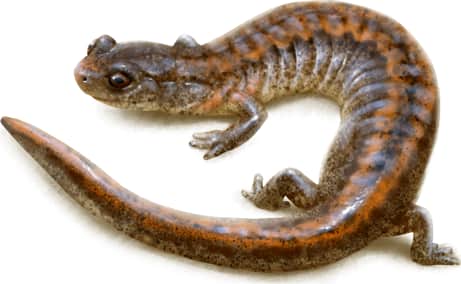
This salamander has a mouth full of paravomerine teeth. It can grow to about 15cm. Its body may be brown or dark gray, spotted with an uneven course of yellowish, bluish white or whitish colors. Its undersides are typically gray. Salamanders that are prevalent in cave areas may be observed to possess a variant of coloration. Its tail is quite round and may be seen to be up to the length of its body. Their costal groove is usually up to 17. The dorsum of the adults typically are bold gray and spotted with white marks. The dorsal specks of the young ones however, are usually reddish and arranged in twos. It is lungless.
Range
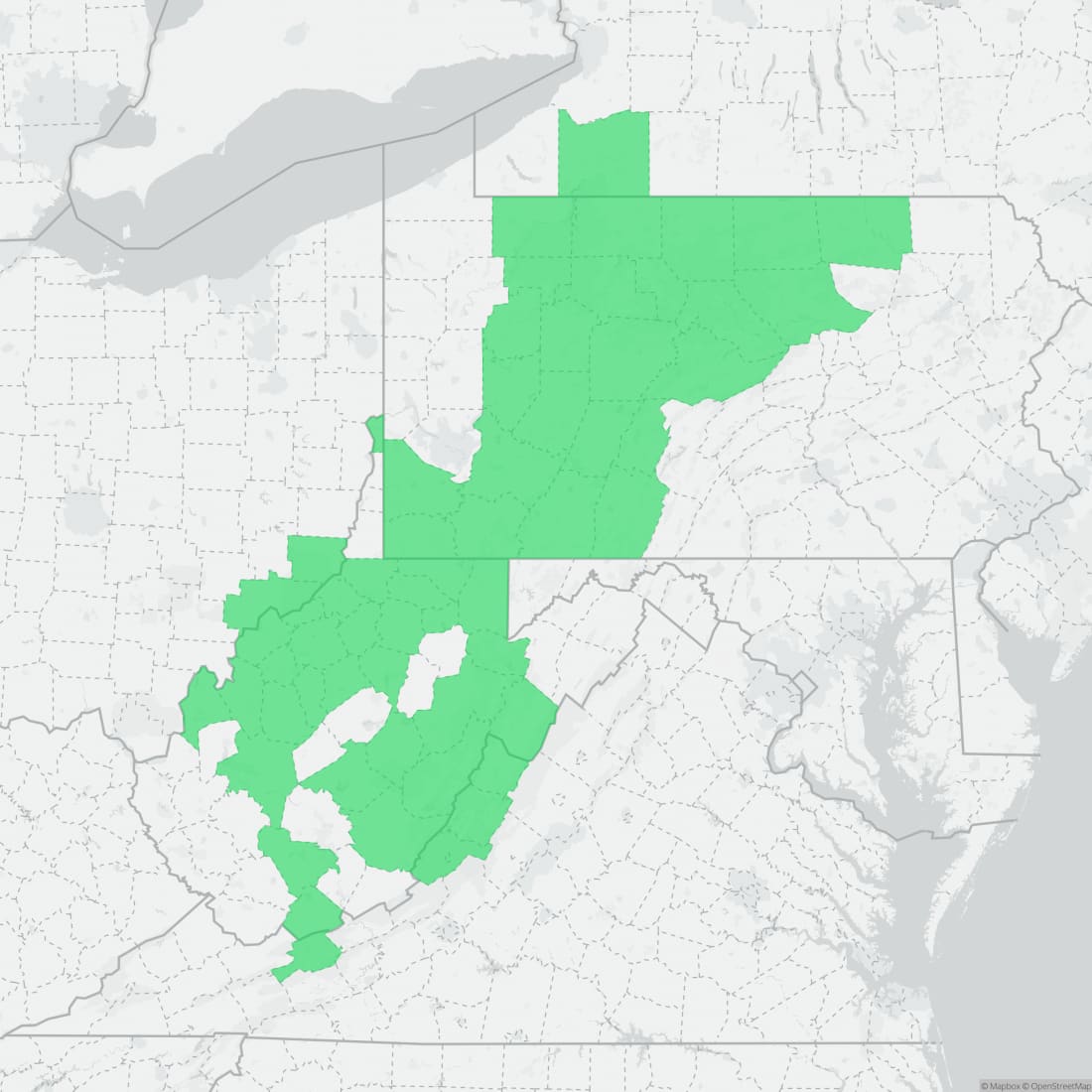
Wehrle's Salamander can be found in the eastern United States from the southern portions of New York to Virginia.
Habitat
It prefers to inhabit forests with high altitudes. It is usually found underneath rocks, logs and burrows. These specie is quite stationary. To avoid been dehydrated, it inhabits higher ground sometime between April and October and lower ground, from March to June. In high elevations, they are usually inactive. Breeding typically takes place once in two years. In early summer, a dispersion of eggs is laid primarily in moss, soil, damp logs or in crevasses. They feed on ants, mites, beetles, spiders and other spineless organisms seen in the soil such as annelids. Females have been observed to mature at 5years while males mature at about 4years.
Similar species
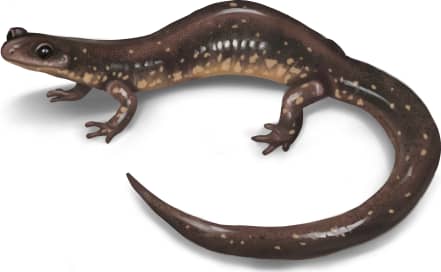
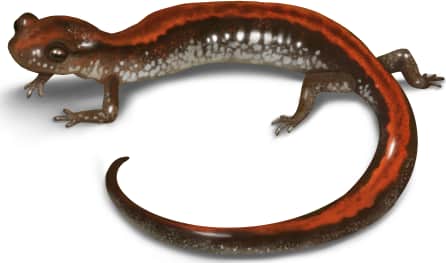
Southern red-backed salamander or plethodon serratus may grow up to 100m. Its body may be black or dark gray. A faint reddish brown stripe runs through its back all the way to its tail. Webster salamander or plethodon websteri has wavy stripes that run through its body, often colored yellow or red. Its stripes are quite jagged.
Name and etymology
Genus
Plethodon
Greek for full of (plethore) teeth (odon).
Origin
Sources
- Tschudi, "1838" 1839. reprinted in Classif. Batr., Mem. Soc. Sci. Nat. Neuchatel, p. 92 ↗
Plethodon. Tschudi, "1838" 1839 - reprinted in Classif. Batr., Mem. Soc. Sci. Nat. Neuchatel, p. 92
Species epithet
wehrlei
Honoring Richard W. Wehrle
Origin
Honors
Sources
- Fowler and Dunn, 1917. Proc. Acad. Nat. Sci. Philadelphia, Vol. 69, p. 23, pl. 4 ↗
Plethodon wehrlei. Fowler and Dunn, 1917 - Proc. Acad. Nat. Sci. Philadelphia, Vol. 69, p. 23, pl. 4
Explore more names in the etymology index.
At a glance
Size
100 to 170 mm
Range
Wehrle's Salamander can be found in the eastern United States from the southern portions of New York to Virginia.
Habitat
It prefers to inhabit forests with high altitudes. It is usually found underneath rocks, logs and burrows. These specie is qu…
Range map
Approximate range. © Mapbox © OpenStreetMap