Island Glass Lizard
Ophisaurus compressus
A legless lizard that has the appearance of a snake, but has obvious lizard-like features on its head, including movable eyelids, visible ear holes, and non-flexible jaws…
How to identify
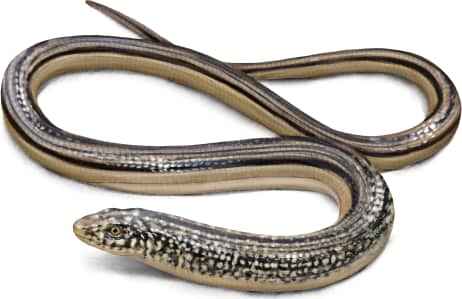
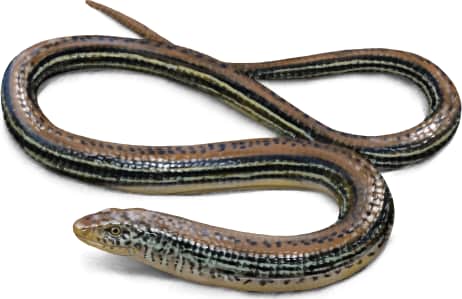
A legless lizard that has the appearance of a snake, but has obvious lizard-like features on its head, including movable eyelids, visible ear holes, and non-flexible jaws. It has a long pointed face with black and cream speckling down the sides of its head and neck. This speckling fades into solid longitudinal stripes down the rest of the body and tail. Its back is mostly solid grey to brown with faint stripes. It has a dark brown to black dorsolateral line on each side, and is solid cream or tan below those lines and on the ventral surface. It can reach 15-24 inches in length. As with all legless lizards, they have a lateral groove running the length of their body, where the ventral scales meet the body scales.
Range
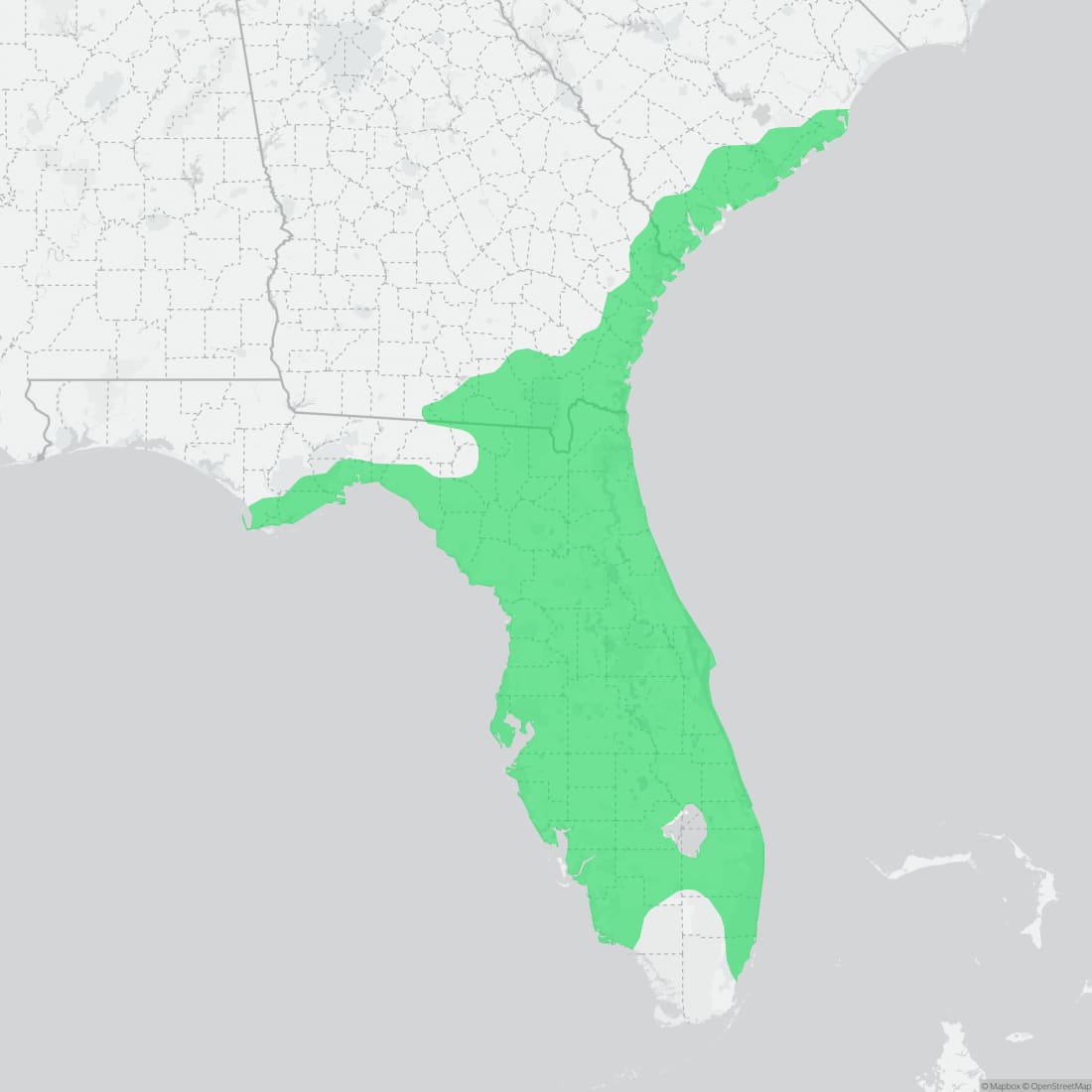
Ranges throughout Florida and coastal Georgia and South Carolina.
Habitat
A ground-dwelling species that prefers dry, sandy scrublands and is often found on offshore islands. Likes to hide under natural and manmade debris.
Variations
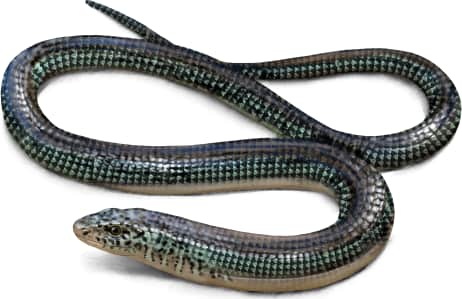
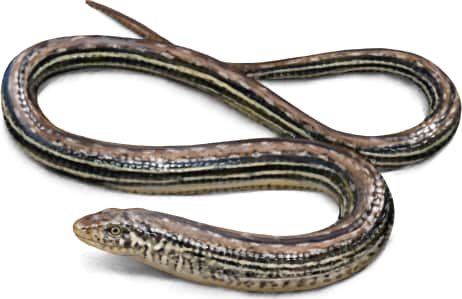
Colors vary from lighter brownish yellow to darker shades of grey-brown.
Similar species
The presence of distinct stripes distinguishes this species from the neighboring eastern glass lizard (*Ophisaurus ventralis*) which is mainly speckled all over. The slender glass lizard (*Ophisaurus attenuatus*) looks more similar, but has thinner, more numerous stripes down the body.
Name and etymology
Genus
Ophisaurus
Greek for snake (ophis) lizard (sauros), referencing snake like body.
Origin
Sources
- Daudin, 1803. Bull. Soc. Philom. Paris, Vol. 3, No. 72, p. 188
Ophisaurus. Daudin, 1803 - Bull. Soc. Philom. Paris, Vol. 3, No. 72, p. 188
Species epithet
compressus
Latin for compressed.
Origin
Sources
- Cope, "1898" 1900. Ann. Rept. U.S. Natl. Mus., p. 501, fig. 90
Ophisaurus compressus. Cope, "1898" 1900 - Ann. Rept. U.S. Natl. Mus., p. 501, fig. 90
Explore more names in the etymology index.
At a glance
Range
Ranges throughout Florida and coastal Georgia and South Carolina.
Habitat
A ground-dwelling species that prefers dry, sandy scrublands and is often found on offshore islands. Likes to hide under natu…
Guide
Reptiles and Amphibians of North America
Range map
Approximate range. © Mapbox © OpenStreetMap