Eastern Glass Lizard
Ophisaurus ventralis
They range from 18 – 43 inches in length. They are long, slender, legless lizards that resemble snakes on the surface. They differ from snakes in that they have moveable…
How to identify
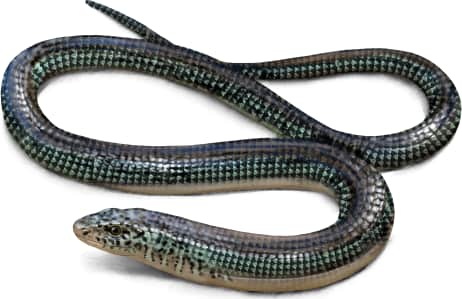
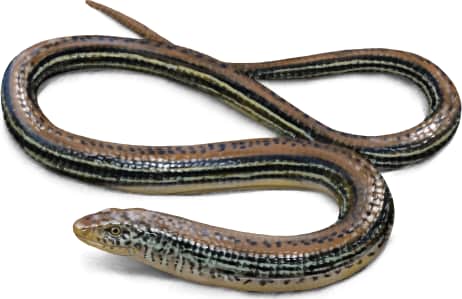
They range from 18 – 43 inches in length. They are long, slender, legless lizards that resemble snakes on the surface. They differ from snakes in that they have moveable eyelids, external ear openings, and inflexible jaws. They are the longest and heaviest glass lizard in the region. It is usually light brown or yellowish to greenish. This species is differentiated from other glass lizards by the absence of a dark dorsal stripe or dark markings below the side groove. Also by the presence of several vertical whitish bars just behind the head. Older individuals usually have a greenish or speckled colouration, which is not as bold as younger individuals.
Range
The Ophisaurus ventralis species are found throughout the southern and eastern portions of Georgia and South Carolina. They are most common in sandy areas of the Coastal Plain.
Habitat
The Eastern glass lizard may be found in various habitats. They are most commonly seen in Flatwoods and around wetlands in sandy niches. Also, the eastern glass lizards are very common in coastal dune habitats. Sometimes, these lizards are even found beneath debris at the tide line. They are very active and often bask in the open sun on the ground with only part of their bodies open. They feed on grasshoppers, crickets, beetles, eggs of other reptiles and so on. Females of this species are oviparous and lay 5-15 eggs in June and July. They do this under logs, boards or any covered object. The females cater to the eggs until they hatch later in the summer.
Variations
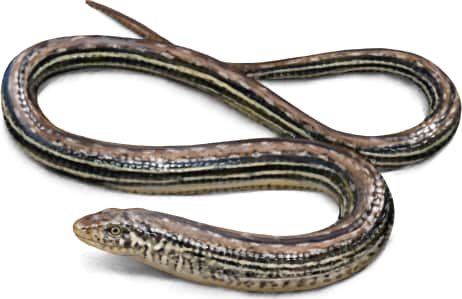
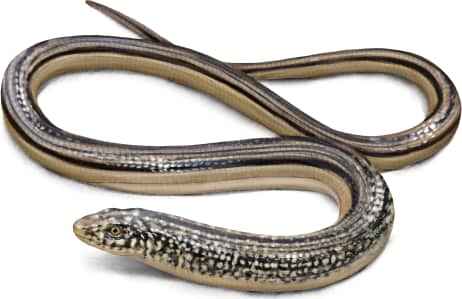
This species may be confused only with Ophisaurus attenuatus (slender glass lizard). This species has dark stripes below the lateral groove. It also lacks the vertical white bars on the side of the neck and head. The Ophisaurus compressus (Island glass lizard) differs from the Eastern glass lizard with the presence of a dark longitudinal stripe on each side of its body as well as its dorsal region.
Similar species
Name and etymology
Genus
Ophisaurus
Greek for snake (ophis) lizard (sauros), referencing snake like body.
Origin
Sources
- Daudin, 1803. Bull. Soc. Philom. Paris, Vol. 3, No. 72, p. 188
Ophisaurus. Daudin, 1803 - Bull. Soc. Philom. Paris, Vol. 3, No. 72, p. 188
Species epithet
ventralis
Latin for of the belly.
Origin
Sources
- Highton, 1997
Plethodon ventralis. Highton, 1997
- (Linnaeus, 1766). Syst. Nat., 12th ed., Vol. 1, p. 391 ↗
Ophisaurus ventralis. (Linnaeus, 1766) - Syst. Nat., 12th ed., Vol. 1, p. 391
Explore more names in the etymology index.
At a glance
Range
The Ophisaurus ventralis species are found throughout the southern and eastern portions of Georgia and South Carolina. They a…
Habitat
The Eastern glass lizard may be found in various habitats. They are most commonly seen in Flatwoods and around wetlands in sa…
Guide
Reptiles and Amphibians of North America
Range map
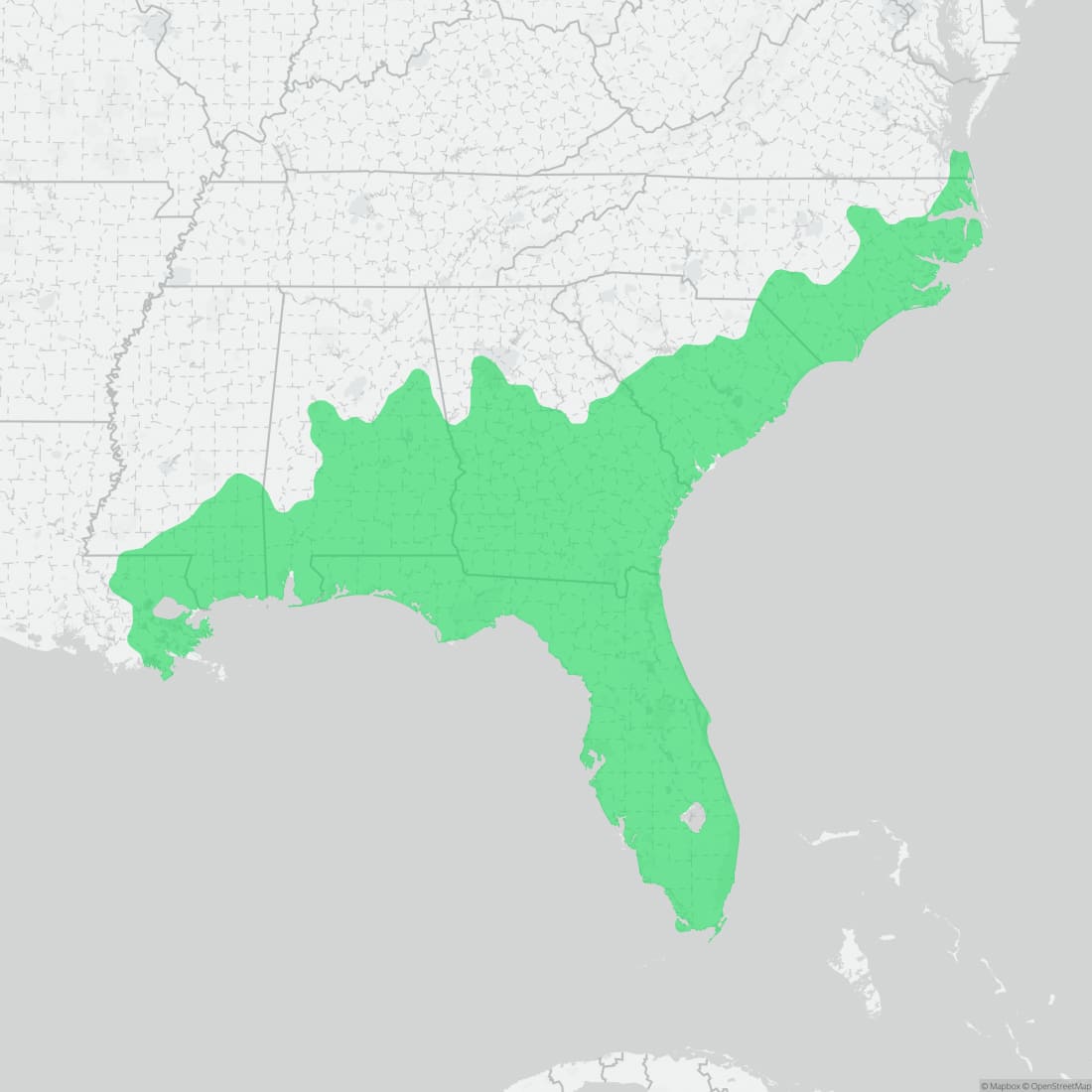
Approximate range. © Mapbox © OpenStreetMap