Marbled Whiptail
Aspidoscelis marmoratus
This whiptail averages 8-12 inches in total length and is named for the marbled pattern on its back. Like all whiptails, it has plate-like scales on its head, a pointed s…
How to identify
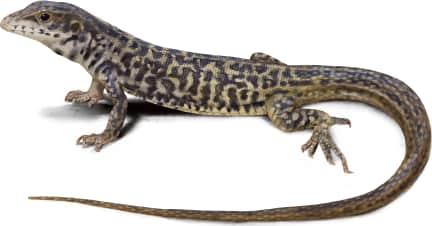
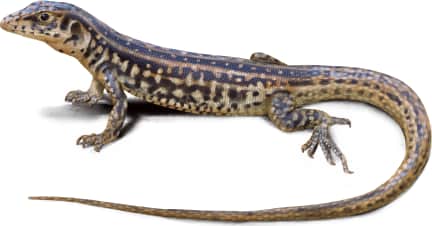
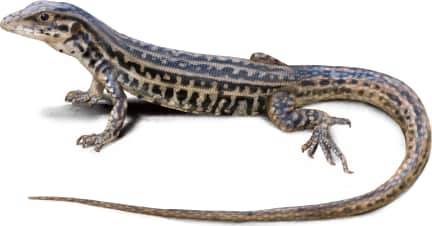
This whiptail averages 8-12 inches in total length and is named for the marbled pattern on its back. Like all whiptails, it has plate-like scales on its head, a pointed snout, granular body scales, smooth rectangular ventral scales, and sharply keeled scales on its excessively long tail. Its dorsum is tan with grey to black marbled markings aligned in rows, creating the appearance of 4-8 light longitudinal stripes.
Range
Central and southern New Mexico, west Texas, and north central Mexico.
Habitat
This ground-dwelling lizard prefers sandy substrate in sparsely vegetated semiarid habitats. It will sometimes be found on the edges of woodland areas.
Variations
The markings may not be clearly aligned, making the light stripes very subtle. Some individuals develop peach coloration on the throat or sides of the belly. Hatchlings have blue tails.
Similar species
Very similar to the tiger whiptail (*Aspidoscelis tigris*) and Colorado checkered whiptail (*Aspidoscelis tesselatus*).
Name and etymology
Genus
Aspidoscelis
Greek for shield (aspido) leg (skelos).
Origin
Sources
- Wagler, 1830. Nat. Syst. Amph., p. 154
Cnemidophorus. Wagler, 1830 - Nat. Syst. Amph., p. 154
Species epithet
marmoratus
Latin for marbled.
Origin
Sources
- (Moore, 1899). Proc. Acad. Nat. Sci. Philadelphia, Vol. 51, p. 316, pl. 14, figs. 1-10 ↗
Desmognathus marmoratus. (Moore, 1899) - Proc. Acad. Nat. Sci. Philadelphia, Vol. 51, p. 316, pl. 14, figs. 1-10
- Baird and Girard, 1852. Proc. Acad. Nat. Sci. Philadelphia, Vol. 6, p. 128 ↗
Cnemidophorus marmoratus. Baird and Girard, 1852 - Proc. Acad. Nat. Sci. Philadelphia, Vol. 6, p. 128
Explore more names in the etymology index.
At a glance
Range
Central and southern New Mexico, west Texas, and north central Mexico.
Habitat
This ground-dwelling lizard prefers sandy substrate in sparsely vegetated semiarid habitats. It will sometimes be found on th…
Guide
Reptiles and Amphibians of North America
Range map
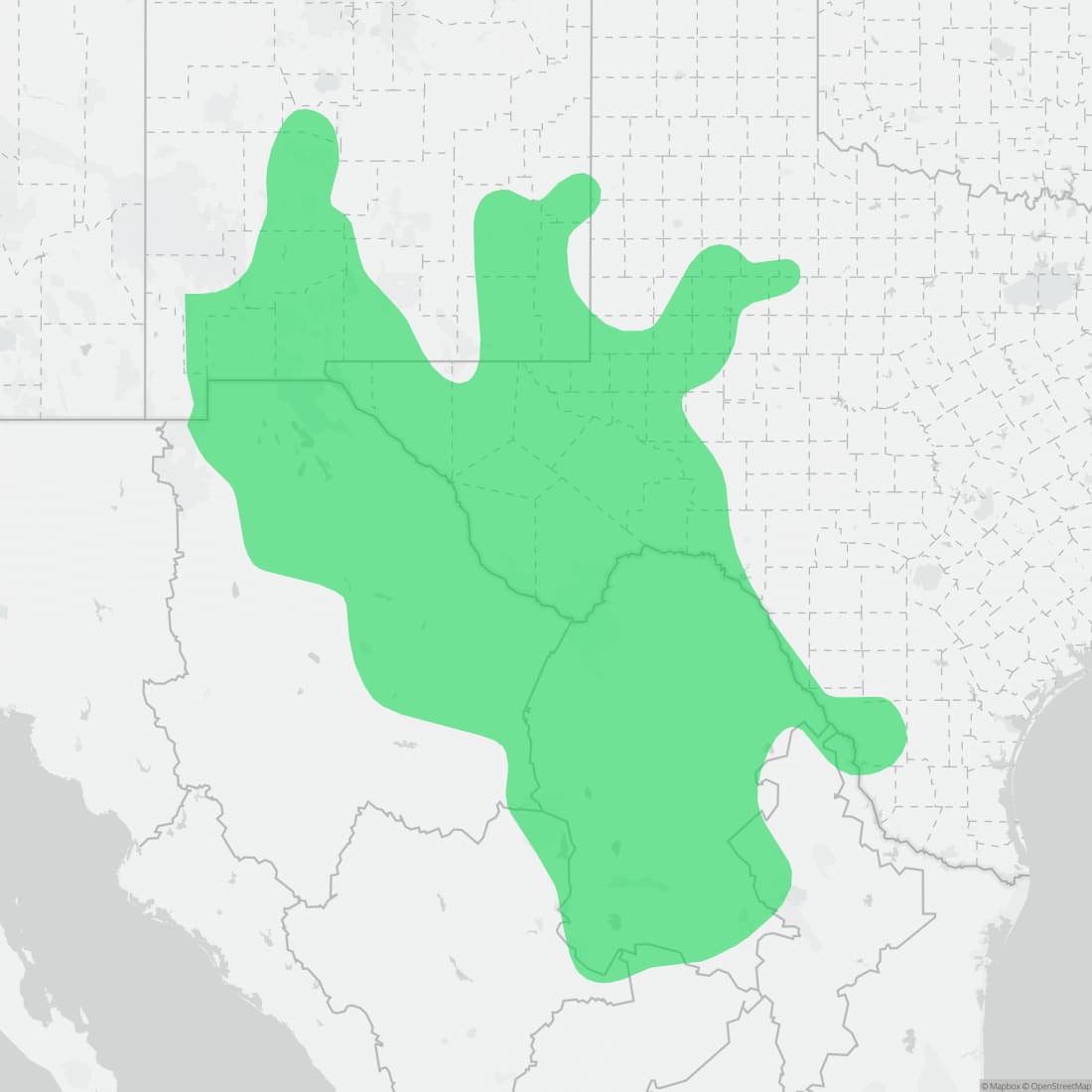
Approximate range. © Mapbox © OpenStreetMap