Boa Constrictor
Boa constrictor
They are large and thick bodied, capable of weighing up to 27kg or 60 pounds. Females are typically larger than males in length and girth, reaching sizes between 7 and 10…
How to identify
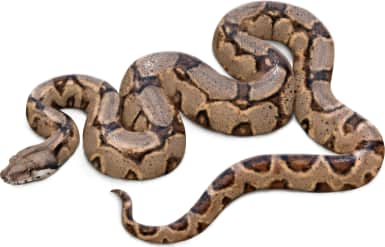
They are large and thick bodied, capable of weighing up to 27kg or 60 pounds. Females are typically larger than males in length and girth, reaching sizes between 7 and 10 ft, whereas males are 6 and 8 ft. They have long and triangular heads, with typically black and dark brown markings against a pale brown and whitish background. However, these colorations and markings may vary in individuals. Dark streaks along the top of its body and extending from the eyes to the back of the jaw are also seen.
Range
The Boa constrictor is a species of snake found throughout tropical South, Central and North America. There have been introduced populations in southern Florida and the U.S Virgin Islands.
Habitat
The Boa constrictor tends to flourish in a variety of environmental conditions, ranging from tropical setting of the rainforest to arid lands. It however prefers to live in the former, as a result of the benefits the nature of the rainforest provides it with in natural cover from predators, humidity, temperature and potential prey. They are nocturnal and usually live on their own, rarely interacting with other snakes except for the sake of mating. Young boa constrictors eat small amphibians, mice, lizards, birds and bats. Their prey ranges from a variety of small to medium-sized animals and birds as they get older. They are viviparous, giving birth to their young, live. They typically breed in the dry season, (April to August), during this period, the female boa constrictor releases pheromones from her to cloaca in order to attract males, who then wrestle with one another in order to breed with her. Boa constrictors become sexually mature at 3-4 years.
Variations
Boa Constrictor occidentalis They are also known as the Argentine boa. They also similarly exhibit sexual dimorphism, with their females also being larger in size and weight than the males. The Boa constrictor occidentalis has a wide range of scale coloration, varying from black to dark-orange or red, with a pale whitish belly.
Similar species
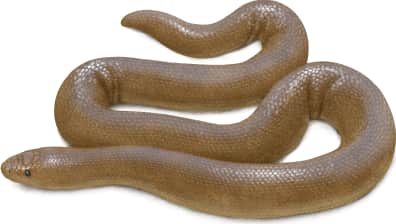
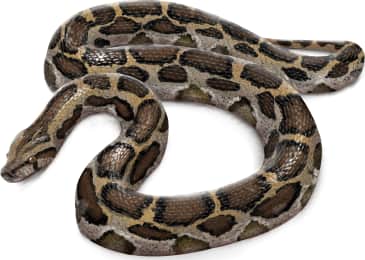
The Boa imperator (Boa constrictor imperator) is one of the smaller Boa species, averaging between 1.3 and 2.5m in length. They can reach up to 6kg in weight. They exhibit similar patterns to the Boa constrictor, save for their darker tails, which ranges from dark brown to dark red. Rubber boa Charina bottae. Their name is derived from their often loose and wrinkled skin, consisting of smooth and shiny scales which give them a rubber-like texture and look. They are generally tan to dark brown, and have small, vertical pupils. Corallus annulatus (Corallus annulatus) has a brownish-red ground color with dark rings and latticelike reticulations.
Name and etymology
Genus
Boa
Latin for large snake.
Origin
Sources
- Wikipedia: Boa ↗
“Boa.” Wikipedia. https://en.wikipedia.org/wiki/Boa_(genus)
Species epithet
constrictor
One who constricts.
Sources
- Linnaeus, 1758. Syst. Nat., 10th ed., Vol. 1, p. 216 ↗
Coluber. Linnaeus, 1758 - Syst. Nat., 10th ed., Vol. 1, p. 216
Explore more names in the etymology index.
At a glance
Range
The Boa constrictor is a species of snake found throughout tropical South, Central and North America. There have been introdu…
Habitat
The Boa constrictor tends to flourish in a variety of environmental conditions, ranging from tropical setting of the rainfore…
Guide
Reptiles and Amphibians of North America
Range map
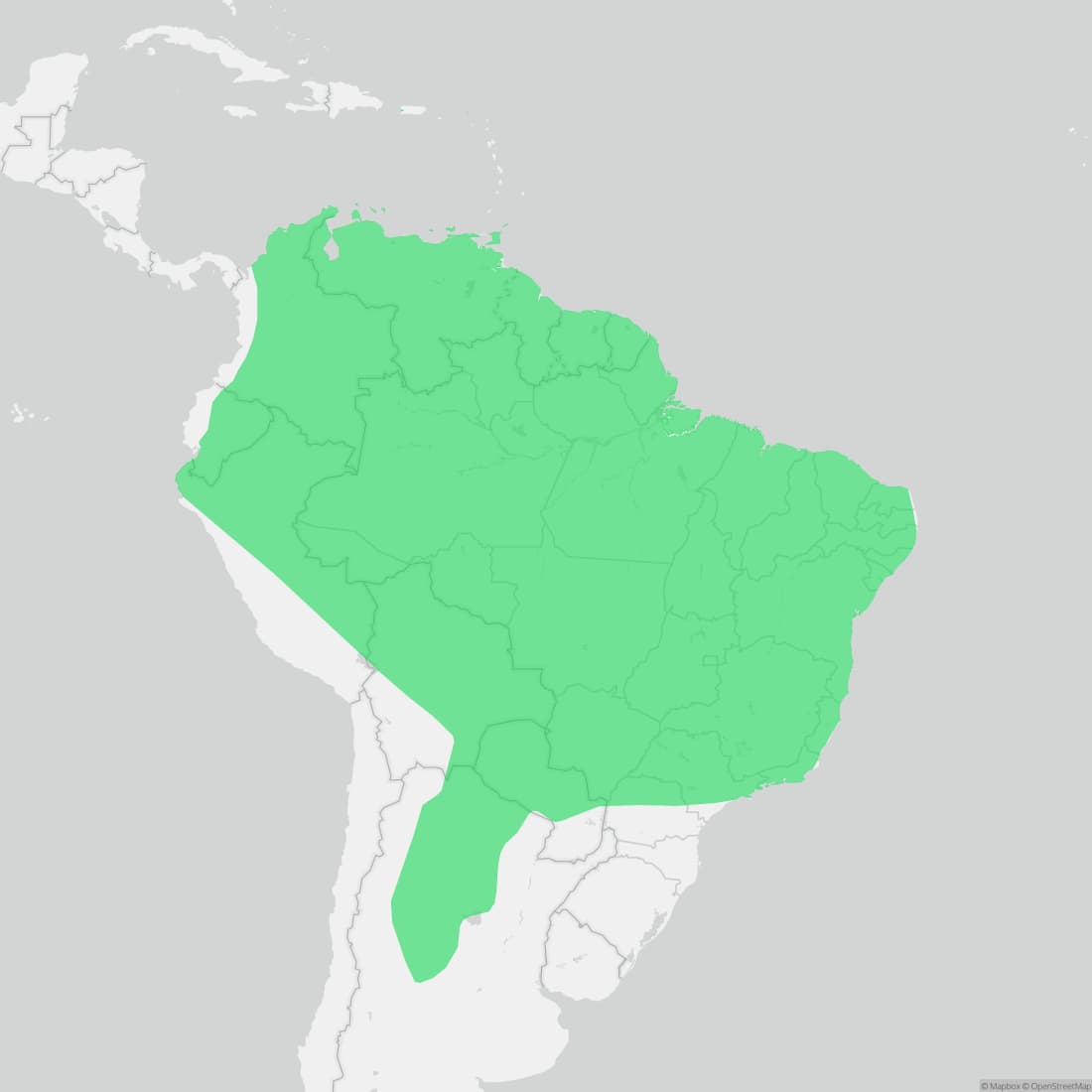
Approximate range. © Mapbox © OpenStreetMap