Collared Pika
Ochotona collaris
O. collaris is similar in size to O. princeps, measuring 18-20 cm in length. They share the same compact body shape, rounded ears, and short tail. The key distinguishing…
How to identify
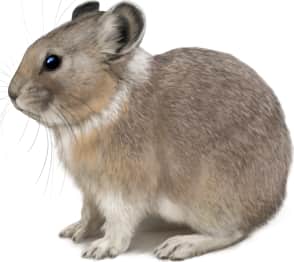
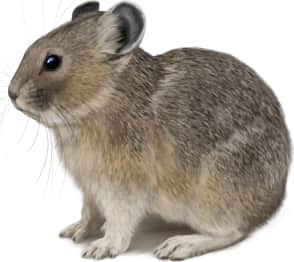
O. collaris is similar in size to O. princeps, measuring 18-20 cm in length. They share the same compact body shape, rounded ears, and short tail. The key distinguishing feature is the presence of a pale grayish or buffy collar around their neck, which is most prominent in their summer pelage. Their overall coloration tends to be slightly grayer than O. princeps.
Range
O. collaris has a more northerly distribution than O. princeps, inhabiting mountainous regions of Alaska, Yukon Territory, and northwestern British Columbia in Canada. Their range is also fragmented, limited to suitable high-elevation habitats.
Habitat
O. collaris occupies rocky slopes, talus fields, and alpine meadows at high elevations. They also rely on crevices and spaces between rocks for shelter and nesting.
Similar species
O. collaris can be confused with O. princeps where their ranges meet, but the collar is a helpful distinguishing characteristic. Other small mammals in similar habitats, like voles and chipmunks, are easily differentiated by their longer tails and body shape.
Name and etymology
Genus
Ochotona
Mongolian (ochodona) for pikas
Origin
Sources
- Palmer, Index Generum Mammalium (1904) ↗
Palmer, T. S. 1904. Index Generum Mammalium: a list of the genera and families of mammals. North American Fauna 23. Government Printing Office, Washington. https://doi.org/10.5962/bhl.title.39809
Species epithet
collaris
Latin for the neck (collum)
Origin
Sources
- Wikipedia: Ochotona collaris ↗
“Ochotona collaris.” Wikipedia. https://en.wikipedia.org/wiki/Collared_pika
Explore more names in the etymology index.
At a glance
Range
O. collaris has a more northerly distribution than O. princeps, inhabiting mountainous regions of Alaska, Yukon Territory, an…
Habitat
O. collaris occupies rocky slopes, talus fields, and alpine meadows at high elevations. They also rely on crevices and spaces…
Guide
Mammals of North America
Range map
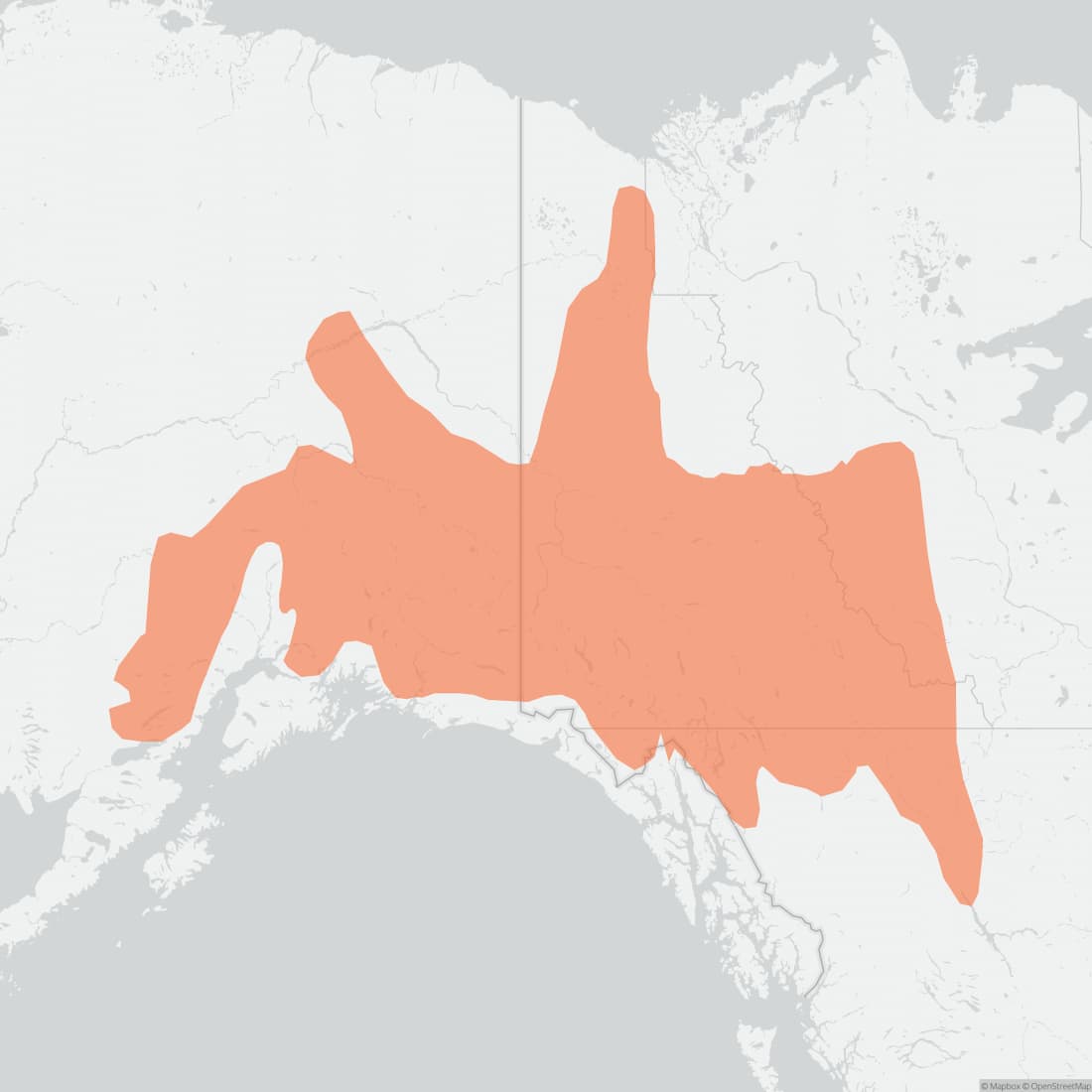
Approximate range. © Mapbox © OpenStreetMap