Western Green Lizard
Lacerta bilineata
The green lizard reaches up to 5.9 inches from the muzzle tip to the Cloaca. Although, the tail could grow up to twice the length of the body, giving the full length of a…
How to identify
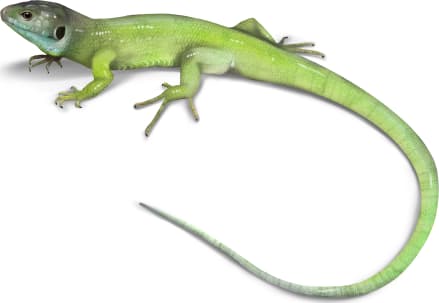
The green lizard reaches up to 5.9 inches from the muzzle tip to the Cloaca. Although, the tail could grow up to twice the length of the body, giving the full length of almost 16 inches. It has a uniform green skin coloration with a bluish throat which is more pronounced in males. Males have a bigger head and body than females. It also has small spots on its dorsum, while the females display 2-4 light bands, bordered by black spots, on their Dorsum. Newly-born Juveniles have a pale-brown pigmentation with a snout-to-vent length of 3-4 cm.
Range
The Green lizard is peculiar to South-eastern Europe, spreading across several Countries like; Southern Germany, Austria, Hungary, Czechia, Slovakia, Eastern Italy, Croatia, Serbia, Montenegro, Albania, Greece, Southern Ukraine, Romania, Bulgaria, and Southern Turkey. Although, it has been introduced in Kansas, the United States.
Habitat
It often dwells in dense, bushy vegetation in open woodlands, hedgerows, field margins, and bramble thickets. They like to bask in the sun, early or late in the day. It feeds on insects and other small invertebrates mainly, but it has been reported to feed on fruits, bird eggs, fledglings, smaller lizards, and even mice. During spring, the females lay 6 to 20 eggs, which hatches between 2 and 4 months. Juveniles grow twice their size in a year.
Variations
lacerta viridis guentherpetersi lacerta viridis meridionalis lacerta viridis viridis
Similar species
The common wall lizard (podarcis muralis) is a tiny species with brownish or greyish skin coloration and often black markings on the throat. Western green lizard (lacerta bilineata) has a bright green body and a blue throat. They could reach a maximum length of 40cm
Name and etymology
Genus
Lacerta
Latin for lizard.
Origin
Sources
- Wikipedia: Lacerta ↗
“Lacerta.” Wikipedia. https://en.wikipedia.org/wiki/Lacerta
Species epithet
bilineata
Latin for two (bi) lined (lineatus).
Origin
Sources
- Wikipedia: Lacerta bilineata ↗
“Lacerta bilineata.” Wikipedia. https://en.wikipedia.org/wiki/Western_green_lizard
Explore more names in the etymology index.
At a glance
Range
The Green lizard is peculiar to South-eastern Europe, spreading across several Countries like; Southern Germany, Austria, Hun…
Habitat
It often dwells in dense, bushy vegetation in open woodlands, hedgerows, field margins, and bramble thickets. They like to ba…
Guide
Reptiles and Amphibians of North America
Range map
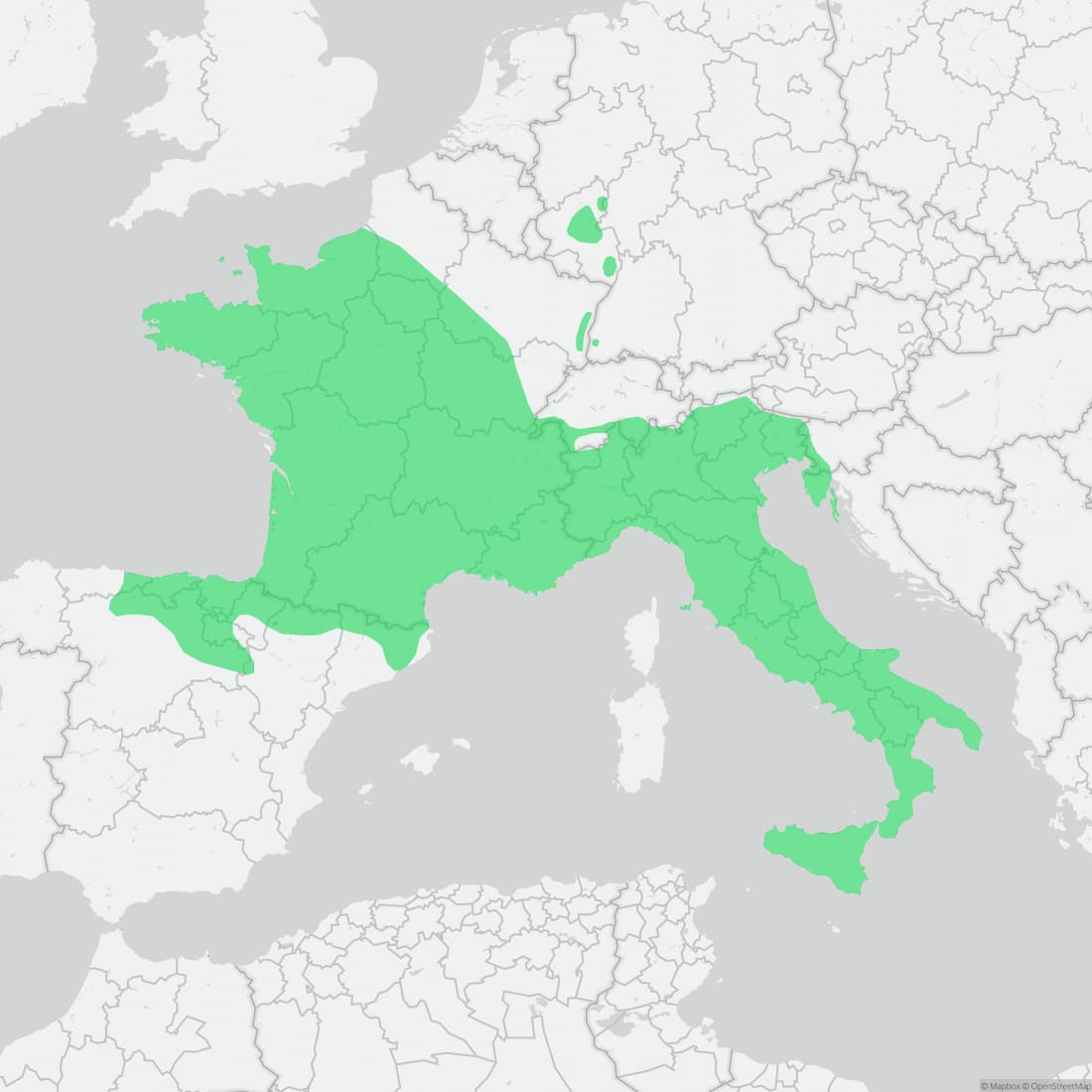
Approximate range. © Mapbox © OpenStreetMap