Appalachian Cottontail
Sylvilagus obscurus
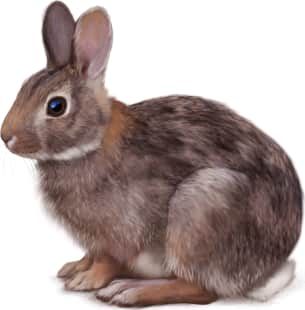
S. obscurus is a medium-sized cottontail, similar in size to the New England Cottontail. They have dark grayish-brown fur with a blackish mid-dorsal stripe and a dark pat…
How to identify
S. obscurus is a medium-sized cottontail, similar in size to the New England Cottontail. They have dark grayish-brown fur with a blackish mid-dorsal stripe and a dark patch between the ears. The nape patch is a dull orange-brown. The underside is grayish-white. Distinguishing them from Eastern Cottontails can be challenging, often requiring careful examination of pelage and skull characteristics.
Range
S. obscurus has a restricted distribution in the Appalachian Mountains of the eastern United States, primarily in western Pennsylvania, western Maryland, West Virginia, and parts of Virginia and North Carolina. Its range is fragmented and declining due to habitat loss and competition with the Eastern Cottontail.
Habitat
S. obscurus inhabits high-elevation forests, particularly areas with dense understory, rocky outcrops, and rhododendron thickets. They require dense cover for protection from predators and suitable nesting sites.
Similar species
The primary similar species is S. floridanus (Eastern Cottontail), which overlaps significantly in range. Subtle differences in pelage coloration, such as the darker dorsal stripe and darker patch between the ears of S. obscurus, can be helpful. Habitat preferences also play a role, with S. obscurus preferring higher-elevation forests.
Name and etymology
Genus
Sylvilagus
Latin for forest (silva) and Greek for hare (lagos_
Origin
Sources
- Palmer, Index Generum Mammalium (1904) ↗
Palmer, T. S. 1904. Index Generum Mammalium: a list of the genera and families of mammals. North American Fauna 23. Government Printing Office, Washington. https://doi.org/10.5962/bhl.title.39809
Species epithet
obscurus
Latin for obscure
Origin
Sources
- Wikipedia: Sylvilagus obscurus ↗
“Sylvilagus obscurus.” Wikipedia. https://en.wikipedia.org/wiki/Appalachian_cottontail
Explore more names in the etymology index.
At a glance
Range
S. obscurus has a restricted distribution in the Appalachian Mountains of the eastern United States, primarily in western Pen…
Habitat
S. obscurus inhabits high-elevation forests, particularly areas with dense understory, rocky outcrops, and rhododendron thick…
Guide
Mammals of North America
Range map
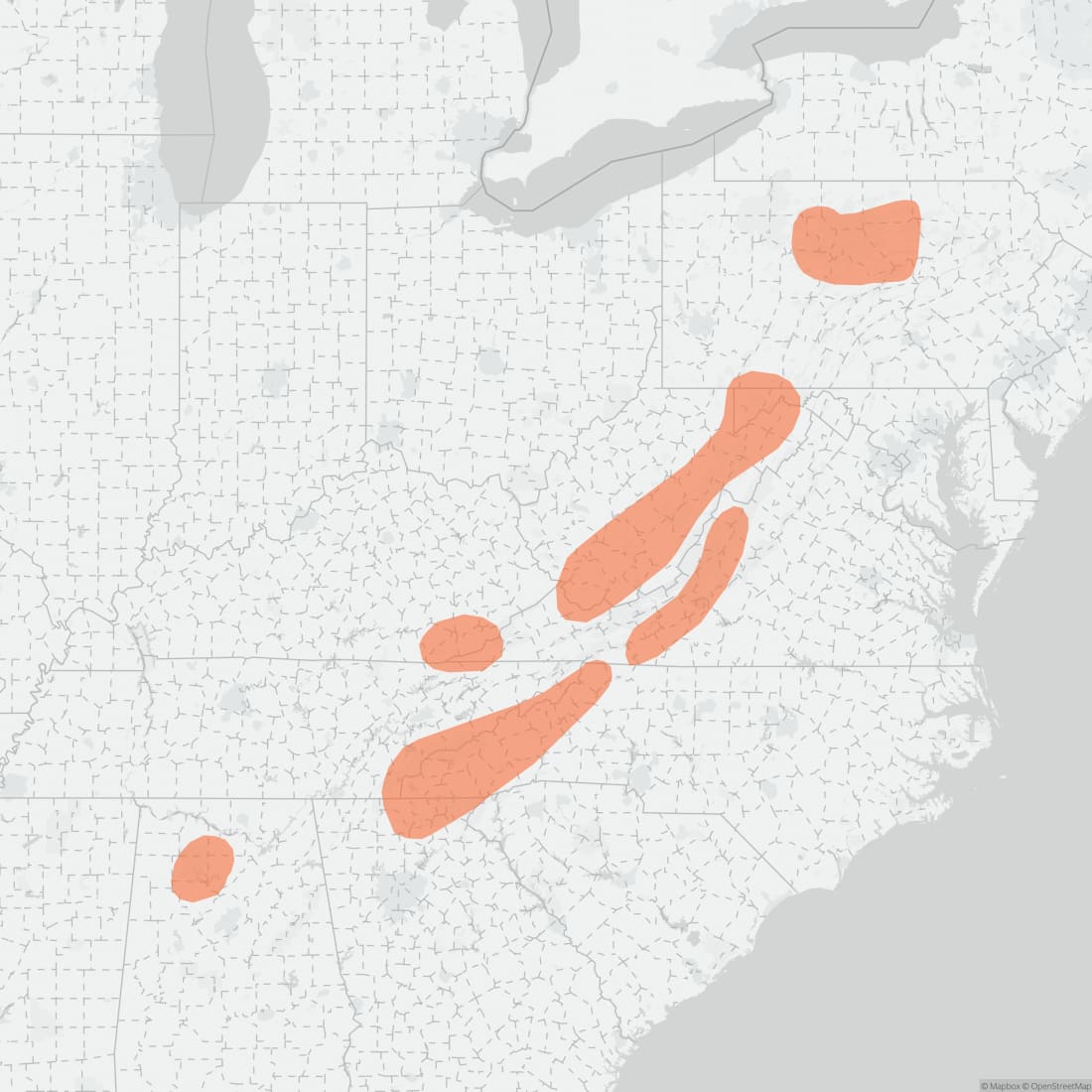
Approximate range. © Mapbox © OpenStreetMap