Tennessee Cave Salamander
Gyrinophilus palleucus
The length of this species ranges from 4.0-7.5 inches. The Tennessee cave salamander or Gyrinophilus palleucus has an overall coloration that ranges from salmon to pale p…
How to identify
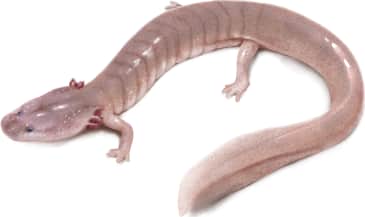
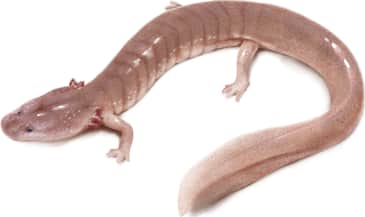
The length of this species ranges from 4.0-7.5 inches. The Tennessee cave salamander or Gyrinophilus palleucus has an overall coloration that ranges from salmon to pale pink. The underside of the belly is pale too. This species is known to have small eyes, wide head, bright red feathery, spatulate snout and external gills. A distinguishing feature of the salamander is that it has no eyelids.
Range
This species is endemic to the Appalachian Mountains present in the United States.
Habitat
The habitats of the Tennessee cave salamander include streams, mud or rock, rimstone pools and isolated pools. It is known to prefer clear water without sediments. This species feeds on amphipods, beetles, earthworms, stoneflies and small aquatic invertebrates that live in caves. Fertilization occurs during the periods when the males have spermatophores which are picked up by the female cloaca. The eggs are attached to the underside of rocks. The gyrinophilus palleucus is paedomorphic, that is, it remains in the larval stage for all of its life
Variations
Gyrinophilus palleucus palleucus or big mouth cave salamander is pale in color and doesn’t have any spot on its body
Similar species
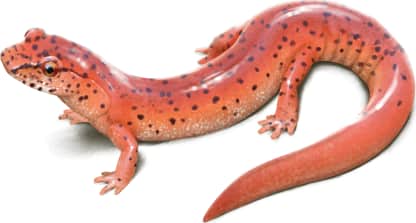
Spring salamander or Gyrinophilus porphyriticus has a light white line from its eye to nostril, that is bordered below by gray pigment which are usually not distinct. The dorsal coloration of this species ranges from red to orange-yellow that is marked with brown or black spots or flecks. The Berry cave salamander or Gyrinophilus gulolineatus has a more spatulate snout when compared to the Tennessee salamander. It also had a broader head and more pigmentation. Up until the adult stage, it has functional eyes which can detect vibrations in water using mechanoreceptors.
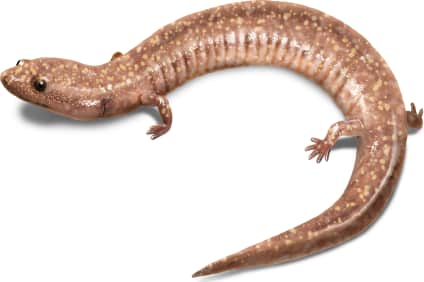
Name and etymology
Genus
Gyrinophilus
Greek for loving (philos) tadpole (gyrinos).
Origin
Sources
- Cope, 1869. Proc. Acad. Nat. Sci. Philadelphia, Vol. 21, p. 108 ↗
Gyrinophilus. Cope, 1869 - Proc. Acad. Nat. Sci. Philadelphia, Vol. 21, p. 108
Species epithet
palleucus
Greek for white or pale.
Origin
Sources
- Brandon, 1965. Copeia, p. 347 ↗
Gyrinophilus palleucus gulolineatus. Brandon, 1965 - Copeia, p. 347
Explore more names in the etymology index.
More illustrations
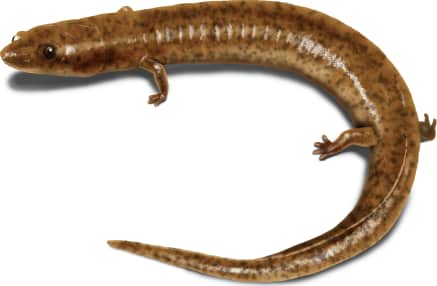
Metamorphosed form
At a glance
Range
This species is endemic to the Appalachian Mountains present in the United States.
Habitat
The habitats of the Tennessee cave salamander include streams, mud or rock, rimstone pools and isolated pools. It is known to…
Guide
Reptiles and Amphibians of North America
Range map
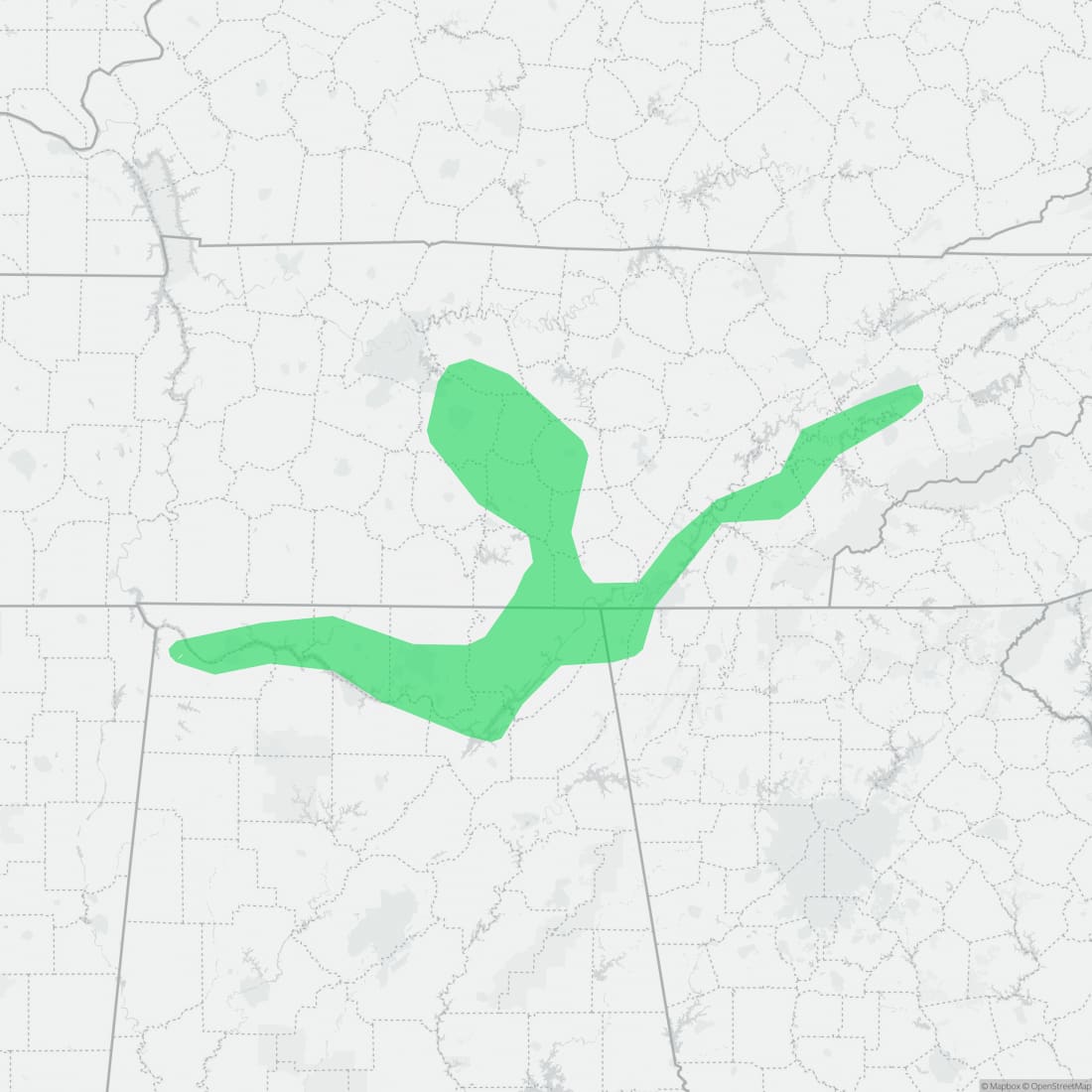
Approximate range. © Mapbox © OpenStreetMap