Spring Salamander
Gyrinophilus porphyriticus
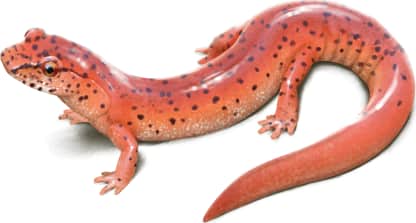
Dorsum either yellowish brown or salmon with red coloring; mottling common. Venter is flesh colored; throat and belly possess small black flecks. Ridge with light colorin…
How to identify
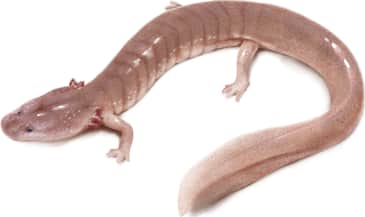
Dorsum either yellowish brown or salmon with red coloring; mottling common. Venter is flesh colored; throat and belly possess small black flecks. Ridge with light coloring connects either eye to beginning of snout. Females lay clutches which can range from 20-100 eggs in number. Larvae metamorphose in 2 to 4 years after birth; reach sexual maturity about one year after metamorphosis.
Range
Eastern United States and Canada from southern Quebec and southern Maine to northeastern Mississippi, Alabama, and northern Georgia.
Habitat
Inhabit smaller streams, springs, seepages, and caves. Can sometimes be found in swamps or on edges of lakes. During rainy weather, spotted in wet wooded areas far from permanent water sources. Hide under rocks and logs during the day but hunt for invertebrates and vertebrates during the night.
Variations
Females can lay eggs in either spring, summer, or fall depending on their locations.
Similar species
Name and etymology
Genus
Gyrinophilus
Greek for loving (philos) tadpole (gyrinos).
Origin
Sources
- Cope, 1869. Proc. Acad. Nat. Sci. Philadelphia, Vol. 21, p. 108 ↗
Gyrinophilus. Cope, 1869 - Proc. Acad. Nat. Sci. Philadelphia, Vol. 21, p. 108
Species epithet
porphyriticus
Greek for reddish-brown (porphyros)
Origin
Sources
- (Green, 1827). Contr. Maclurean Lyc., Vol. 1, p. 3, pl. 1, fig. 2
Gyrinophilus porphyriticus. (Green, 1827) - Contr. Maclurean Lyc., Vol. 1, p. 3, pl. 1, fig. 2
Explore more names in the etymology index.
At a glance
Range
Eastern United States and Canada from southern Quebec and southern Maine to northeastern Mississippi, Alabama, and northern G…
Habitat
Inhabit smaller streams, springs, seepages, and caves. Can sometimes be found in swamps or on edges of lakes. During rainy we…
Guide
Reptiles and Amphibians of North America
Range map
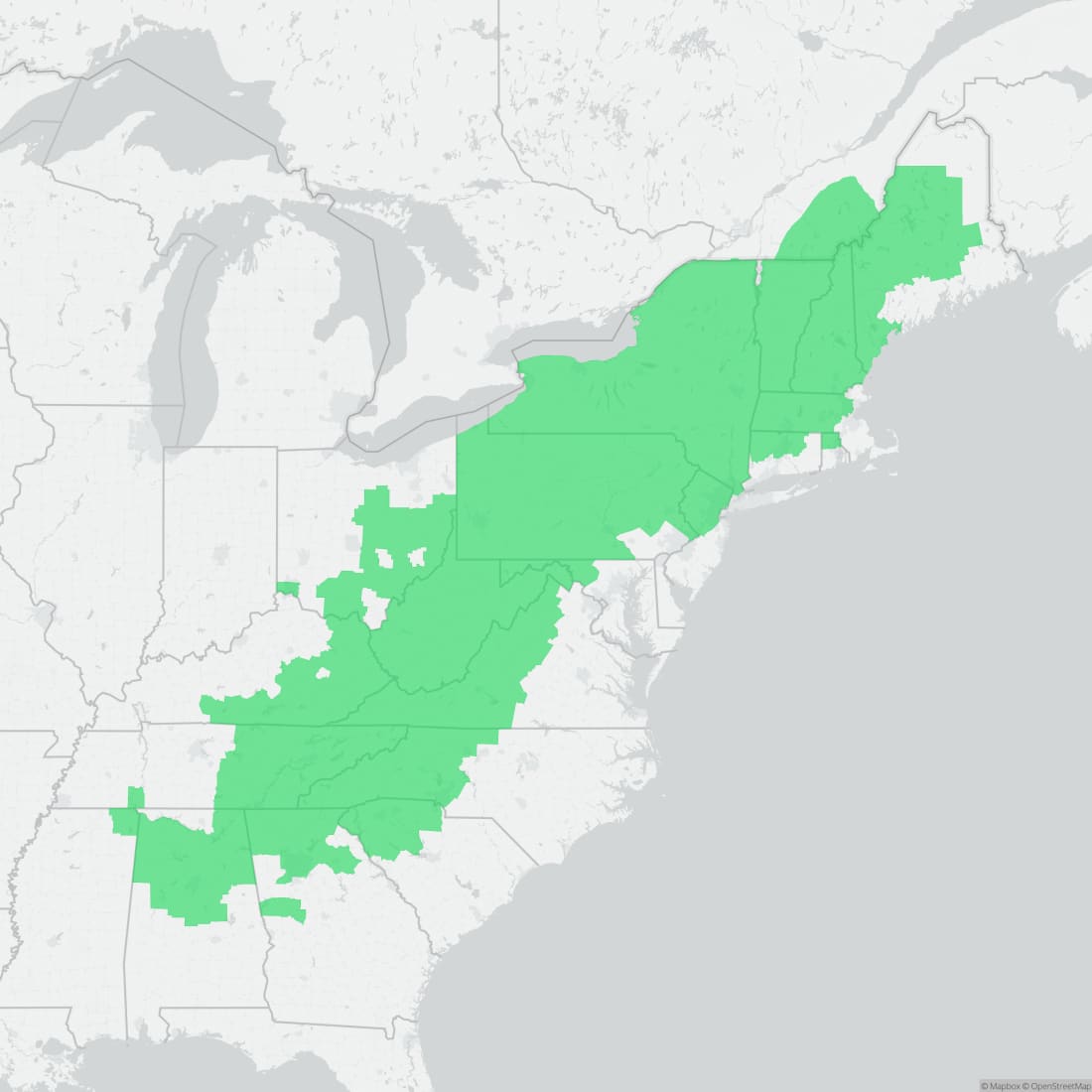
Approximate range. © Mapbox © OpenStreetMap