California Newt
Taricha torosa
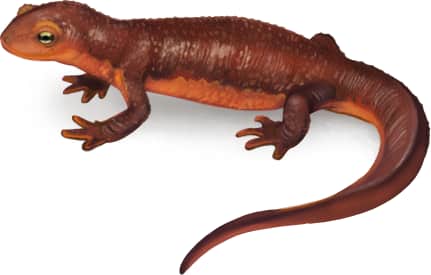
Also called the orange-bellied newt, it has a bright orange ventrum fading up into a dark orange to black dorsum. The skin on its back is bumpy, and its bulging eyes are…
How to identify
Also called the orange-bellied newt, it has a bright orange ventrum fading up into a dark orange to black dorsum. The skin on its back is bumpy, and its bulging eyes are a striking greenish yellow. Adults reach 5-8 inches in length. It emits a strong toxin from its skin.
Range
Only found in California, mainly along the coast from the San Diego area northward to the Mendocino National Forest. An isolated population can be found inland in the Sequoia National Forest.
Habitat
Wide range of terrestrial habitat preferences ranging from forest to chaparral. Like to reside near ponds and creeks where breeding occurs.
Variations
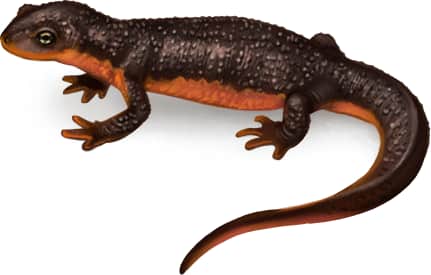
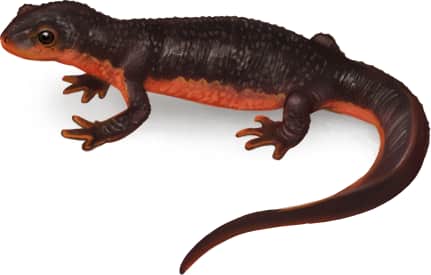
Slight variations in orange hues on belly, and darkness of skin on back.
Similar species
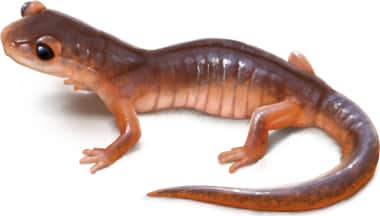
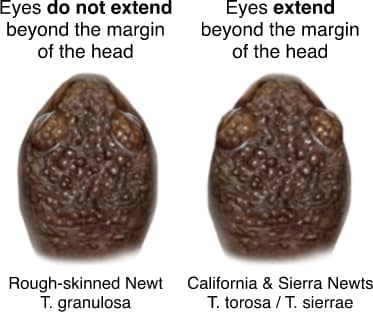
Nearly indistinguishable from the rough-skinned newt (*Taricha granulosa*), which shares its range. Slight difference in skin color around the bottom of their eyes can be noted; orange skin for California newts, and grey for rough-skinned newts. Red-bellied newts (*Taricha rivularis*) are also very similar in appearance and range, but are smaller. The Sierra newt (*Taricha sierrae*) and California newt were once considered a subspecies of *Taricha torosa*, but later separated. The Sierra newt has a more inland California range. The Ensatina (*Ensatina eschscholtzii*) has similar colors, but noticeably different morphology.
Name and etymology
Genus
Taricha
Greek for preserved mummy.
Origin
Sources
- Gray, 1850. Cat. Spec. Amph. Coll. Brit. Mus., Batr. Grad., Part 2, p. 25
Taricha. Gray, 1850 - Cat. Spec. Amph. Coll. Brit. Mus., Batr. Grad., Part 2, p. 25
Species epithet
torosa
Latin for full of muscle.
Origin
Sources
- (Rathke, 1833).
Taricha torosa. (Rathke, 1833) -
Explore more names in the etymology index.
More illustrations
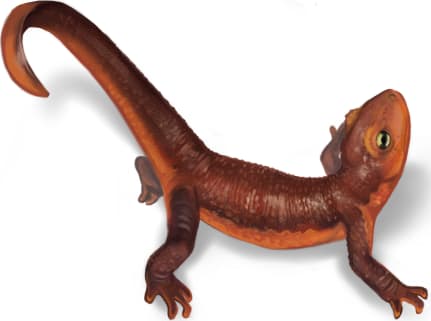
Sierra/California Newt in Defensive Position
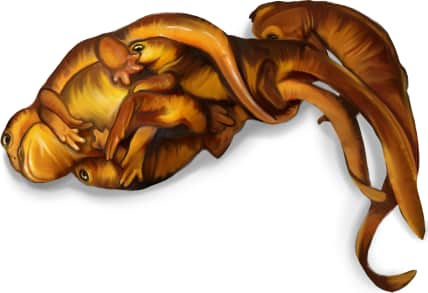
Newt Matting Ball
At a glance
Range
Only found in California, mainly along the coast from the San Diego area northward to the Mendocino National Forest. An isola…
Habitat
Wide range of terrestrial habitat preferences ranging from forest to chaparral. Like to reside near ponds and creeks where br…
Guide
Reptiles and Amphibians of North America
Range map
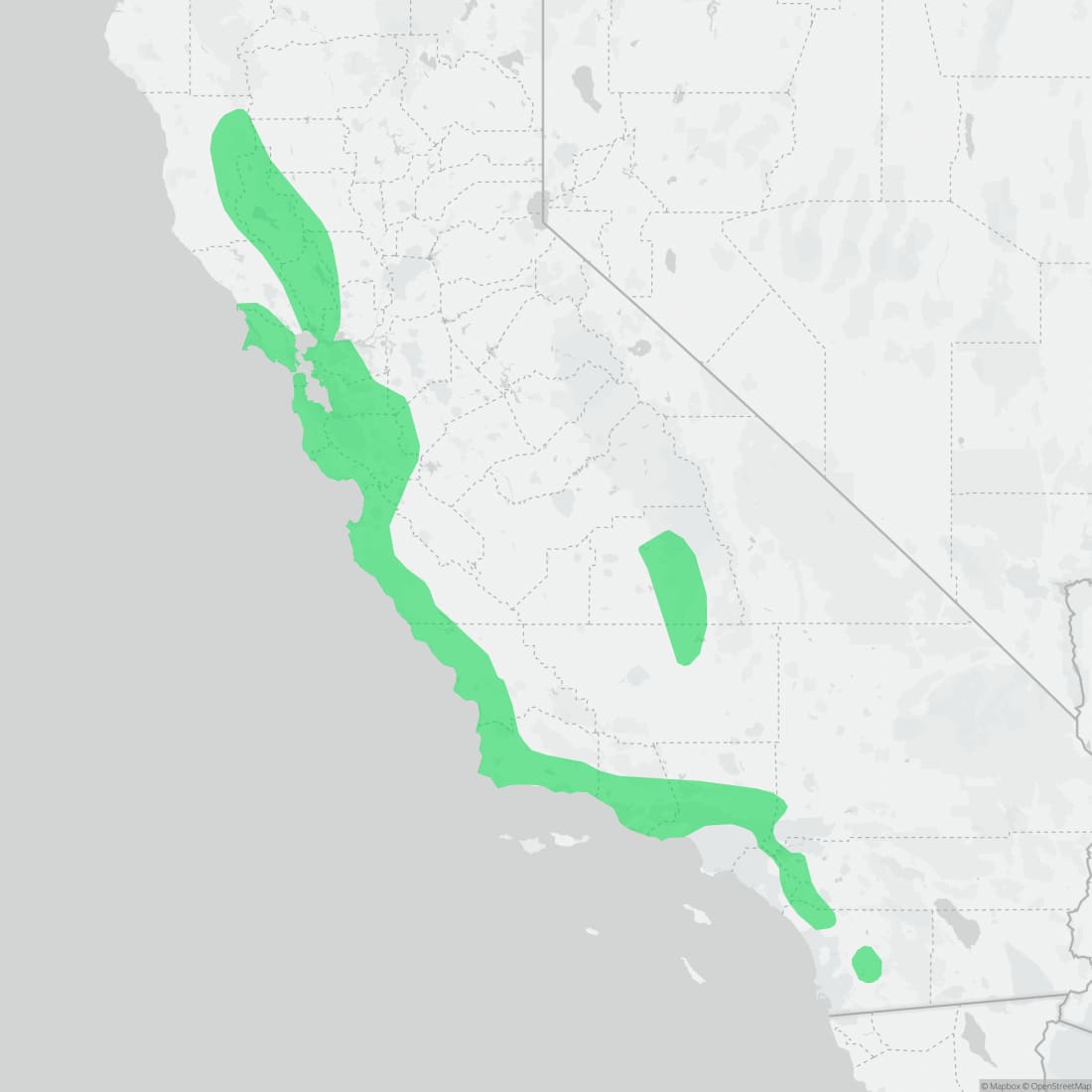
Approximate range. © Mapbox © OpenStreetMap