Ensatina
Ensatina eschscholtzii
A salamander that reaches 3-5 inches in total length and is characterized by its tail which is more narrow at the base than the rest of the tail. They have long skinny le…
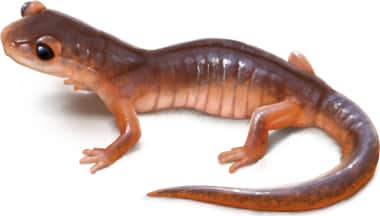
How to identify
A salamander that reaches 3-5 inches in total length and is characterized by its tail which is more narrow at the base than the rest of the tail. They have long skinny legs and large bulging eyes. They come in a variety of colors and patterns, depending on subspecies. They have 5 toes on the hind feet and 4 on the front feet.
Range
Seven subspecies range throughout the Pacific coast, from southwestern British Columbia down to northwestern Baja Peninsula.
Habitat
This species inhabits chaparral, oak woodlands, coniferous forests, or mixed grasslands. It is terrestrial and prefers moist, shady areas with lots of coarse woody debris in which to hide. Often found under rocks, logs, or pieces of fallen bark.
Variations
Some are burnt orange or brown with white or black flecks, some are black with bright yellow or orange patches, some are grey with orange blotching, some are black with a yellow or orange ventrum, and some are pale pinkish, solid black or solid grey.
Similar species
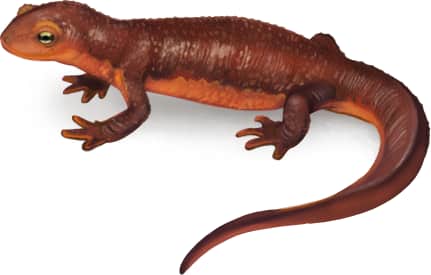
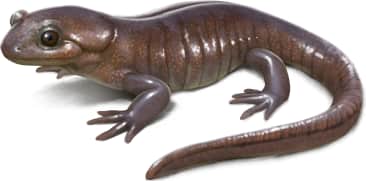
Due to similar coloration, the ensatina could be confused with the California newt (*Taricha torosa*) or Sierra newt (*Taricha sierrae*). It also resembles the northwestern salamander (*Ambystoma gracile*).
Name and etymology
Genus
Ensatina
Latin for similar to (-ina) a sword (ensatus).
Origin
Sources
- Gray, 1850. Cat. Spec. Amph. Coll. Brit. Mus., Batr. Grad., p. 48
Ensatina. Gray, 1850 - Cat. Spec. Amph. Coll. Brit. Mus., Batr. Grad., p. 48
Species epithet
eschscholtzii
Honoring Johann F. Eschscholtz.
Origin
Honors
Sources
- (Cope, "1867" 1868). Proc. Acad. Nat. Sci. Philadelphia, Vol. 19, p. 210 ↗
Ensatina eschscholtzii croceater. (Cope, "1867" 1868) - Proc. Acad. Nat. Sci. Philadelphia, Vol. 19, p. 210
Explore more names in the etymology index.
More illustrations
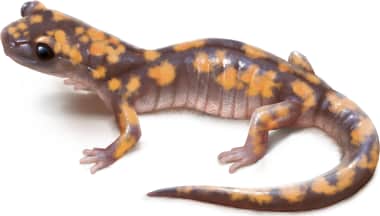
Sierra Nevada Ensatina
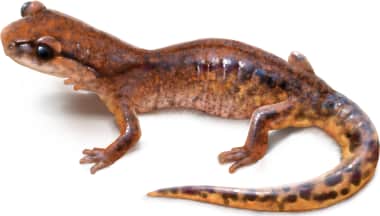
Painted Ensatina
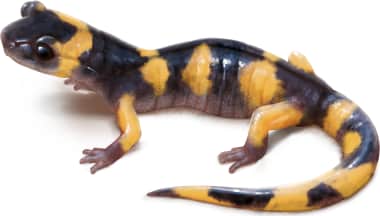
Large-blotched Ensatina
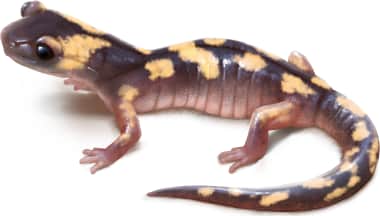
Yellow-blotched Ensatina
At a glance
Range
Seven subspecies range throughout the Pacific coast, from southwestern British Columbia down to northwestern Baja Peninsula.
Habitat
This species inhabits chaparral, oak woodlands, coniferous forests, or mixed grasslands. It is terrestrial and prefers moist,…
Guide
Reptiles and Amphibians of North America
Range map
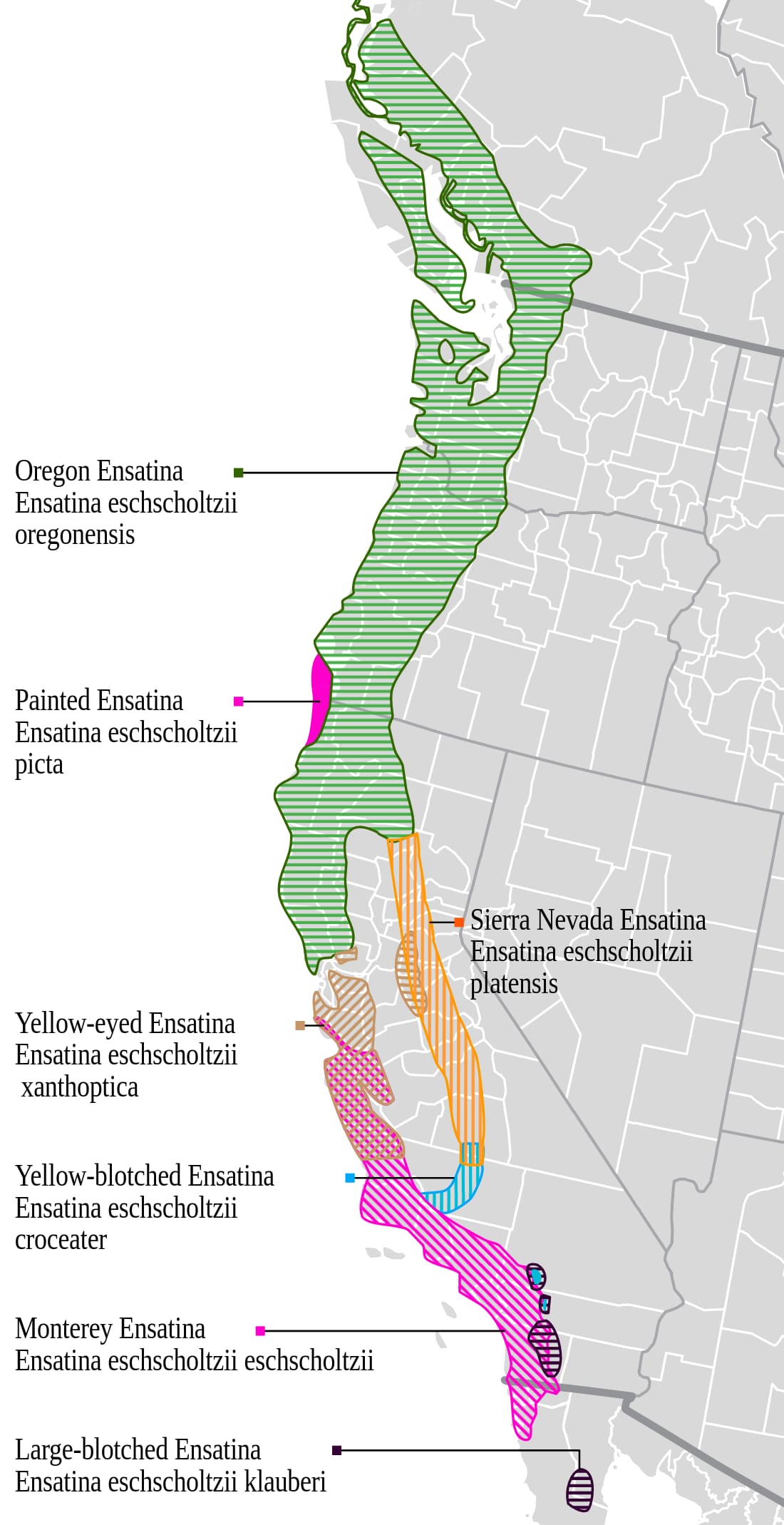
Approximate range. © Mapbox © OpenStreetMap