Georgia Blind Salamander
Eurycea wallacei
Little is known about this blind, neotenic salamander. It has 3 long pink feather-like gills on each side, and translucent skin with tiny grey speckles. It has long, skin…
How to identify
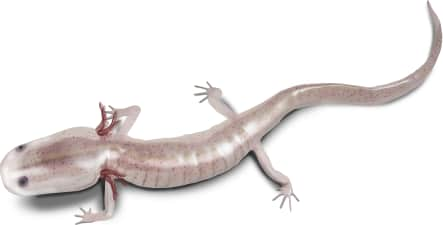
Little is known about this blind, neotenic salamander. It has 3 long pink feather-like gills on each side, and translucent skin with tiny grey speckles. It has long, skinny legs, a shovel-shaped head, and tiny black eyes under the skin. It averages 5-7 cm in total length.
Range
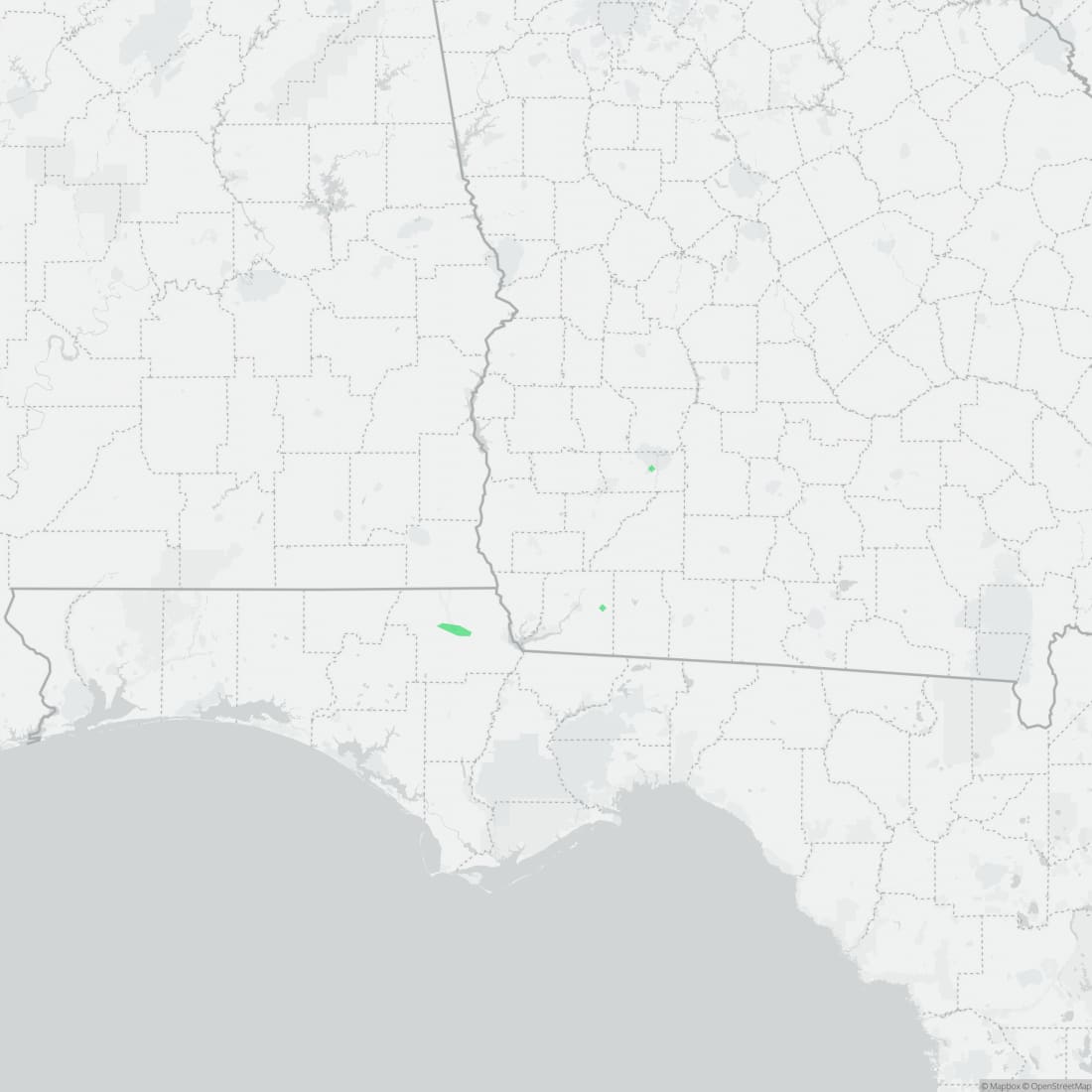
Three separate tiny ranges; two in southwest Georgia and one in the central Florida panhandle.
Habitat
This aquatic species is only found in underground caves and other water-filled subterranean passageways connected to the Floridan aquifer system.
Variations
No known variations in appearance.
Name and etymology
Genus
Eurycea
Probably honoring Eurydice the wife of Orpheus in Greek mythology. Although Rafinesque, who named the genus, only wrote "mythological"
Origin
Honors
Sources
- Rafinesque, 1822. Kentucky Gazette, Lexington, N. S., Vol. 1, No. 9, Feb. 28, p. 3, column 6
Eurycea. Rafinesque, 1822 - Kentucky Gazette, Lexington, N. S., Vol. 1, No. 9, Feb. 28, p. 3, column 6
Species epithet
wallacei
Honoring arachnologist Howard K. Wallace.
Origin
Sources
- Wikipedia: Eurycea wallacei ↗
“Eurycea wallacei.” Wikipedia. https://en.wikipedia.org/wiki/Georgia_blind_salamander
Explore more names in the etymology index.
At a glance
Range
Three separate tiny ranges; two in southwest Georgia and one in the central Florida panhandle.
Habitat
This aquatic species is only found in underground caves and other water-filled subterranean passageways connected to the Flor…
Guide
Reptiles and Amphibians of North America
Range map
Approximate range. © Mapbox © OpenStreetMap