Greater Earless Lizard
Cophosaurus texanus
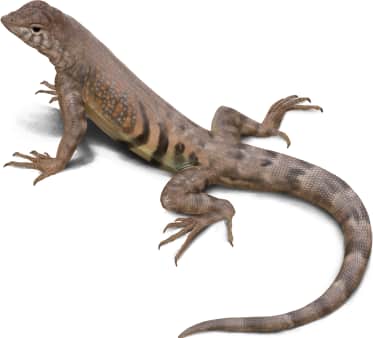
The greater earless lizard is medium-sized at a 3.5 in average snout-to-vent length. The limbs are slender and the tail is flattened. The scales are gray, or tan and the…
How to identify
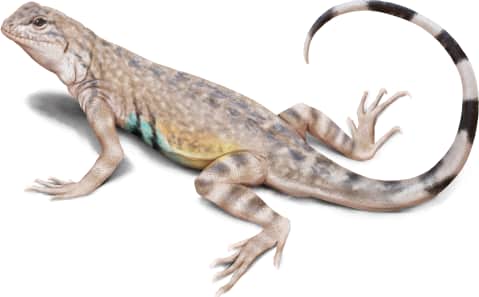
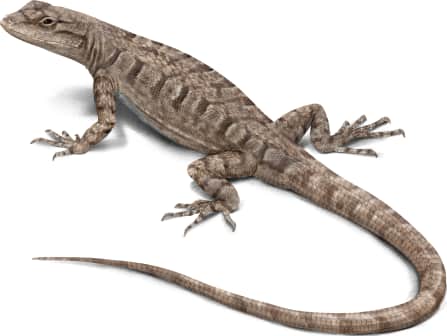
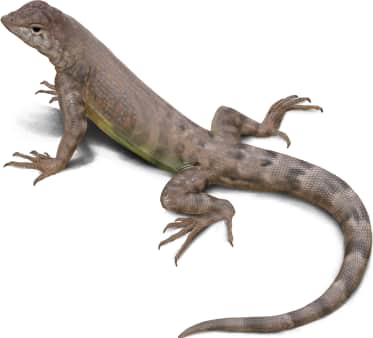
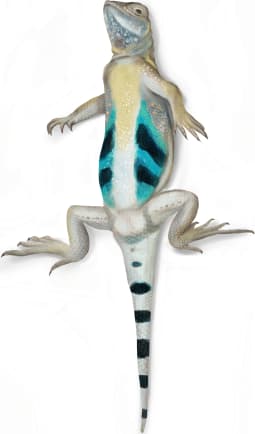
The greater earless lizard is medium-sized at a 3.5 in average snout-to-vent length. The limbs are slender and the tail is flattened. The scales are gray, or tan and the underside of the tail is white and has black cross bands. The upper part of the body has yellow or peach flecks surrounded by speckles of a whitish color or cream. The males have tints of yellow on the lower back, the groin, and forelimbs. Two dark stripes on the belly extend to the sides. Males have these bars surrounded by blue blotches while females have very faint bars or none at all. In the breeding seasons, females display pink throat patches and an orange or peach tint on the flanks. This lizard lacks an external ear opening, as the name implies.
Range
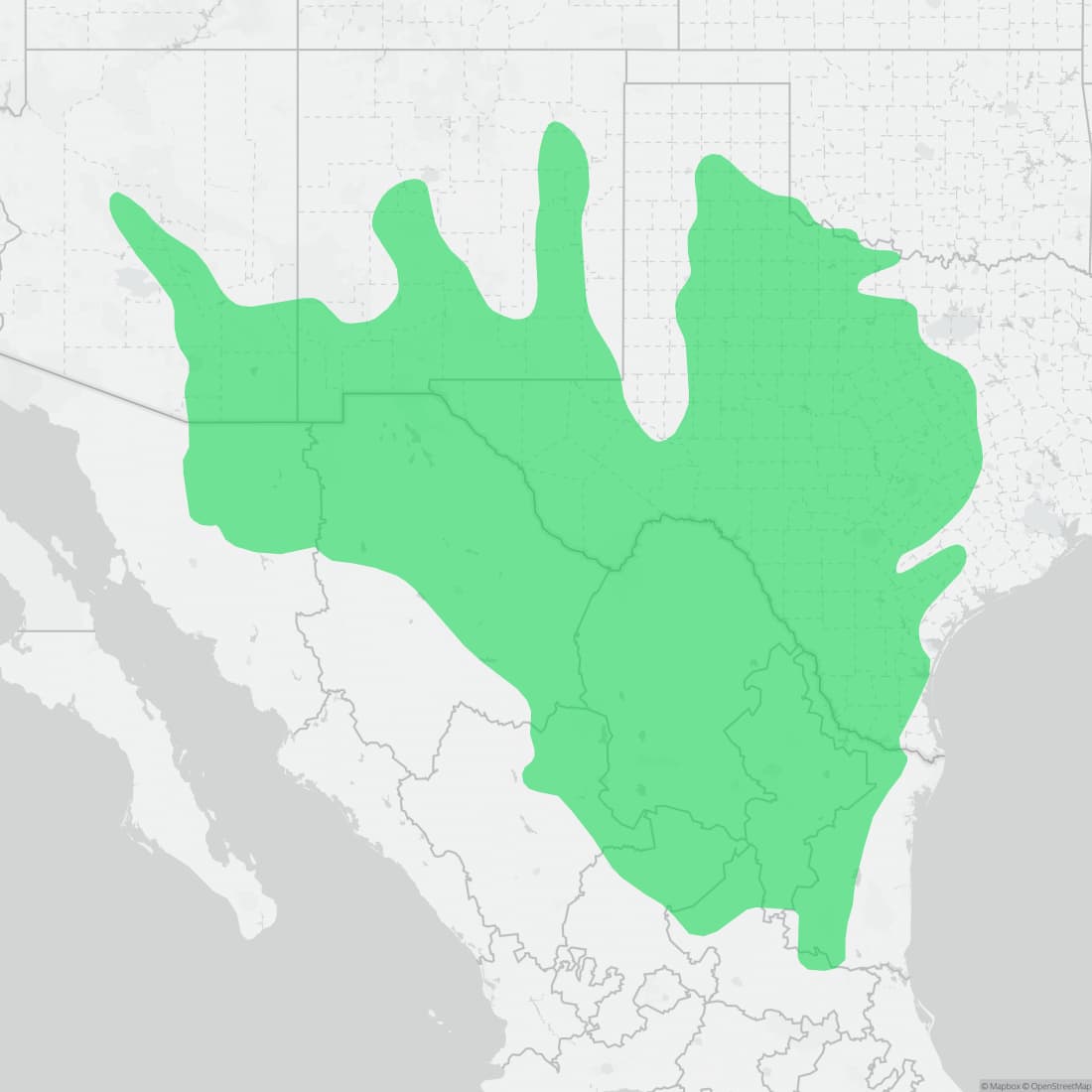
This lizard is endemic to North America with its range extending from Arizona to southern New Mexico across northern Texas and then south to Mexico (Zacatecas and San Luis Potosi, and Tamaulipas).
Habitat
This lizard can be found in the desert scrubland, semi-desert grassland, and the coniferous woodlands. They are usually seen on the open slopes and sandy drainages of flats within the mountainous terrain. The greater earless lizard feeds on invertebrates including insects such as grasshoppers, moths, bees, beetles, butterflies, caterpillars and ants. They also feed on arachnids such as spiders. Mating season for this lizard is in spring. The females lay one or more clutches of eggs from spring to summer. Clutch size can range from 2 – 9 eggs.
Similar species
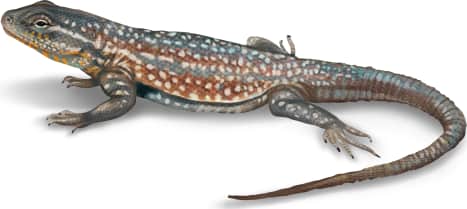
The zebra-tailed lizard or Callisaurus draconoides is characteristically distinguished from C. texanus by the forward position of its side bars. Common Side-blotched Lizard or Uta stansburiana is smaller with a snout-to-vent length of 2.4 inches. A distinguishing feature is the coloration – with males having blue flecks on their backs and tails. The most obvious (and in both sexes) is the characteristic blotch at the sides that earn it its name. Ornate Tree Lizard or Urosaurus ornatus is smaller as well, with an average snout-to-vent length of 2.3 inches. The ornate tree lizard can be found in a variety of colors. However, one of the salient features is the orange throat coloration among the males.
Name and etymology
Genus
Cophosaurus
Greek for deaf (kophos) lizard (saurus).
Origin
Sources
- Troschel, "1850" 1852. Arch. Naturg., Vol. 16, Band 1, p. 389, pl. 6
Cophosaurus. Troschel, "1850" 1852 - Arch. Naturg., Vol. 16, Band 1, p. 389, pl. 6
Species epithet
texanus
Belonging to Texas.
Origin
Sources
- Troschel, "1850" 1852. Arch. Naturg., Vol. 16, Band 1, p. 389, pl. 6
Cophosaurus. Troschel, "1850" 1852 - Arch. Naturg., Vol. 16, Band 1, p. 389, pl. 6
Explore more names in the etymology index.
More illustrations
Greater Earless Lizard Female
At a glance
Size
60 to 130 mm
Range
This lizard is endemic to North America with its range extending from Arizona to southern New Mexico across northern Texas an…
Habitat
This lizard can be found in the desert scrubland, semi-desert grassland, and the coniferous woodlands. They are usually seen…
Range map
Approximate range. © Mapbox © OpenStreetMap