
Reticulated Gecko
Coleonyx reticulatus
The reticulated gecko is a large gecko with an average length of 5inches. Although the skin is thin, supple and flexible, its whole body is covered with rows of tubercles…
How to identify
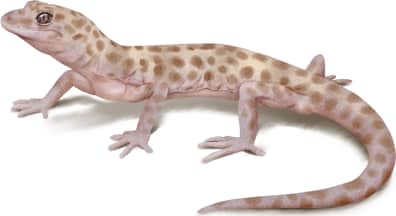
The reticulated gecko is a large gecko with an average length of 5inches. Although the skin is thin, supple and flexible, its whole body is covered with rows of tubercles and small granular scales on the dorsal part except the belly which appears tan and patternless. Its base coloration is usually pink but with several brown bands all round. In matured species, these brown bands become reticulated, forming a series of network, hence, the name ‘Reticulated Banded Gecko’. It has a large pair of eyes and moveable eyelids. It has a long and prehensile tail, spindly legs, slender and paddless toes.
Range
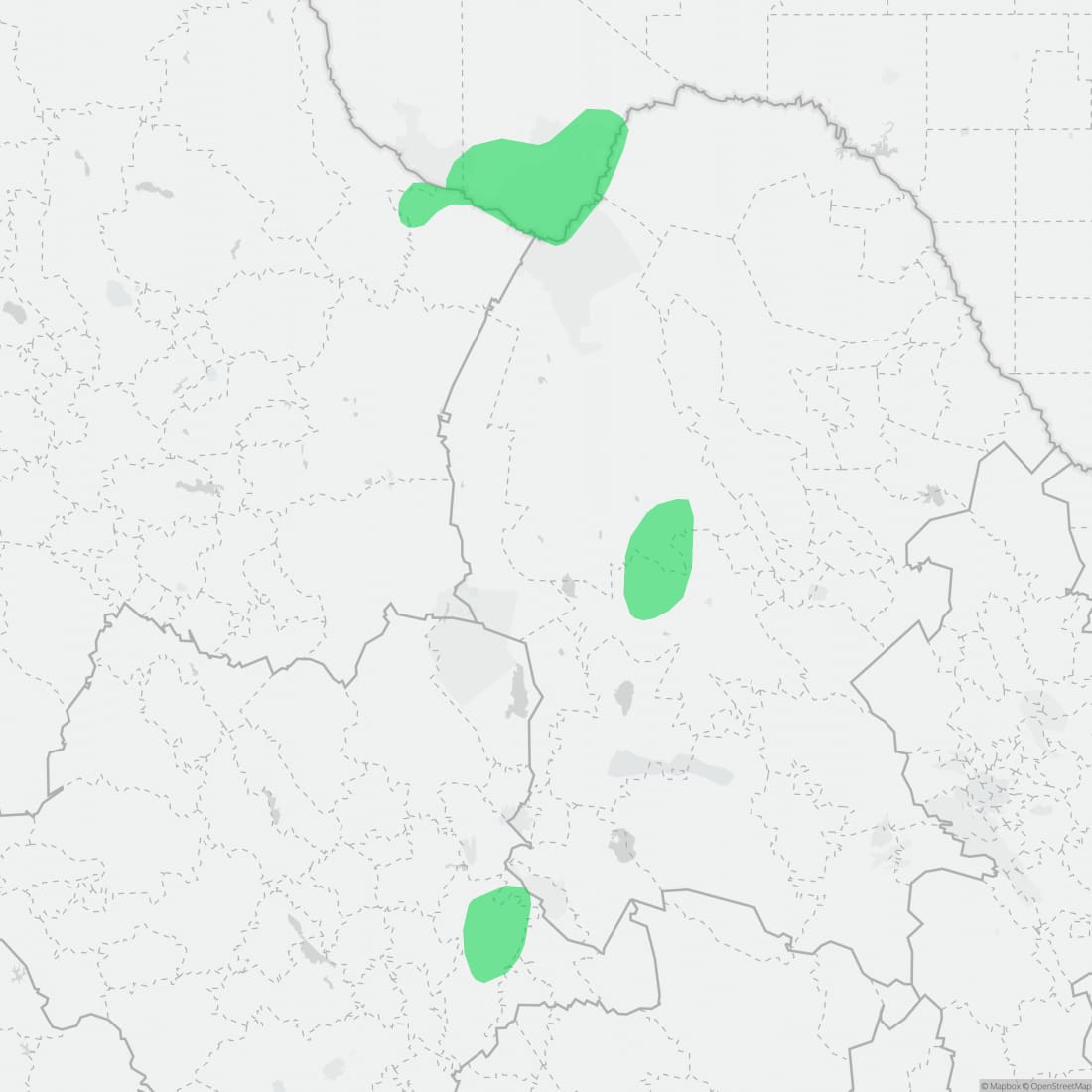
The reticulated banded gecko has a small area of distribution and is native to Texas, United States and Mexico.
Habitat
The reticulated gecko dwells in cracks and crevices in dry and rocky regions with other similar species and because of that, is often mistaken as the Texas Banded Gecko although the reticulated gecko is larger in size. It is nocturnal but takes cover when the daytime temperature or environment seems harmful. For instance, when exposed to natural or artificial lighting, the eyes immediately begins to dilate. It is classified as a coldblooded reptile and so outsources heat or cold as needed. Ideally, the reticulated gecko is terrestrial but not as terrestrial as similar species. It has a detachable tail used as a distraction when threatened or under attack. It is considered small but smart as it stalks and sneaks on preys like cats putting out one leg at a time. It is considered a carnivore hence, feeds majorly on various types of small arthropods (invertebrates) ranging from beetles to cricket, grasshoppers, ants, etc. It is dimorphic and considering that reproduction is oviparous, at about a month after mating, the female specie lays eggs and give in approximately two months for incubation, before producing a gecko.
Similar species
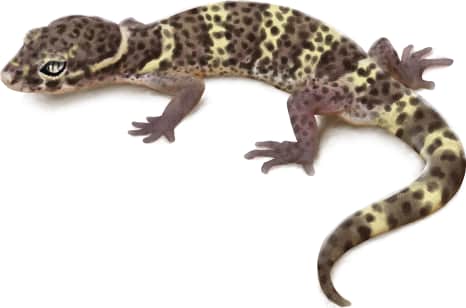
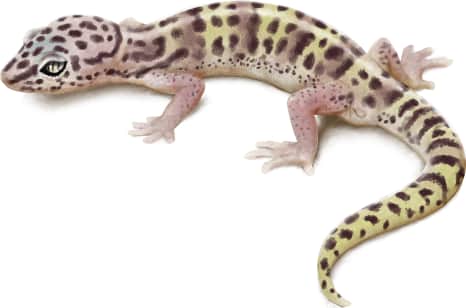
The Texas Banded Gecko (Coleonyx brevis) are small geckos compared to the reticulated gecko. It hardly exceeds 4inches in total length. It has interchanging band colors ranging from pink to yellow and brown, taped black and sparsely covered with dark spots. This banded pattern gets more mottled as the reptiles age. The Western Banded Gecko (Coleonyx variegatus) is a sandy colored gecko with reddish-brown patterns. Its skin is sleek and silky. It has tiny aligning dorsal scales. A matured western banded gecko grows up to 4 to 6 inches in total length while hatchlings rarely measure up to an inch in size. Its tail is also detachable as in the reticulated gecko. The Central American banded gecko(Coleonyx mitratus) is a moderate sized reptile of about 190mm lengthwise. Its tail is usually longer than half of its entire body. Distinguishingly, this gecko is beautifully banded; it has brown, black and yellow horizontal bands on the dorsal part.
Name and etymology
Genus
Coleonyx
Greek for sheath (koleos) claw (onyx).
Origin
Sources
- Gray, 1845. Ann. Mag. Nat. Hist., Ser. 1, Vol. 16, p. 162 ↗
Coleonyx. Gray, 1845 - Ann. Mag. Nat. Hist., Ser. 1, Vol. 16, p. 162
Species epithet
reticulatus
Latin for netted.
Origin
Sources
- Davis and Dixon, 1958. Proc. Biol. Soc. Washington, Vol. 71, p. 151 ↗
Coleonyx reticulatus. Davis and Dixon, 1958 - Proc. Biol. Soc. Washington, Vol. 71, p. 151
Explore more names in the etymology index.
At a glance
Range
The reticulated banded gecko has a small area of distribution and is native to Texas, United States and Mexico.
Habitat
The reticulated gecko dwells in cracks and crevices in dry and rocky regions with other similar species and because of that,…
Guide
Reptiles and Amphibians of North America
Range map
Approximate range. © Mapbox © OpenStreetMap