
Southwestern Speckled Rattlesnake
Crotalus pyrrhus
The southwestern speckled rattlesnake has a length that ranges from 91cm to 120 cm. The color pattern of this species varies as it depends on the color of the rocks and s…
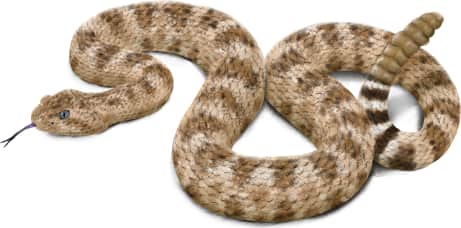
How to identify
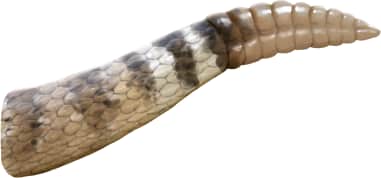
The southwestern speckled rattlesnake has a length that ranges from 91cm to 120 cm. The color pattern of this species varies as it depends on the color of the rocks and soil of the habitat. The ground color of the snake may be brown, pink, gray, yellow, nearly white and it is speckled with black and white. The pattern, if present consist of rhombs, blotches or bands. The tail of Crotalus pyrrh is ringed.
Range
This species is found in the southwestern United States that includes southern California, southern Nevada, Southwestern Utah, and western Arizona. It I s also found in northwestern Mexico, in Sonora and northern Baja California.
Habitat
The habitats includes rocky country, talus slopes, canyons, rocky hillsides. This species can also be found in cactus country but are never away from rocks. The southwestern speckled rattlesnake is a nocturnal creature and takes shelter in rock crevices during the day. It feeds on mostly small mammals,, birds, lizards. The females are ovoviviparous, giving birth to up to 12 live young. The neonates are 12 inches long.
Similar species
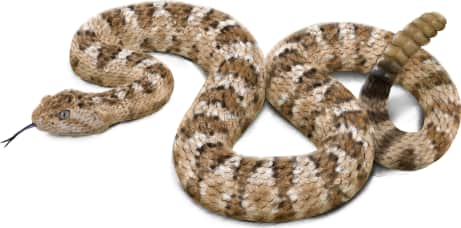
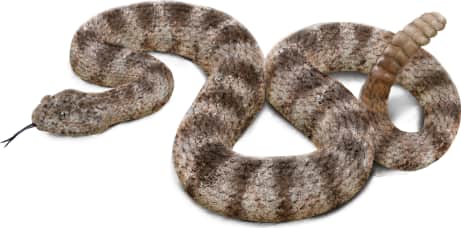
The Great Basin rattlesnake or Crotalus lutosus has three or more internasal scales. It has 32-49 dorsal blotches which range from dark brown to black in color and have pale centres. The blotches are irregular in shape with the lateral blotches indistinct anteriorly. The blotches become more distinct posteriorly. The tiger rattlesnake or Crotalus tigris has crossbands on the anterior portion of its body with a seires of 36-52 olive , gray or brown bands across its dorsum which consists of mainly heavy punctuations. The ridge-nosed rattlesnake or Crotalus willardi has distinctive ridges along each side of the nose. The ridges are a series of scales that are upturned. The color pattern of this species is generally a dark brown base.
Name and etymology
Genus
Crotalus
Greek for rattle (krotalon).
Origin
Sources
- Linnaeus, 1758. Syst. Nat., 10th ed., Vol. 1, p. 214 ↗
Crotalus. Linnaeus, 1758 - Syst. Nat., 10th ed., Vol. 1, p. 214
Species epithet
pyrrhus
Honoring Pyrrhus of Epirus or Greek for reddish
Origin
Honors
Sources
- Wikipedia: Crotalus pyrrhus ↗
“Crotalus pyrrhus.” Wikipedia. https://en.wikipedia.org/wiki/Crotalus_pyrrhus
Explore more names in the etymology index.
More illustrations
Tail
At a glance
Range
This species is found in the southwestern United States that includes southern California, southern Nevada, Southwestern Utah…
Habitat
The habitats includes rocky country, talus slopes, canyons, rocky hillsides. This species can also be found in cactus country…
Guide
Reptiles and Amphibians of North America
Range map
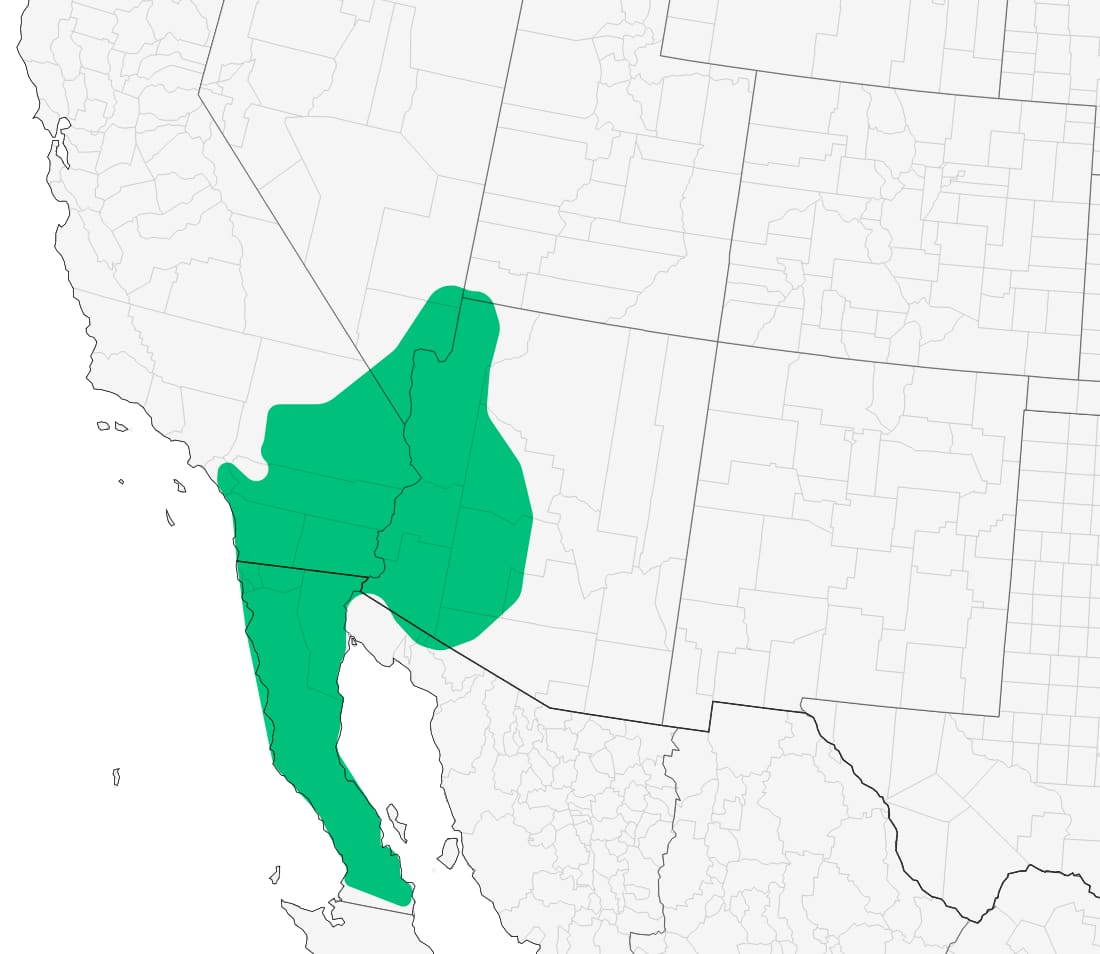
Approximate range. © Mapbox © OpenStreetMap