Western Dwarf Salamander
Eurycea paludicola
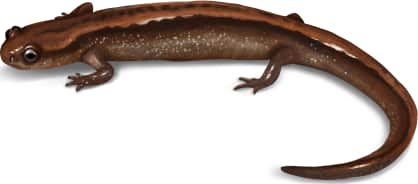
The Western Dwarf Salamander has metachrosis ability which is the ability to change colors by alternating pigment cells. The dorsal color has a range of dark-brown to yel…
How to identify
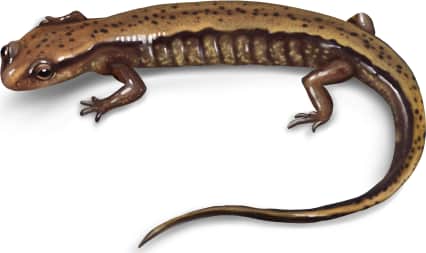
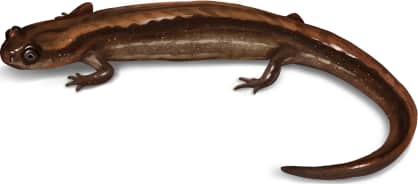
The Western Dwarf Salamander has metachrosis ability which is the ability to change colors by alternating pigment cells. The dorsal color has a range of dark-brown to yellow while the dorsal strip can move from brown to orange to yellow which is usually lighter than the background color. It grows to between 2.0 and 3.5 inches with a slender body with a long tail and dark stripes down each side.
Range
The Eurycea paludicola is spread out through the western third of the Texan geographical area and found further eastward into the southern area of Arkansas, the majority of Louisiana and the eastern portion of Mississippi.
Habitat
The Western Dwarf Salamander favors habitats of swampy pine woods leaving most of its life under leaf litter. Reproduction is prime in the fall with between 12 and 48 eggs being laid in shallow or slow-moving water and preferably still waters.
Similar species
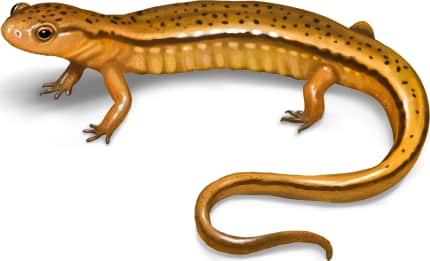
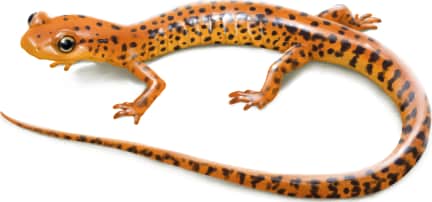
The Florida Dwarf Salamander (Eurycea Quadrigigata) is a four-fingered salamander that has a slender body. The Eurycea paulodica was recently classified as a sub-species of the Eurycea quadrigigata until recently it was upgraded to a species. It has a slender body with a long tail and usually yellow-brown with a deeper brown blotch and dark stripes running along each side. It is classified as an epithet quadridigitatat to show that its feet have four toes. The Brown-backed salamander (Eurycea aquatica) is a species of Brook Salamander. They are deeply brown colored. They are often between 30mm t0 40mm and are sexually dimorphic with the head shapes having males have broader heads. The Southern Two Lined Salamander (Eurycea cirrigera) are temperate areas thin salamanders distinguished by two lateral lines running down its lateral portion. Its deep light brown and grows to between 6.5cm and 12cm in length. The Long-tailed Salamander (Eurycea longicauda) is alternatively termed "cave salamander" because of its frequent caves. The body color varies from yellow to orange red-spotted randomly with black patches. They grow to an average length of 2 inches in snout to vent length while its distinctive tail measures 2.8 inches.
Name and etymology
Genus
Eurycea
Probably honoring Eurydice the wife of Orpheus in Greek mythology. Although Rafinesque, who named the genus, only wrote "mythological"
Origin
Honors
Sources
- Rafinesque, 1822. Kentucky Gazette, Lexington, N. S., Vol. 1, No. 9, Feb. 28, p. 3, column 6
Eurycea. Rafinesque, 1822 - Kentucky Gazette, Lexington, N. S., Vol. 1, No. 9, Feb. 28, p. 3, column 6
Species epithet
paludicola
Latin for delling (-cola) in a marsh or swamp (paludis)
Origin
Sources
- Wikipedia: Eurycea paludicola ↗
“Eurycea paludicola.” Wikipedia. https://en.wikipedia.org/wiki/Western_dwarf_salamander
Explore more names in the etymology index.
At a glance
Range
The Eurycea paludicola is spread out through the western third of the Texan geographical area and found further eastward into…
Habitat
The Western Dwarf Salamander favors habitats of swampy pine woods leaving most of its life under leaf litter. Reproduction is…
Guide
Reptiles and Amphibians of North America
Range map
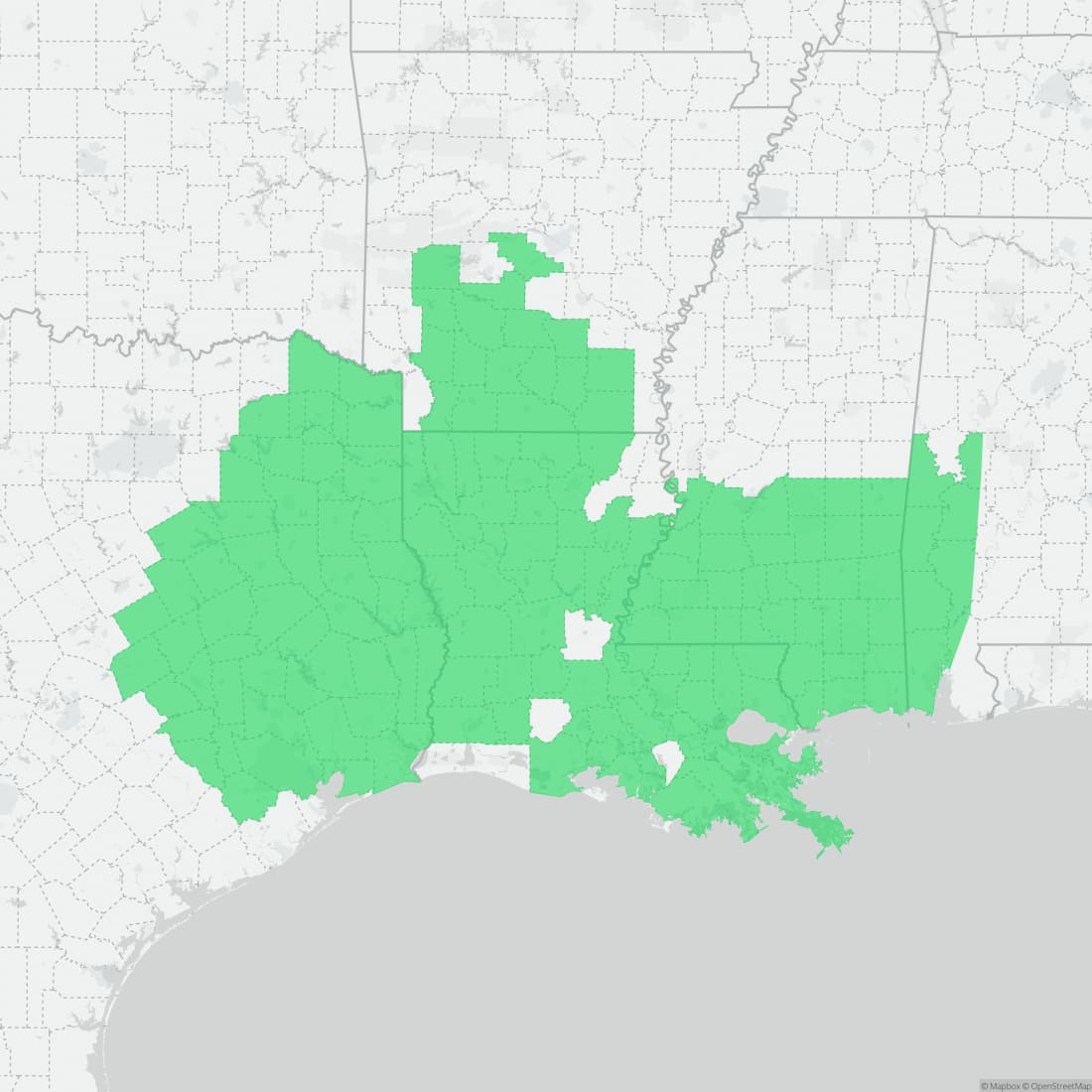
Approximate range. © Mapbox © OpenStreetMap