Twin-spotted Rattlesnake
Crotalus pricei
This specie is a small snake of about 660 mm in total length. They are usually blue-grey, pale-grey or grey-brown. They have two rows of small, dark blotches that run dow…
How to identify
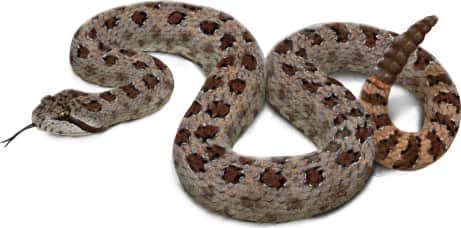
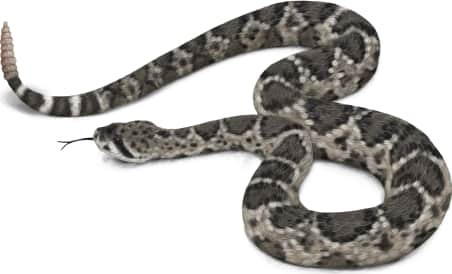
This specie is a small snake of about 660 mm in total length. They are usually blue-grey, pale-grey or grey-brown. They have two rows of small, dark blotches that run down their backs. The dorsal blotches usually unite into one row close to the tail. Also, a dark stripe marks both sides of their face. This then extends from behind the eye to the neck. The underside of this snake is cream with mottling of dark grey-brown. On the end of this snake’s tail, it has a rattle made up of a series of loosing interlocking keratinous sections. Also, a new section is added every time the snake sheds its skin. Lastly, its rattle segment closest to the tail is orange.
Range
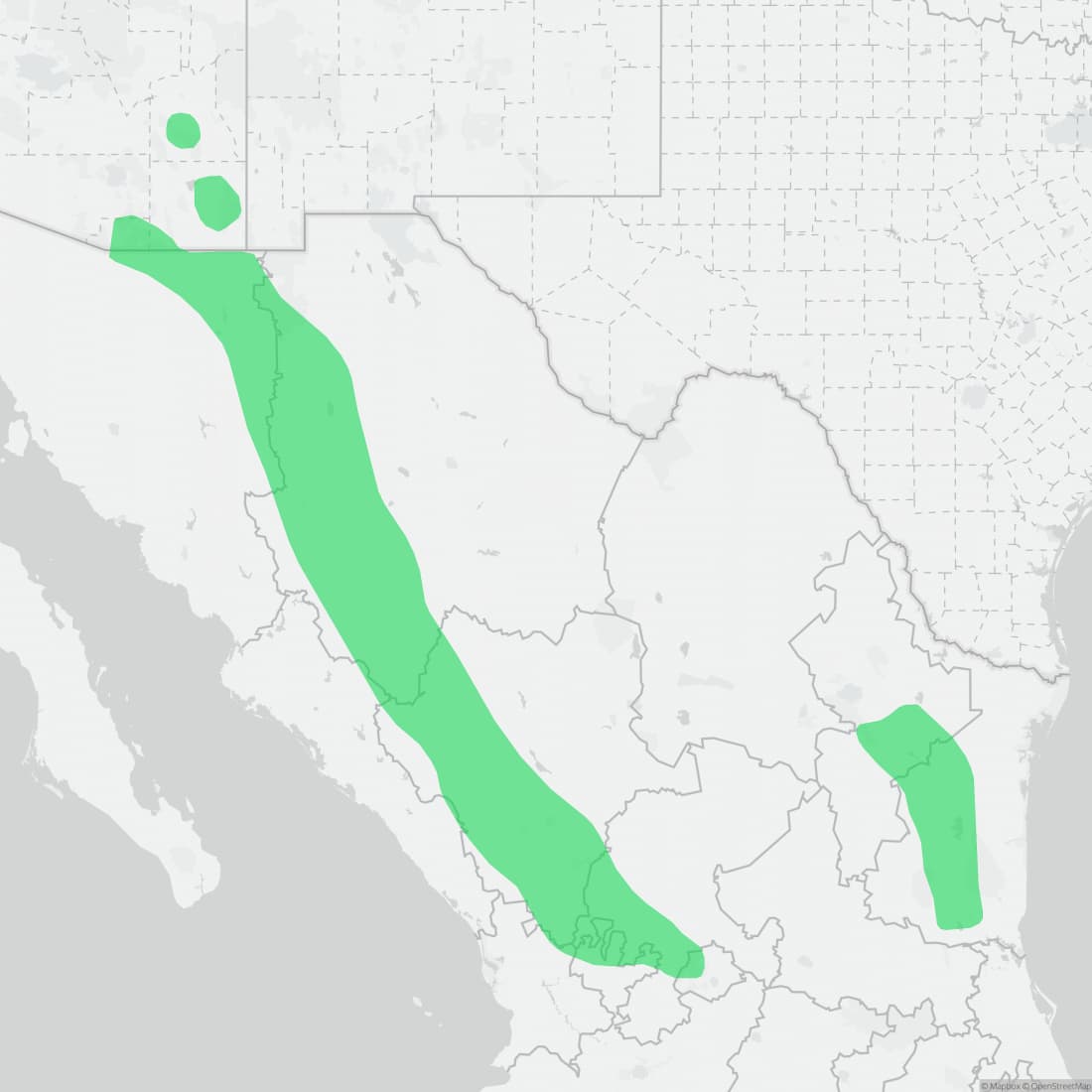
This specie can be found in the Chiricahua, Pinaleno, Huachuca and Santa Rita mountain ranges of southeastern Arizona at elevations ranging from ca. 6,000 feet to ca. 11,000 feet.
Habitat
This specie can be found in the Petran Subalpine Conifer Forest and Petran Montane Conifer Forest communities. Usually, it can be found in taluses and rocky outcrops and comparably flat, rockless, open forests. They are pretty active any time of the year but during winter, it is restricted to basking. Their diet is made up of lizards, small rodents and birds. Mating occurs during the summer, giving birth to about 9 young. These are born in summer.
Similar species
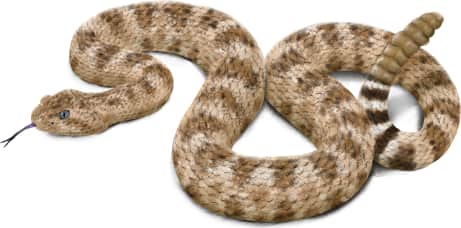
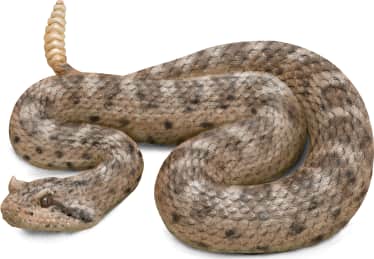
Crotalus pyrrhus or the Southwestern Speckled Rattlesnake. Its base coloration could be pink, grey, yellow, brown or nearly white. This is then spotted with white and black. Crotalus cerastes or the Horned Rattlesnake. They usually have 21 rows of keeled dorsal scales which are found midbody. Their color may be cream, buff, yellowish-brown, pink, or ash grey. Crotalus catalinensis or the Santa Catalina Rattlesnake. The specie has two color variants. The first has a light cream-coloured base while the other has a much lighter, ash grey colour as its base.
Name and etymology
Genus
Crotalus
Greek for rattle (krotalon).
Origin
Sources
- Linnaeus, 1758. Syst. Nat., 10th ed., Vol. 1, p. 214 ↗
Crotalus. Linnaeus, 1758 - Syst. Nat., 10th ed., Vol. 1, p. 214
Species epithet
pricei
Honoring William W. Price
Origin
Honors
Sources
- Van Denburgh, 1895. Proc. California Acad. Sci., Ser. 2, Vol. 5, p. 856 ↗
Crotalus pricei. Van Denburgh, 1895 - Proc. California Acad. Sci., Ser. 2, Vol. 5, p. 856
Explore more names in the etymology index.
At a glance
Range
This specie can be found in the Chiricahua, Pinaleno, Huachuca and Santa Rita mountain ranges of southeastern Arizona at elev…
Habitat
This specie can be found in the Petran Subalpine Conifer Forest and Petran Montane Conifer Forest communities. Usually, it ca…
Guide
Reptiles and Amphibians of North America
Range map
Approximate range. © Mapbox © OpenStreetMap