Couch's Spadefoot
Scaphiopus couchii
This plump, round toad is named for a hard black sickle-shaped protrusion on the underside of each hind foot, used for burrowing into the ground. They also have vertical…
How to identify
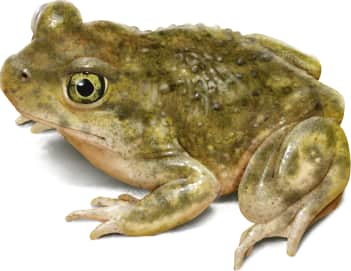
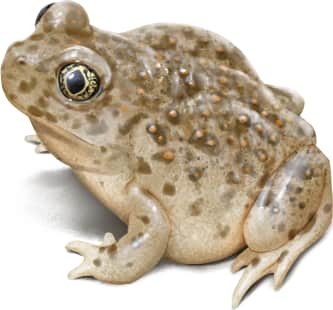
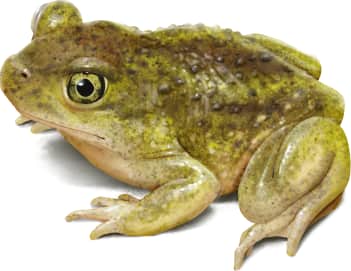
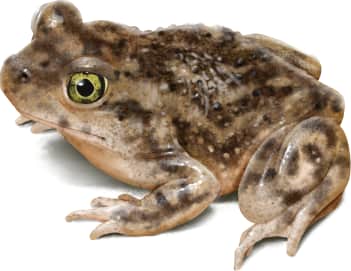
This plump, round toad is named for a hard black sickle-shaped protrusion on the underside of each hind foot, used for burrowing into the ground. They also have vertical pupils, unlike other toads, and very large bulging eyes. They have small bumps on their skin, which is light yellow with a dark marbled pattern. They grow up to 3.5 inches in length. Ventral side is pale and unmarked.
Range
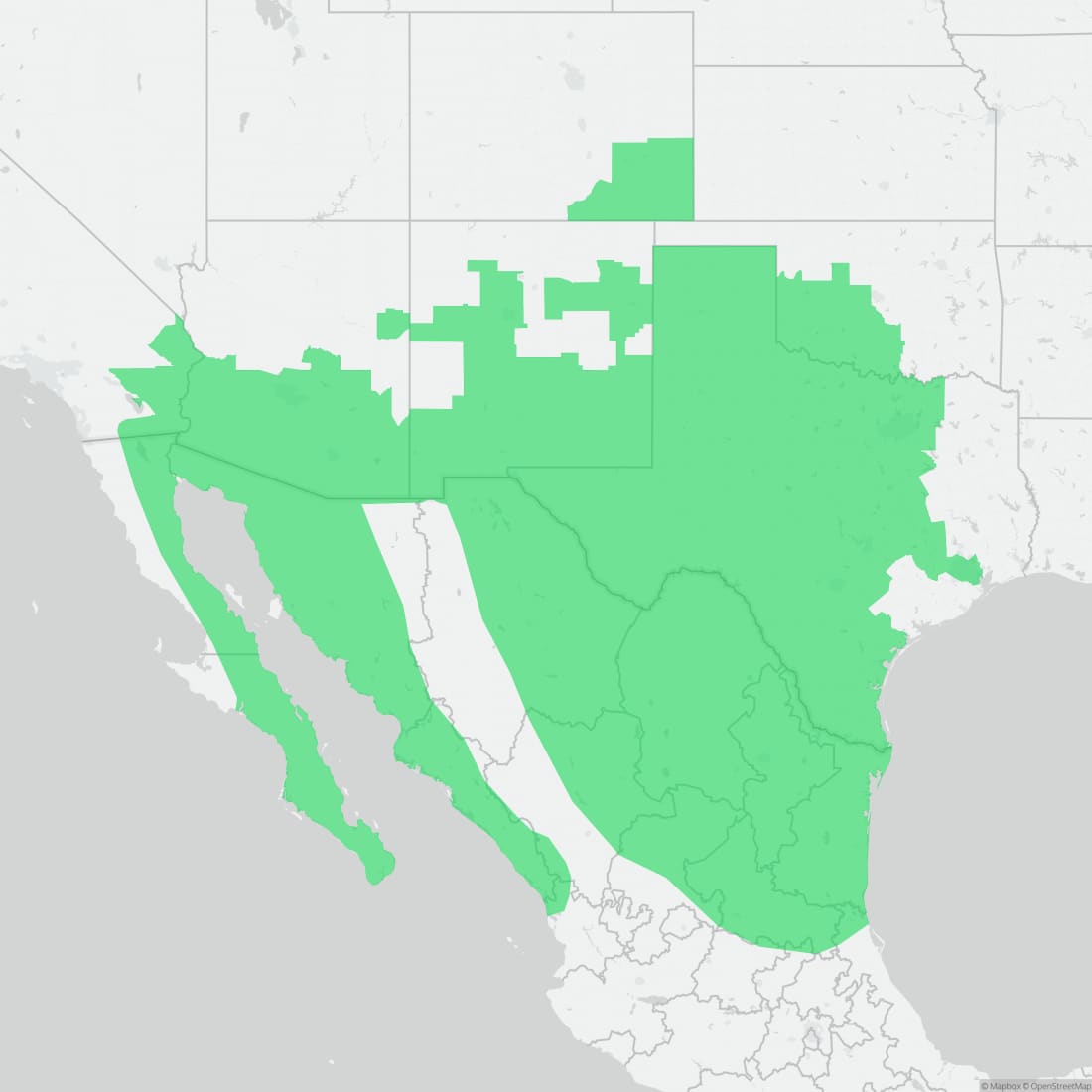
Ranges throughout much of the southwestern US, from southeastern California to east Texas. The most northern border of its range is in southeastern Colorado, and it can be found throughout most of northern Mexico.
Habitat
Primarily lives underground to protect itself from the dry climate in grassland prairies and mesquite savannahs. They emerge mostly to breed in temporary desert rain pools.
Variations
Background color can be light grey or greenish-yellow. Marble pattern ranges from pale, faded grey to distinct black.
Similar species
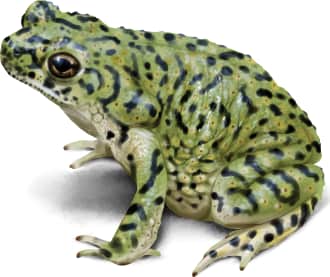
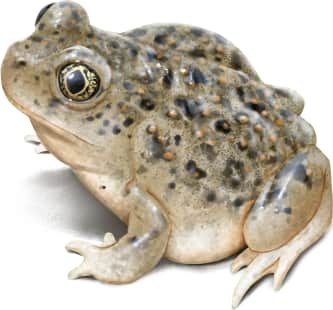
Looks most similar to the Mexican spadefoot (*Spea multiplicata*) which has less distinct marbled patterning. Body shape is very close to the western spadefoot (*Spea hammondii*) or Hurter's spadefoot (*Scaphiopus hurterii*), but their colors and patterns are quite different. It could also be confused with the green toad (*Anaxyrus debilis*).
Name and etymology
Genus
Scaphiopus
Greek for spade (skaphis) foot (pous).
Origin
Sources
- Holbrook, 1836. N. Amer. Herp., Ed. 1, Vol. 1, p. 85 ↗
Scaphiopus. Holbrook, 1836 - N. Amer. Herp., Ed. 1, Vol. 1, p. 85
Species epithet
couchii
Honoring Darius N. Couch.
Origin
Honors
Sources
- (Kennicott, 1859). U.S. Pacif. R.R. Surv., Vol. 10, Pt. 4, p. 10
Thamnophis couchii. (Kennicott, 1859) - U.S. Pacif. R.R. Surv., Vol. 10, Pt. 4, p. 10
- Baird, 1854. Proc. Acad. Nat. Sci. Philadelphia, Vol. 7, p. 62 ↗
Scaphiopus couchii. Baird, 1854 - Proc. Acad. Nat. Sci. Philadelphia, Vol. 7, p. 62
Explore more names in the etymology index.
More illustrations
Female Couch's Spadefoot
At a glance
Size
2.25 to 3.5 mm
Range
Ranges throughout much of the southwestern US, from southeastern California to east Texas. The most northern border of its ra…
Habitat
Primarily lives underground to protect itself from the dry climate in grassland prairies and mesquite savannahs. They emerge…
Range map
Approximate range. © Mapbox © OpenStreetMap