Western Spadefoot
Spea hammondii
Adult toads are between 1.5 and 3.0 inches in length, with short legs and wart skin. They have light-colored golden eyes and vertical pupils, with a shiny black wedge-sha…
How to identify
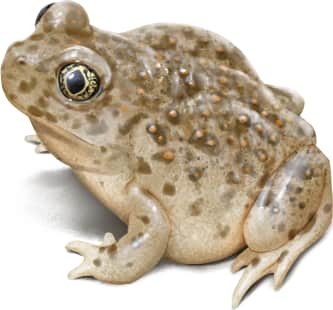
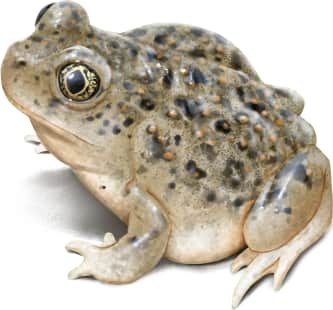
Adult toads are between 1.5 and 3.0 inches in length, with short legs and wart skin. They have light-colored golden eyes and vertical pupils, with a shiny black wedge-shaped spade on each hind foot. They have a whitish ventrum, their color may be greenish, cream or brown, with 4 asymmetrical white stripes and dark blotches on the back, their skin tubercles tipped in red.
Range
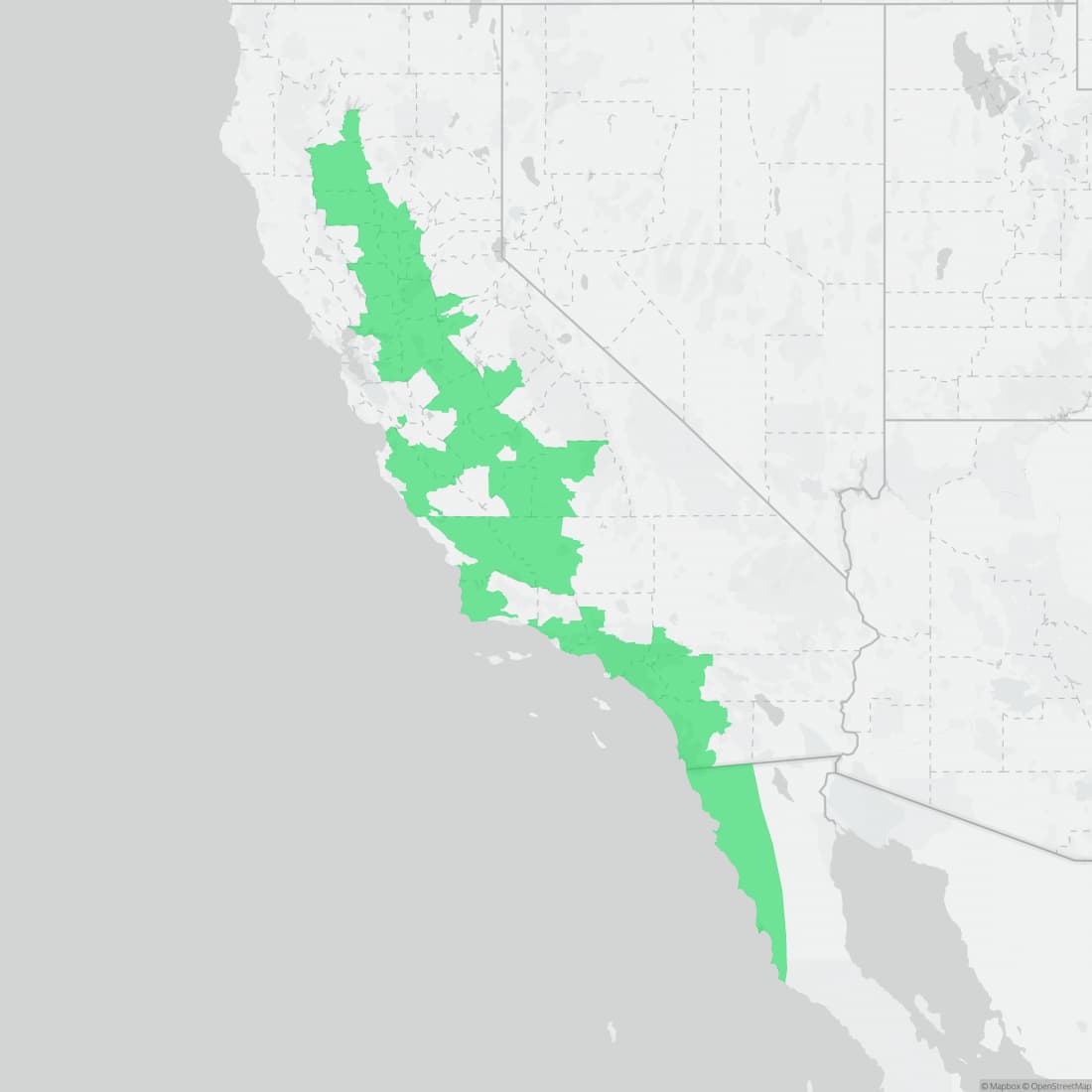
The western spadefoot toad is an amphibian species endemic to western California in the United States, and Mexico.
Habitat
The western spadefoot prefers open areas with gravelly soils, including woodlands, grasslands, lowlands, scrub, foothills, mountains and sandy washes. Juveniles feed mostly on plants while Adult toads feed on mainly invertebrates, spiders, flies, earthworms, grasshoppers, ants, moths, tree bugs and ground beetles. They are nocturnal and are most active during wet and summer seasons. The western spadefoot becomes sexually mature in the third year. Females lay about 300-500 eggs, which attach themselves to underwater vegetation, eggs hatch quickly and the tadpoles emerge in 15 hours. They have the fastest known metamorphosis for any toad or frog which takes 12 to 13 days. The breeding of eggs usually occur from January to late March
Similar species
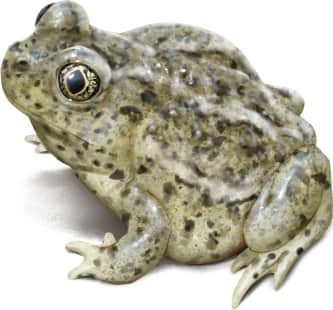
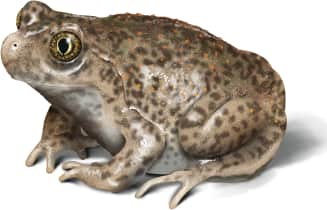
Plains spadefoot toad (spea bombifrons) have a tanned dark brown color with orange spots. The species name makes reference to its distinguishing characteristic of a buzzing mating call and leaf shaped metatarsals. Great basin spadefoot (spea intermontane) is an opportunistic hunter, able to produce secretions which can kill prey and ward off enemies. They are well adapted to life in dry habitats. Their eyes are catlike, circle like at night and vertical in bright light. New Mexico Spadefoot toad (spea multiplicata) very closely reflect the soil color of their native habitat, with orange and black speckles on their back and a white ventrum. It was once classified as a subspecies of the spea hammondi but its unique morphological characteristics forced researchers to change their minds.
Name and etymology
Genus
Spea
Greek for cave or cavern.
Origin
Sources
- Cope, 1866. Journ. Acad. Nat. Sci. Philadelphia, Vol. 6, 2nd Series, p. 81 ↗
Spea. Cope, 1866 - Journ. Acad. Nat. Sci. Philadelphia, Vol. 6, 2nd Series, p. 81
Species epithet
hammondii
Honoring John F. Hammond.
Origin
Honors
Sources
- (Baird, 1859). Rep. Pacif. R.R. Survey, Vol. 10, Williamson's Route, Pt. 4, No. 4, p. 12, pl. 28, fig. 2
Spea hammondii. (Baird, 1859) - Rep. Pacif. R.R. Survey, Vol. 10, Williamson's Route, Pt. 4, No. 4, p. 12, pl. 28, fig. 2
Explore more names in the etymology index.
At a glance
Range
The western spadefoot toad is an amphibian species endemic to western California in the United States, and Mexico.
Habitat
The western spadefoot prefers open areas with gravelly soils, including woodlands, grasslands, lowlands, scrub, foothills, mo…
Guide
Reptiles and Amphibians of North America
Range map
Approximate range. © Mapbox © OpenStreetMap