Chihuahuan Green Toad
Anaxyrus debilis
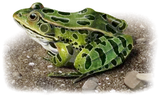
This plump toad is mainly green with black and yellow irregular spots all over. Its ventral surface is solid light cream. It has mildly rough, warty skin and a short snou…
How to identify
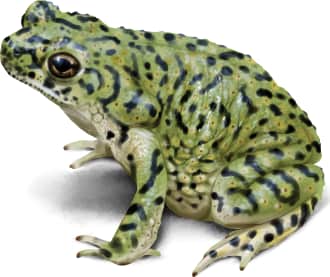
This plump toad is mainly green with black and yellow irregular spots all over. Its ventral surface is solid light cream. It has mildly rough, warty skin and a short snout. They range from 1.5-2.4 inches in snout to vent length, with females being slightly larger than males. Parotid glands are noticeable and elongated. Tadpoles start out black and develop a mottled pattern as they grow up to 1 inch. Their tail fin has a high arch.
Range
South-central US through central Mexico. As far north as southern Colorado and western Kansas, west to southeastern Arizona, and east to eastern Texas.
Habitat
Due to living in arid regions below 5000 feet, it spends most of its time burrowed underground, emerging primarily after periods of rain. They move from dry, terrestrial areas to temporary bodies of water during breeding season in spring and summer. Their wide range means they can be found in various habitats such as plains, grasslands, and brushland.
Variations
Green color ranges from pale to a medium mossy or olive shade. Density of black spots can vary, and some blend together to form small patches with a slightly reticulated pattern. The throat color of males is darker than that of females.
Similar species
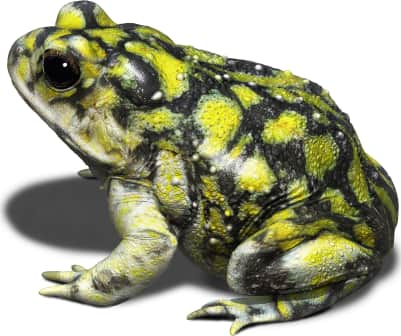
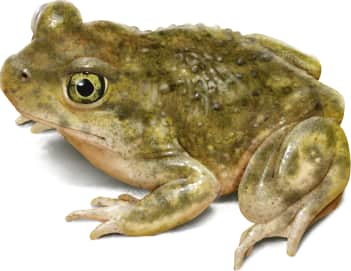
Closely resembles the Sonoran green toad (*Anaxyrus retiformis*) which has a small range further west in Arizona and northern Mexico, and has a more distinct reticulated pattern in the black coloration all over, rather than spots. Also looks a bit like the Couch's spadefoot (*Scaphiopus couchii*) which shares much of its range. However, the spadefoot's colors are more faded and blended, it lacks parotid glands, and has a rounder body with larger more bulging eyes.
Name and etymology
Genus
Anaxyrus
From Greek meaning a king or chief
Origin
Sources
- Laurenti, 1768. Syn. Rept., p. 25
Bufo. Laurenti, 1768 - Syn. Rept., p. 25
Species epithet
debilis
Latin for crippled, probably in reference to its slender body and limbs
Origin
Sources
- Girard, 1854. Proc. Acad. Nat. Sci. Philadelphia, Vol. 7, p. 87 ↗
Bufo debilis. Girard, 1854 - Proc. Acad. Nat. Sci. Philadelphia, Vol. 7, p. 87
Explore more names in the etymology index.
At a glance
Range
South-central US through central Mexico. As far north as southern Colorado and western Kansas, west to southeastern Arizona,…
Habitat
Due to living in arid regions below 5000 feet, it spends most of its time burrowed underground, emerging primarily after peri…
Guide
Reptiles and Amphibians of North America
Range map
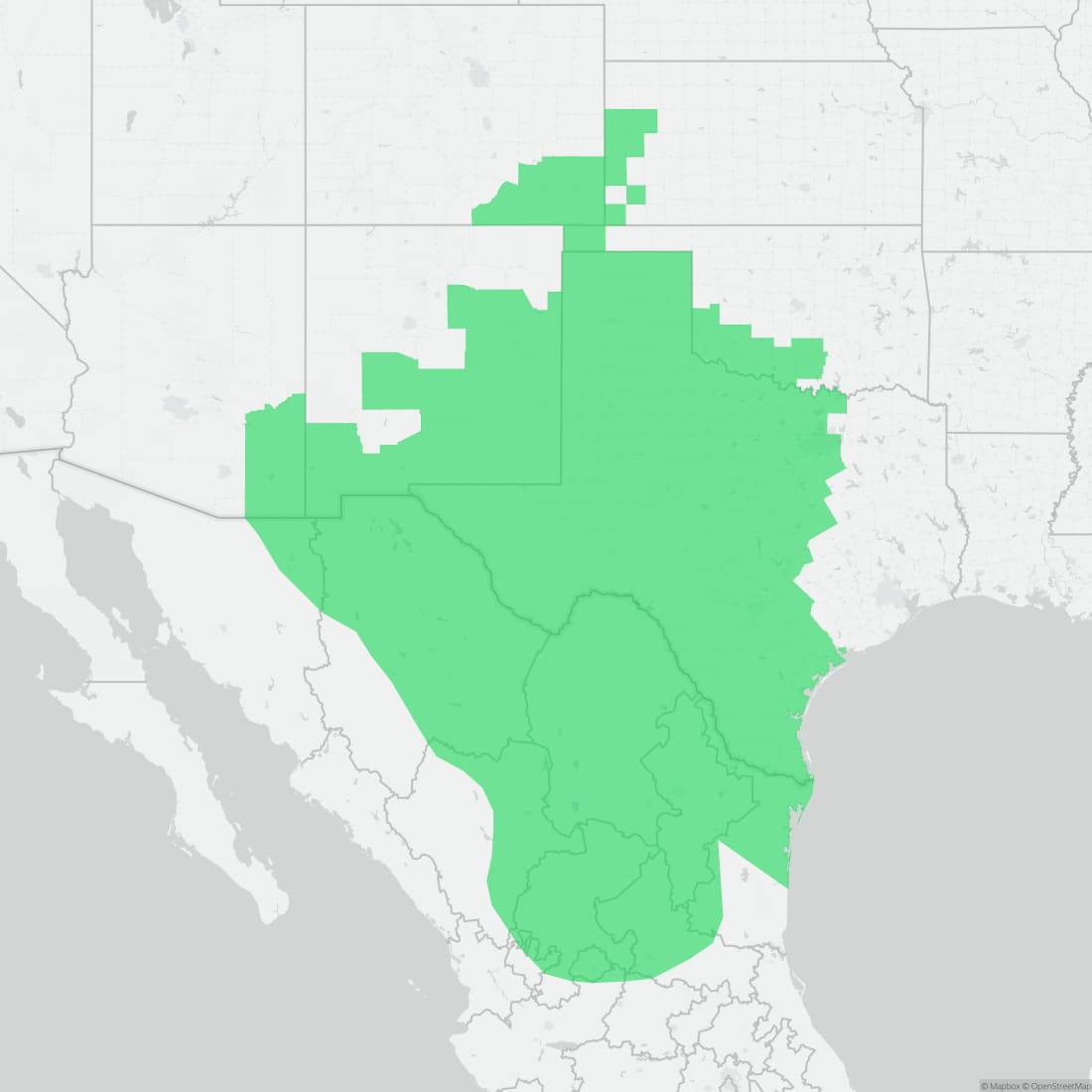
Approximate range. © Mapbox © OpenStreetMap