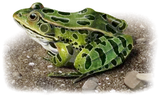
Little Grass Frog
Pseudacris ocularis
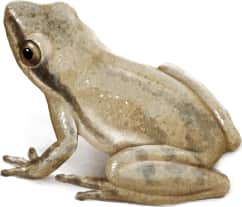
The smallest frog in North America, this species only reaches 19 millimeters in length. It has a flattened body, pointed snout, and large, non-bulging eyes. Its skin is s…
How to identify
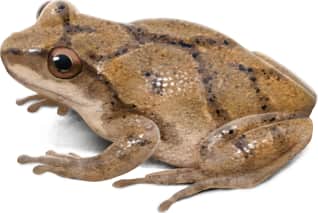
The smallest frog in North America, this species only reaches 19 millimeters in length. It has a flattened body, pointed snout, and large, non-bulging eyes. Its skin is smooth or very mildly bumpy. It is primarily light brown, and may have a dark brown mask running through the eyes from the snout to the mid-section of the body.
Range
Range stretches along the southern Atlantic coast, from southeast Virginia through the Florida peninsula and most of the panhandle.
Habitat
This species resides in the ground vegetation around marshy swampland or ditches. They sometimes climb higher than 1.5 meters.
Variations
Lighter brown individuals can have a pink or green hue. The dark mask is sometimes absent. Faint darker markings are sometimes present down the middle of the back or on the legs.
Similar species
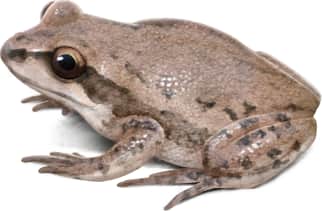
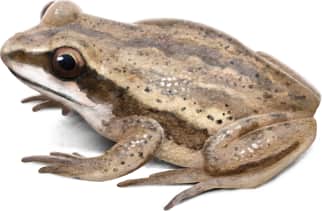
Most akin to the upland chorus frog (*Pseudacris feriarum*), Brimley's chorus frog (*Pseudacris brimleyi*), or spring peeper (*Pseudacris crucifer*).
Name and etymology
Genus
Pseudacris
Greek for false(pseudes) locus(akris) referencing genus Acris.
Origin
Sources
- Fitzinger, 1843. Syst. Rept., p. 31 ↗
Pseudacris. Fitzinger, 1843 - Syst. Rept., p. 31
Species epithet
ocularis
Latin for of the eye.
Origin
Sources
- (Bosc and Daudin, 1801).
Pseudacris ocularis. (Bosc and Daudin, 1801) -
Explore more names in the etymology index.
At a glance
Range
Range stretches along the southern Atlantic coast, from southeast Virginia through the Florida peninsula and most of the panh…
Habitat
This species resides in the ground vegetation around marshy swampland or ditches. They sometimes climb higher than 1.5 meters…
Guide
Reptiles and Amphibians of North America
Range map
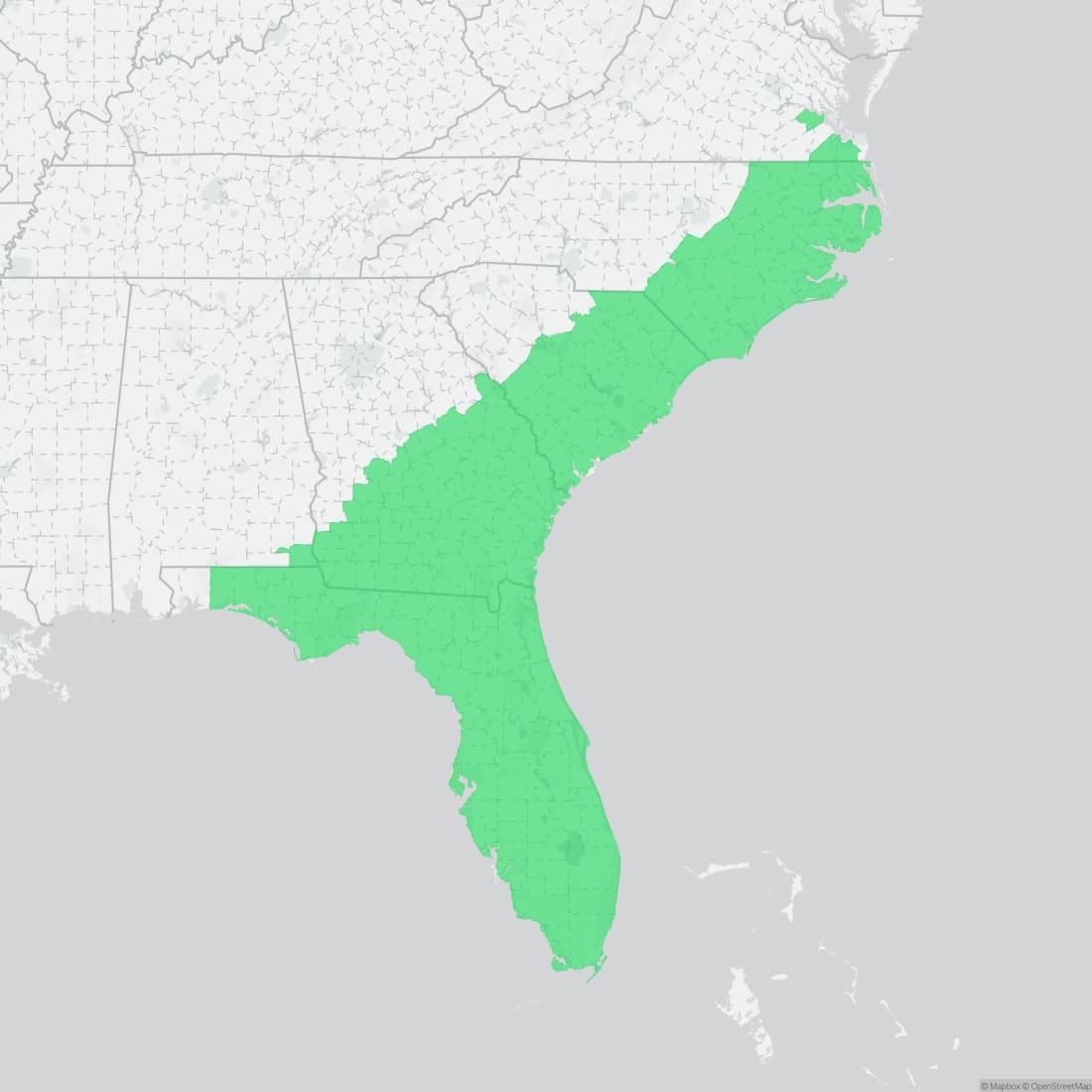
Approximate range. © Mapbox © OpenStreetMap