
Spring Peeper
Pseudacris crucifer
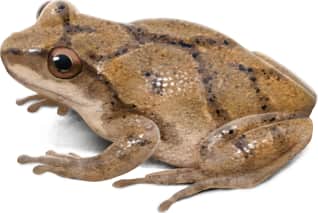
Spring peepers have a dark X-shaped cross on their tan, grey, olive green or brown dorsal surface. The females are often bigger and lighter in skin coloration but the ma…
How to identify
Spring peepers have a dark X-shaped cross on their tan, grey, olive green or brown dorsal surface. The females are often bigger and lighter in skin coloration but the males have a darker throat and the ability to make high-pitched sounds. Their body length ranges between 25mm and 38mm and a mass between 3g and 5g. they have large toe pads for climbing.
Range
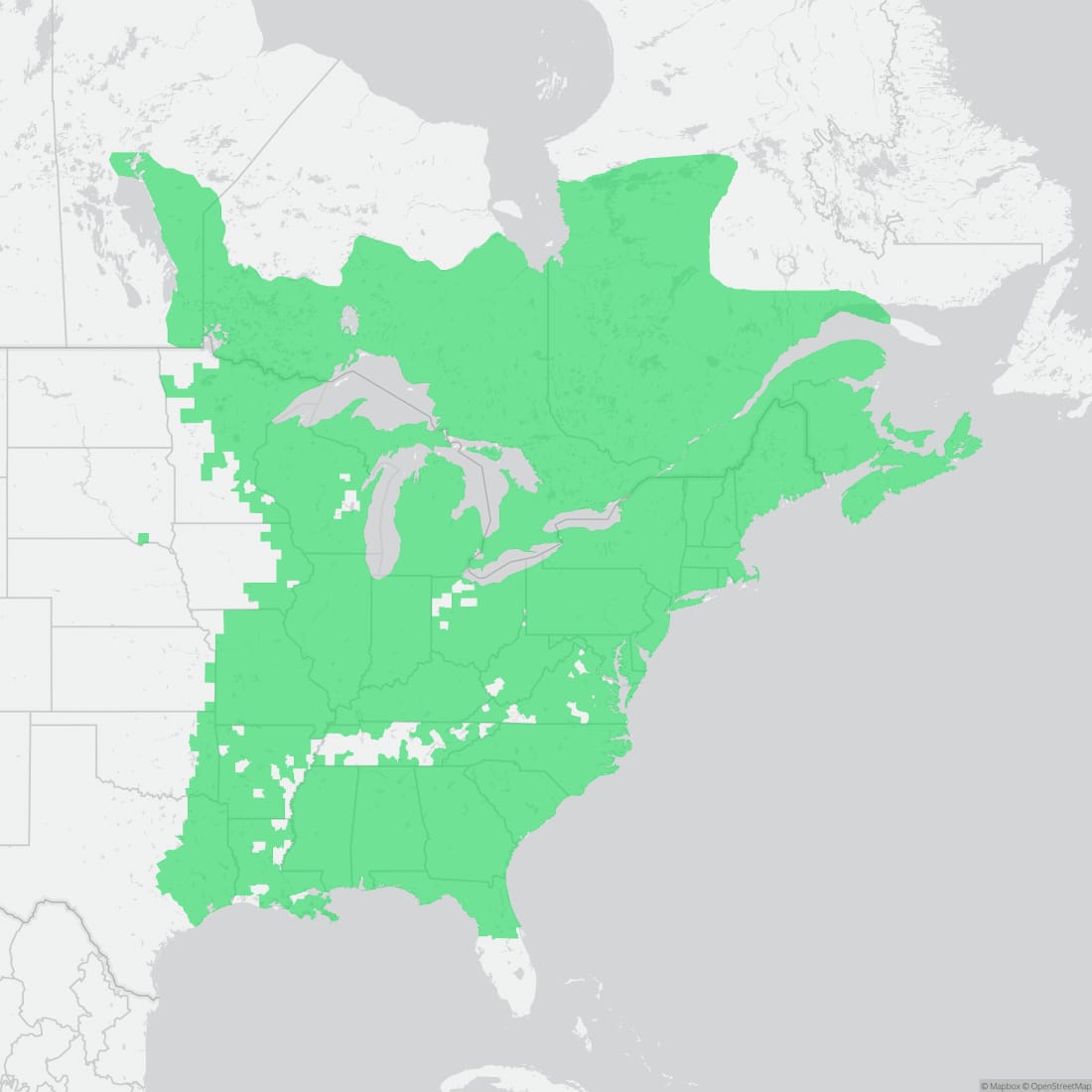
The Spring Peeper is found in the gulf coast from South-eastern Texas to South-Eastern Georgia and northern Florida, USA.
Habitat
They naturally inhabit woodlands, forests and ephemeral wetlands. They also inhabit areas like swamps, marshes, and ponds as aquatic biome for their tadpoles and eggs. They are nocturnal insectivores so they are more active at night and feed on insects like beetles, spiders, ants, and flies. They hunt in low vegetation. Their Tadpoles feed on algae and small organisms in the water. While Southern spring peepers breed from October to march, the northern spring peepers breed between March and June. They lay around 900 eggs and are hidden under vegetation. When they hatch, they remain tadpoles for up to 3 months until they turn into frogs and leave the water.
Variations
The northern Spring peeper (Pseudacris Crucifer Crucifer) is discovered in the whole of the Eastern United States and eastern Canada. The southern Spring peeper (Pseudacris crucifer Bartramiana) is found along the gulf coast, which is distinguishable by a strong dark marking on its belly.
Similar species
The wood frog (Rana Sylvaticus) ranges from 2-2.8 inches. They have brown skin coloration with dark eye masks The grey tree frog (Dryophytes Versicolor) has a length of 1.5-2 inches with lumpy, warty skin texture. They can camouflage from grey to green. The Upland chorus frog (Pseudacris Feriarum) is 0.75 to 1.5 inches long. They are reddish-brown or grey-brown, with darker blotching.
Name and etymology
Genus
Pseudacris
Greek for false(pseudes) locus(akris) referencing genus Acris.
Origin
Sources
- Fitzinger, 1843. Syst. Rept., p. 31 ↗
Pseudacris. Fitzinger, 1843 - Syst. Rept., p. 31
Species epithet
crucifer
Latin for cross (crucis) bearer (-ifer), referencing its dorsal "x" marking.
Origin
Sources
- (Wied, 1838). Reise Nord-Amer., Vol. 1, Pt. 5, p. 275
Pseudacris crucifer. (Wied, 1838) - Reise Nord-Amer., Vol. 1, Pt. 5, p. 275
Explore more names in the etymology index.
At a glance
Size
20 to 25 mm
Range
The Spring Peeper is found in the gulf coast from South-eastern Texas to South-Eastern Georgia and northern Florida, USA.
Habitat
They naturally inhabit woodlands, forests and ephemeral wetlands. They also inhabit areas like swamps, marshes, and ponds as…
Range map
Approximate range. © Mapbox © OpenStreetMap