Eastern Coralsnake
Micrurus fulvius
This coral snake is venomous, slender and medium-sized (average length range of 18-30 inches). The scales are smooth and the anal plate is typically divided. The color pa…
How to identify
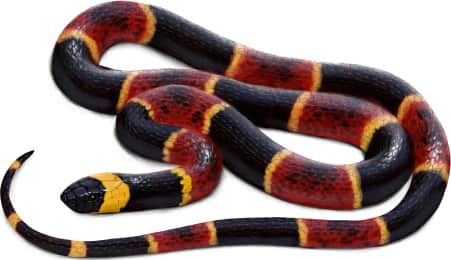
This coral snake is venomous, slender and medium-sized (average length range of 18-30 inches). The scales are smooth and the anal plate is typically divided. The color pattern is one of red, white, or yellow and black bands. Typically wide red and black rings separated by narrow yellow rings. The yellow and red bands are beside each other while its snout is black. The scaled have a smooth texture and occur in 15 rows across the body.
Range
The Micrurus Fulvius has a scattered range in the southern Coastal Plain of the United States into northeastern Mexico. The range begins from southeastern North Carolina, south to South Carolina, south into most of Florida, west into Georgia, Alabama and southeastern Louisiana.
Habitat
These snakes are difficult to find even in their habitat. But this may be because they spend a lot of time underground. Unlike many other snakes, this species is not arboreal and can only be selectively seen crawling above ground. The snakes lay about six or seven eggs in the beginning of summer and the young hatch by the end of the summer or early fall. Harlequin coral snakes feed mostly on lizards and other snakes including its own species. They also feed on birds, frogs, insects, and fish. They use venom to kill their prey.
Similar species
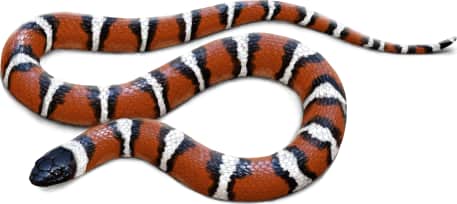
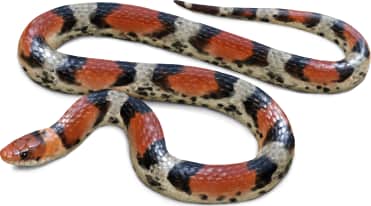
Scarlet kingsnakes or Lampropeltis triangulum and scarlet snakes or Cemophora coccinea are similar in look and size. In fact, the scarlet snake is called a harmless mimic. The difference (aside from the venomous fangs) lies in the pattern of rings; the red rings on the scarlet snake only touches the black rings. Another difference is that the snout of the scarlet snakes are red. A more identical species would be the Texas Coral Snake or Micrurus tener. The primary difference lies in the fact that the Texas coral snake is a bit bigger (longer and stouter) at averagely 24 inches and can yield more venom.
Name and etymology
Genus
Micrurus
Greek for small (mikros) tail (oura).
Origin
Sources
- Wagler, 1824.
Micrurus. Wagler, 1824 -
Species epithet
fulvius
Latin for reddish, dark yellow
Origin
Sources
- (Linnaeus, 1766). Syst. Nat., 12th ed., Vol. 1, p. 381 ↗
Micrurus fulvius. (Linnaeus, 1766) - Syst. Nat., 12th ed., Vol. 1, p. 381
Explore more names in the etymology index.
At a glance
Range
The Micrurus Fulvius has a scattered range in the southern Coastal Plain of the United States into northeastern Mexico. The r…
Habitat
These snakes are difficult to find even in their habitat. But this may be because they spend a lot of time underground. Unlik…
Guide
Reptiles and Amphibians of North America
Range map
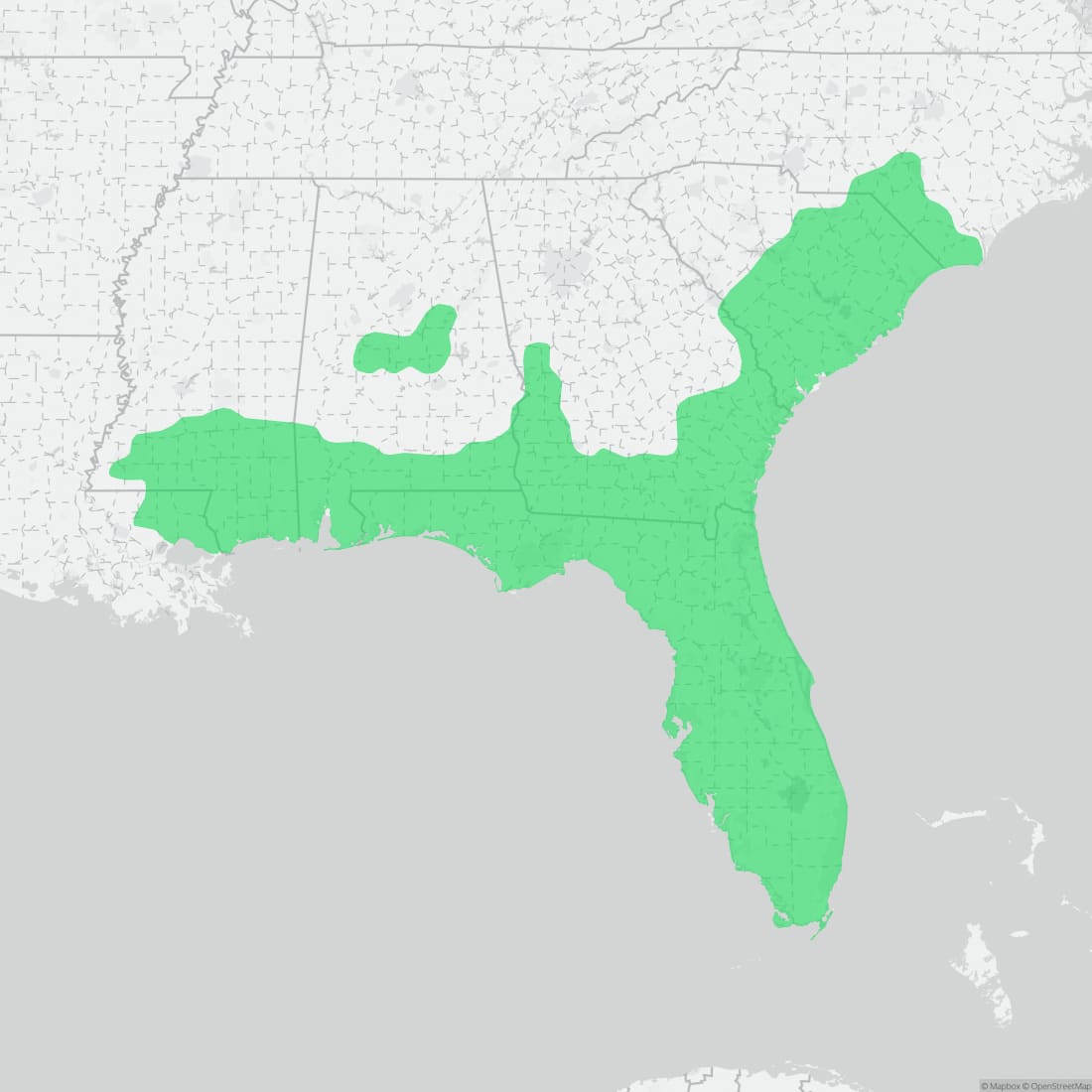
Approximate range. © Mapbox © OpenStreetMap