Scarletsnake
Cemophora coccinea
The scarletsnake or cemophora coccinea is relatively small and has a total length that includes the tail of 14-26 inches. The dorsum is light gray in color with series of…
How to identify
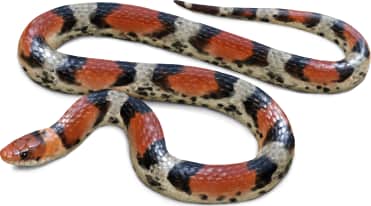
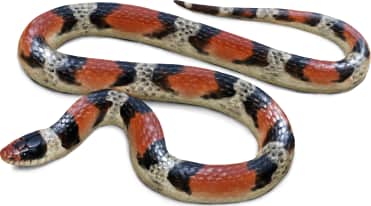
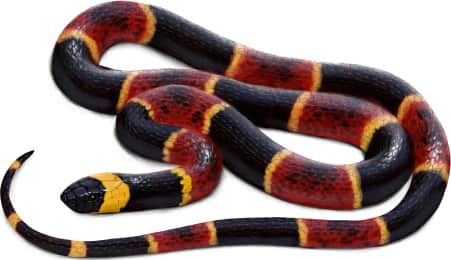
The scarletsnake or cemophora coccinea is relatively small and has a total length that includes the tail of 14-26 inches. The dorsum is light gray in color with series of blotches which are red in color and bordered with black. The dorsal blotches which are band-like ring in appearance and extends down the sides of the body. Like the harmless scarlet kingsnake, the scarletsnake has red bands that do not touch yellow bands. The bands do not extend to the venter, thus leaving the underside solid pink, white or grayish. The snout is pointed and usually red in
Range
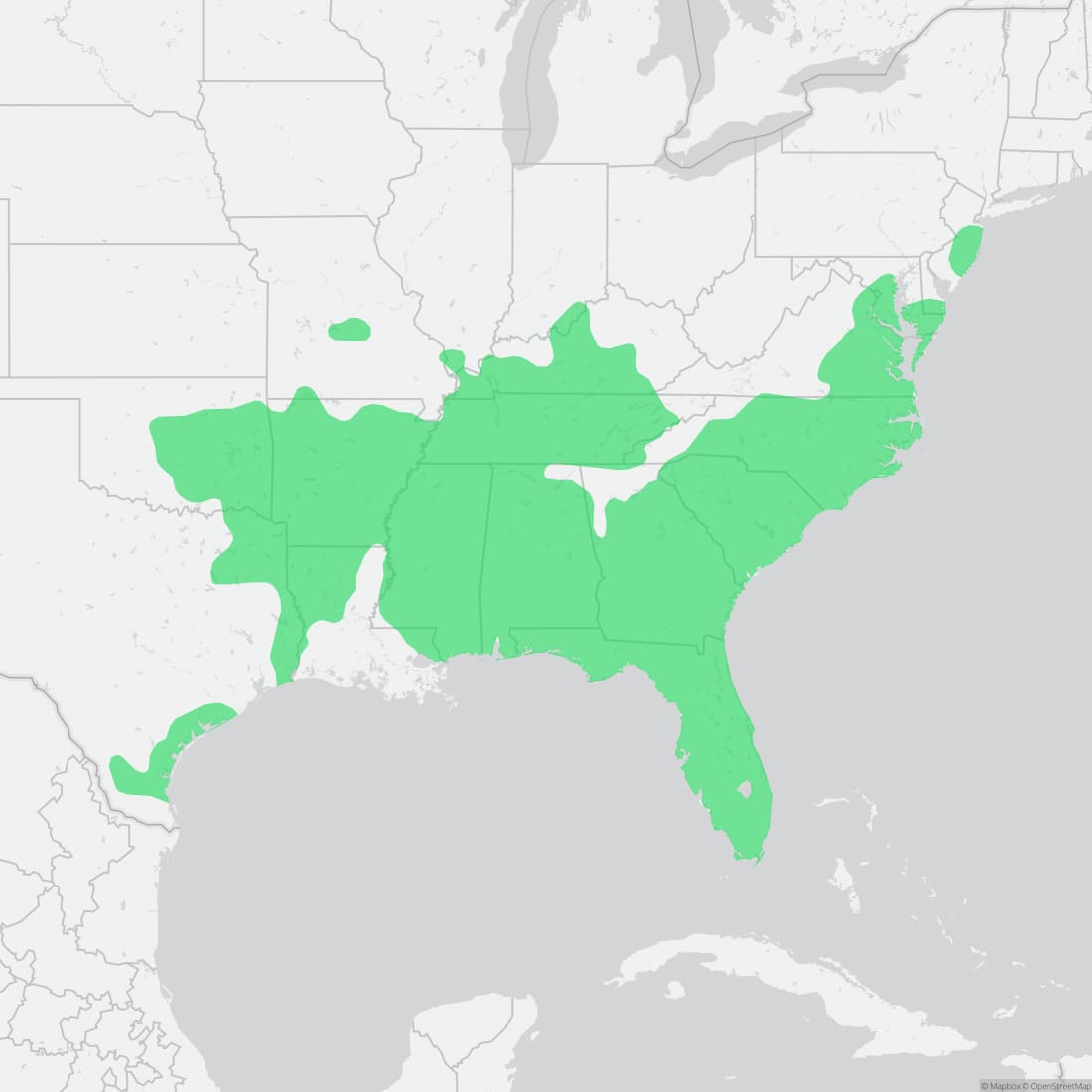
This species is native to the southeastern part of The United States in areas like eastern Oklahoma, Arkansas, Mississippi, Alabama, Louisiana, South Carolina, Virginia and Maryland.
Habitat
This species is nocturnal and spend most of the daytime under leaf litter, fallen logs, debris like boards, tin or trash. The Cemophora coccinea feeds on lizards, reptile eggs, small rodents and other snakes. The scarletsnakes lay eggs in clutches comprising 3-8 eggs per clutch. Breeding occurs in Spring months having eggs laid through the summer. The eggs hatch in early fall.
Variations
The Florida scarletsnake or Cemophora coccinea coccinea has white bands and a red head with a slightly upturned nose. It has a gray or white skin with red blotches that is bordered by black. Northern scarletsnake or Cemophora coccinea copei has 17-24 red blotches on its white base color.
Similar species
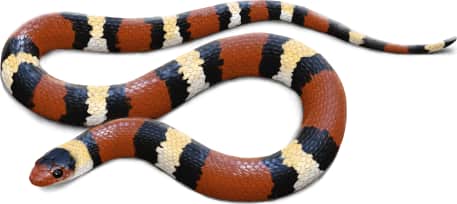
Texas scarletsnake or Cemophora lineri has distinct red blotches with black borders. The black borders do not join on the sides. This species has a solid white or gray color. The Eastern Coral Snake or Micrurus fulvius possesses a rounded black snout and the red rings on its body touch its yellow rings. The Scarlet Kingsnake or Lampropeltis elapsoides has colored rings that go around its belly.
Name and etymology
Genus
Cemophora
Greek for muzzle (kemos) bearing (phoros).
Origin
Sources
- Cope, 1860. Proc. Acad. Nat. Sci. Philadelphia, Vol. 12, p. 244 ↗
Cemophora. Cope, 1860 - Proc. Acad. Nat. Sci. Philadelphia, Vol. 12, p. 244
Species epithet
coccinea
Latin for crimson or scarlet.
Origin
Sources
- (Blumenbach, 1788). Voigt's Mag. Neu. Phys. Naturg., Vol. 5, Pt. 1, p. 11, pl. 1
Cemophora coccinea. (Blumenbach, 1788) - Voigt's Mag. Neu. Phys. Naturg., Vol. 5, Pt. 1, p. 11, pl. 1
Explore more names in the etymology index.
At a glance
Range
This species is native to the southeastern part of The United States in areas like eastern Oklahoma, Arkansas, Mississippi, A…
Habitat
This species is nocturnal and spend most of the daytime under leaf litter, fallen logs, debris like boards, tin or trash. The…
Guide
Reptiles and Amphibians of North America
Range map
Approximate range. © Mapbox © OpenStreetMap